

Our Picks
Introduction
Run the diagnostic on your own house. Windows that sweat in the morning, a basement that smells like a wet towel, a floorboard that has started to cup, black speckling along the closet wall? That is a water problem, and no air purifier on the market will touch it. Now the other column: the air looks clean, but your eyes itch every April, the cat triggers a sneezing fit, smoke from a fire two counties over seeps through the supply vents. That is a particle problem, and a dehumidifier does nothing for it.
The two machines get cross-shopped because both promise "cleaner, healthier air." Only one of them removes moisture. Below are seven units worth considering in 2026, the specs that separate them, and a plain framework for deciding whether you need a dehumidifier or an air purifier in the first place.
Two numbers matter before you shop. First, pint ratings dropped in 2019 and never came back. The Department of Energy moved its test from 80°F down to 65°F that June. Cooler air holds less water, so the same physical machine that once removed 70 pints a day now gets labeled 50. Nothing about the hardware changed, only the sticker. A "50-pint" unit tested to today's standard is what your neighbor would have called a 70-pint unit a decade ago, so ignore old charts that tell you a basement needs a 70-pint model. It needs today's 50. Watch for the trick some budget brands use: they quote capacity at 95°F and 90% humidity instead, which inflates the pint number well above what the unit pulls in a normal room.
Second, the badge on the front means less than you think. Most dehumidifiers come off a handful of the same factories and then get different logos. When a defect appears, it appears everywhere: a 2021 recall pulled two million units sold under names like Honeywell, Danby, and Idylis, and a 2023 recall pulled 1.56 million more sold as Frigidaire, GE, and Kenmore. Buy on the spec sheet, the efficiency number, the warranty, and the owner reviews, not the name.
The Short Version
If you only read this far:
- Best high-capacity unit for basements: the Midea Cube 50-Pint. It dries faster on less power than any other 50-pint unit, and its stacking bucket lets you raise the tank so a gravity hose works without a pump.
- Best value at high capacity: the hOmeLabs 50-Pint Wi-Fi. Cheaper than the brands, with solid long-term owner satisfaction and Wi-Fi control.
- Best mid-sized unit for living spaces: the Midea Cube 35-Pint, the same design in a size that suits a main floor.
- Best budget pick for a single room: the Waykar 34-Pint, light, quiet, and well-priced, as long as you read its spec sheet honestly.
- Best for cold or tiny rooms: the Ivation 13-Pint, a desiccant unit that keeps working in the cold where compressor models freeze.
Two more fill out the large-unit tier: the GE 50-Pint with a built-in pump when you have to push water uphill, and the Frigidaire FHDD5034 50-Pint if you want a familiar box with a phone app. Honeywell, a default for years, is missing on purpose; the company has stopped making large-capacity dehumidifiers.
Midea Cube 50-Pint - Best High-Capacity
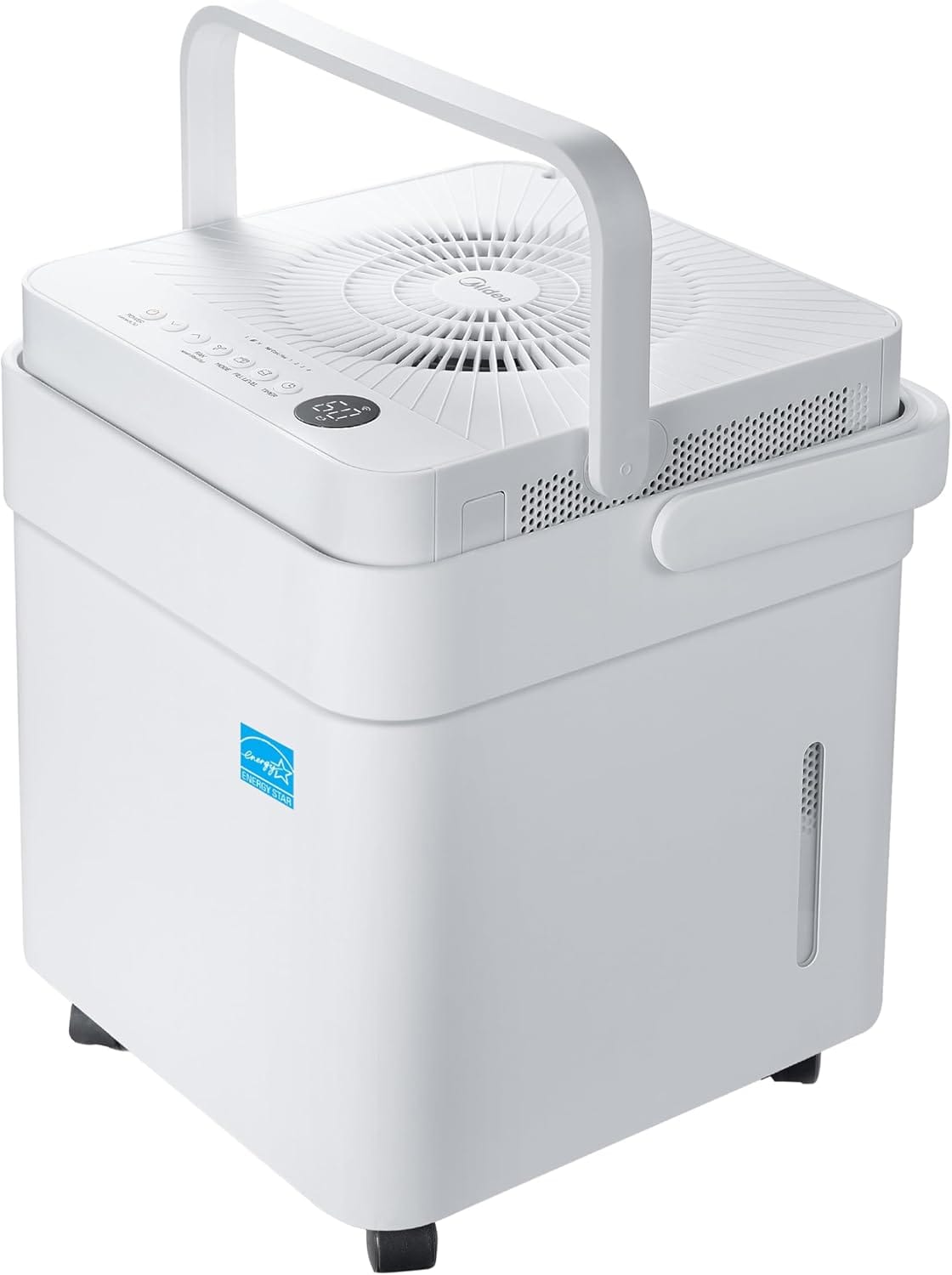
Midea Cube 50-Pint
The unit most independent testers land on. Fastest efficiency, quietest at its size, and the stacking bucket solves the gravity-hose problem that forces most people to buy a pump.
Pros
- Fastest and most efficient 50-pint unit in lab measurements
- Stacking bucket raises the tank so a gravity hose works without a pump
- Large reservoir stretches emptying to once every few days
Cons
- Still uses older R-410A refrigerant
- A minority of owners report icing and failure near the one-year mark
- Costs more than a plain box, and the two-piece body is bulky to store
Specifications
Efficiency that pays for itself
This is the unit most independent testers land on. In lab measurements it pulls a room's humidity down faster and on less power than any other 50-pint machine, drawing roughly 512 watts where rivals pull north of 600. It carries the Energy Star Most Efficient badge at about 2.19 liters of water removed per kilowatt-hour. For a dehumidifier that may run eight months a year in a basement, that efficiency gap adds up fast on your electricity bill. It is also quiet for its class, about 45 dB on low, which puts it closer to a refrigerator hum than a window AC.
The stacking design solves the drain problem
The shape is the other reason to buy it. The Cube splits into two stacking blocks, so you can lift the bucket up off the floor, and that height is what finally lets a plain gravity hose drain the unit without a pump. Most dehumidifiers sit low enough that you either empty a bucket every few hours or buy a separate pump to push water out. The Cube's design sidesteps that entirely. The reservoir holds far more than a standard two-gallon bucket, which stretches manual emptying to once every few days even in a damp basement. Skip the pricier Wi-Fi and onboard-pump trims unless you specifically need them; the basic version is the smart buy.
Where it falls short
It still runs on older R-410A refrigerant, and a minority of owners report the unit icing over and failing after about a year. Buy from a seller with a clean return window and keep the filter clean to reduce that risk. The two-piece body is also bulkier to store than a standard box shape.
hOmeLabs 50-Pint Wi-Fi - Best Value
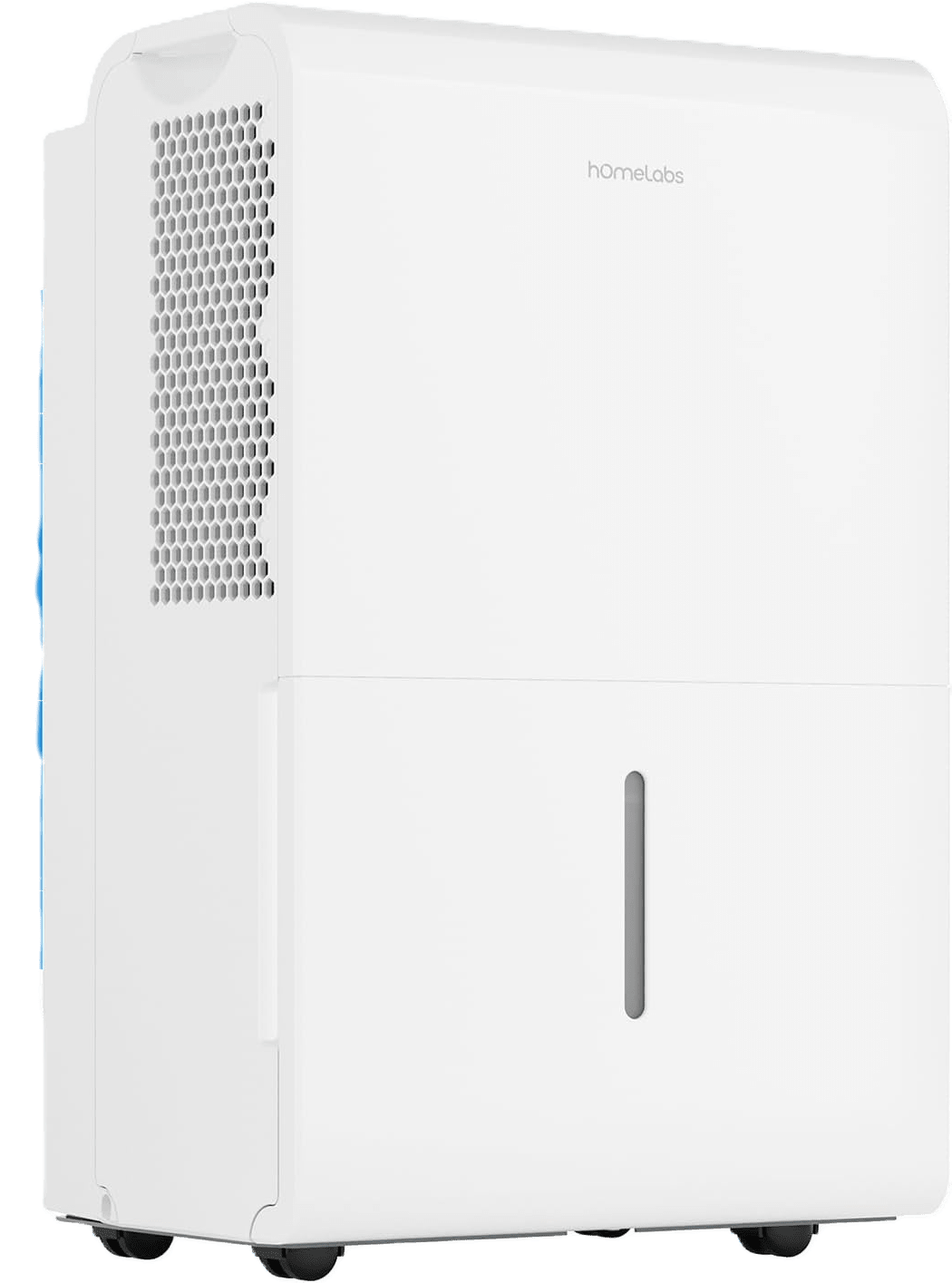
hOmeLabs 50-Pint Wi-Fi
Does the 50-pint job for less money than the name brands, with app control and solid efficiency. Read the spec sheet honestly, though: the pint number shrinks in a cool basement.
Pros
- Lower power draw than many rivals at about 520 W
- App control with Comfort, Turbo, and Continuous modes at a cheaper price than name brands
- Strong long-term owner satisfaction record
Cons
- Coverage and pint numbers are quoted on generous test conditions
- Louder in independent testing than the label claims
- No pump on this version, and the brand's pumps have a mixed reliability record
Specifications
A cheaper path to 50 pints
hOmeLabs built its name on one thing: a 50-pint unit that does the job for less money than the name brands. The current Wi-Fi model adds app control with Comfort, Turbo, and Continuous modes, a 24-hour timer, and a humidity readout you can check from your phone. It draws about 520 watts where some rivals pull 700, which means lower electricity bills over a full dehumidifying season.
App control and practical features
The Wi-Fi connectivity is genuinely useful here. You can monitor the humidity reading remotely, switch between modes without walking down to the basement, and set a timer so the unit runs during off-peak electricity hours. The three operating modes give you some flexibility: Comfort for normal use, Turbo when you need to dry a space out fast, and Continuous for initial setups or after a flood event. At its price point, you are getting feature parity with units that cost $40 to $80 more.
Read the numbers with a clear eye
The "7,000 sq ft" coverage figure is marketing. The 50-pint rating is measured at 80°F and 60% humidity, the older and easier test condition, so in a cool basement it behaves closer to a 35-pint unit under today's DOE test. The 1.6-gallon tank is average, and this version has no pump, so run a gravity hose where you can. Independent testers have clocked it nearer 58 dB on high than the 53 dB on the label, and hOmeLabs pumps have a spotty reliability history, which is one more reason the plain bucket-and-gravity version is the one to trust.
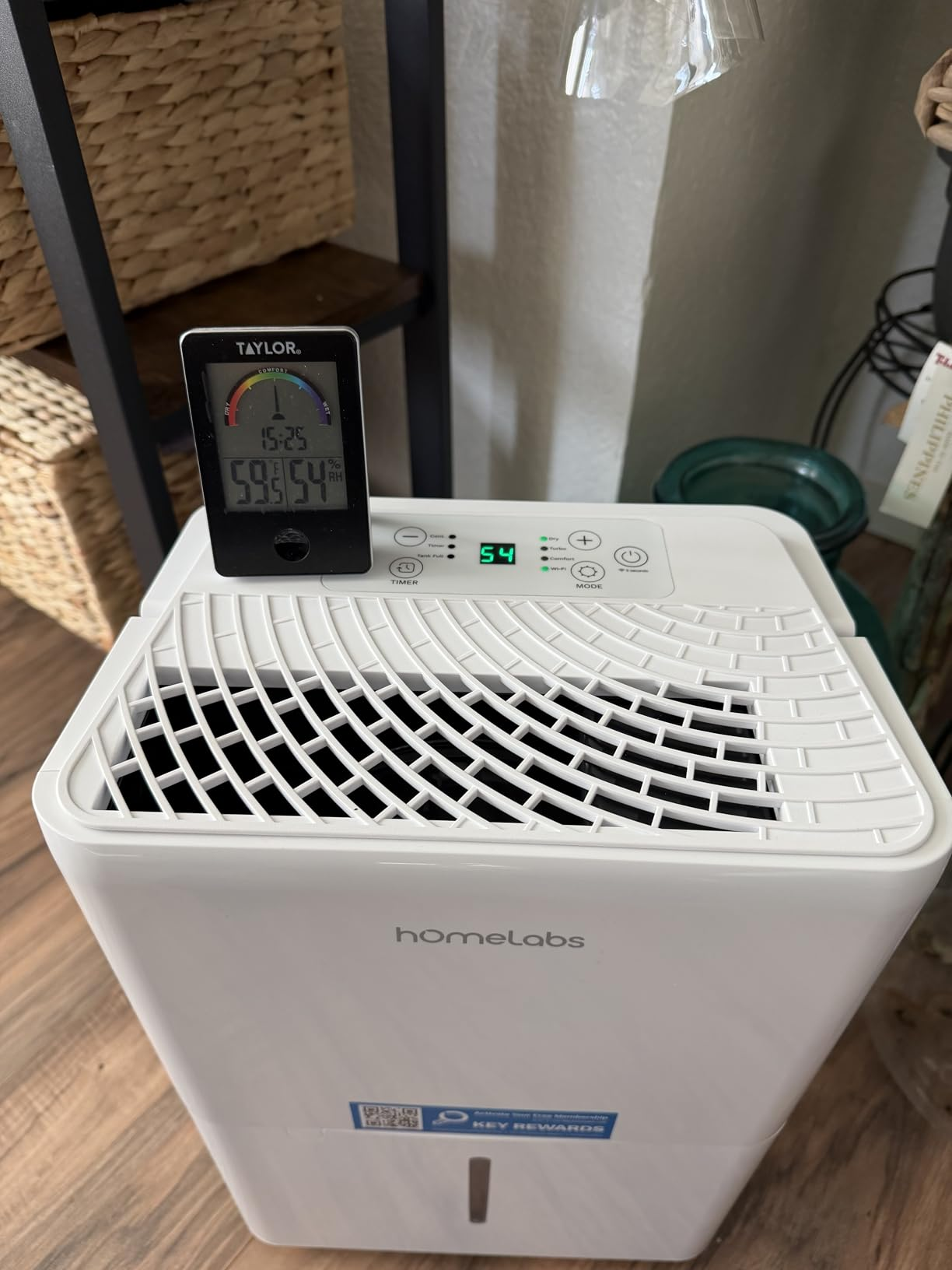
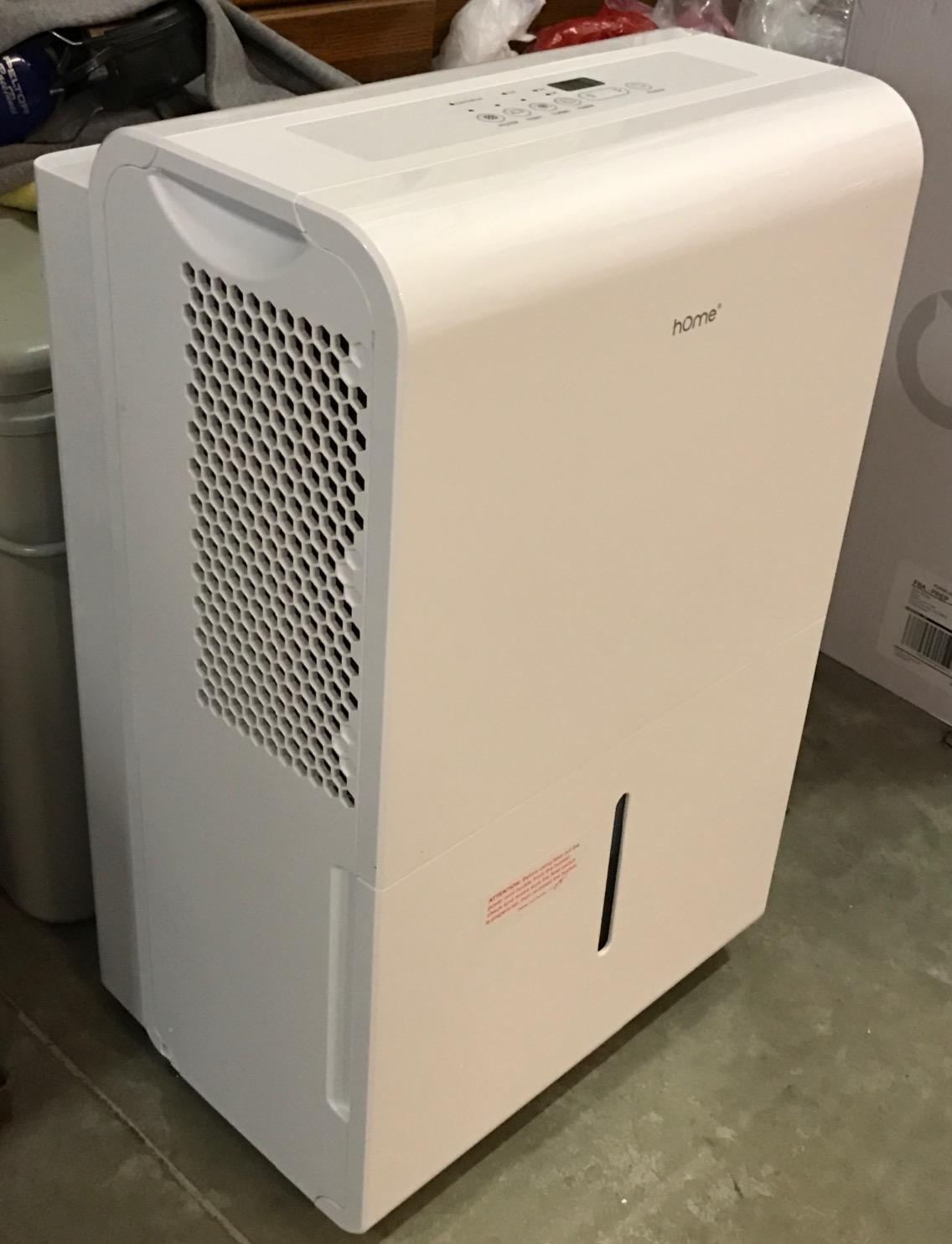
Built-in digital hygrometer on the hOmeLabs dehumidifier showing 54% humidity, matching the external Taylor hygrometer on top
GE 50-Pint with Built-in Pump - Best Built-in Pump

GE 50-Pint w/ Pump (ADHE50PWF)
Buy this when the water has nowhere to go but up. The built-in pump pushes condensate through a 16-foot hose and lifts it 15 vertical feet. If your basement has a floor drain, a simpler model does the same job.
Pros
- Built-in pump lifts water up to about 15 feet, so the drain can sit above the unit
- Smart Dry auto mode and strong airflow suit large open basements
- Larger 15-pint bucket than most for the days you skip the hose
Cons
- Pumps fail more often than simple gravity drains
- Around 50 dB on high is clearly audible
- Heavy to carry, and the Energy Star listing applies to the specific APHR50LB SKU
Specifications
When water has to travel uphill
Buy this one when the water has nowhere to go but up. The GE's internal pump pushes condensate through a 16-foot hose and lifts it as much as 15 vertical feet, so it can drain into a utility sink or out a high window that a gravity hose could never reach. That pump is the entire reason this model exists, and it is the only option on this list where you do not need to think about floor drains or downhill runs.
Smart Dry and the feature set
Its Smart Dry mode runs the fan to match the room rather than drying the air in its own corner, which helps in a big, open basement where stale pockets of moisture linger far from the unit. Underneath the features it is a serious wet-space machine: 50 pints a day, a generous 15-pint bucket for manual use, auto-defrost for cool rooms, and a filter reminder plus a full-bucket alarm. The 15-pint bucket is bigger than most competing units, which gives you more runway on the days you skip the hose entirely.
The pump tradeoff
Across this category, the pump is the part that fails first, so a pump model trades some long-term reliability for the convenience of uphill drainage. If your basement already has a floor drain below the unit, a cheaper bucket-and-gravity model does the same job with one less thing to break. Buy the pump because you need the lift, not because it sounds more capable.
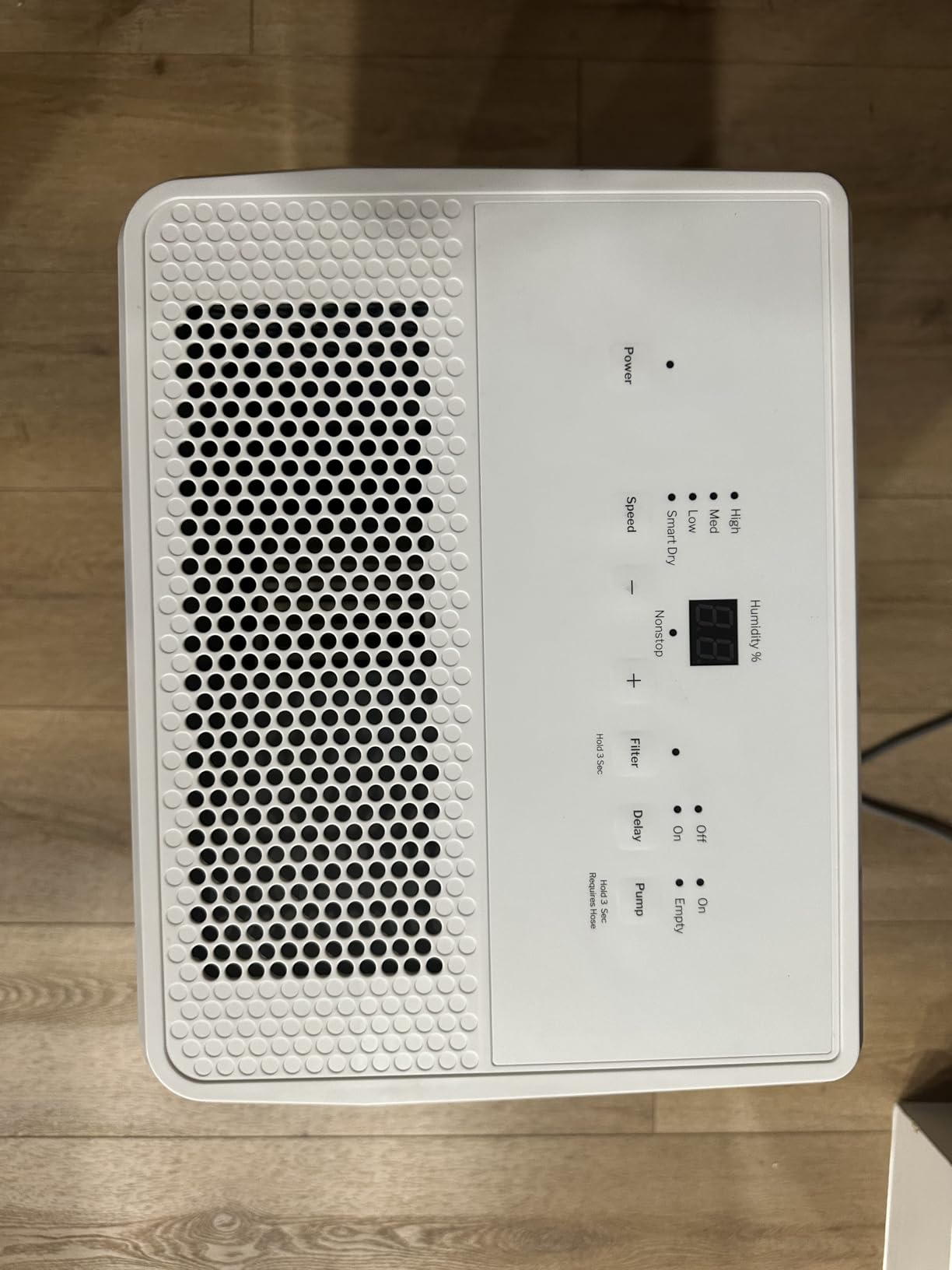
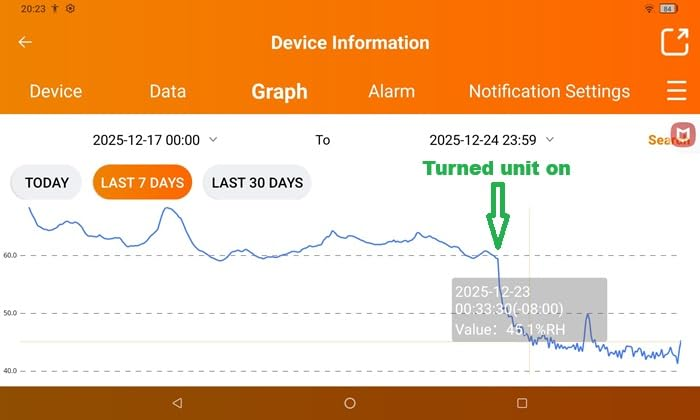
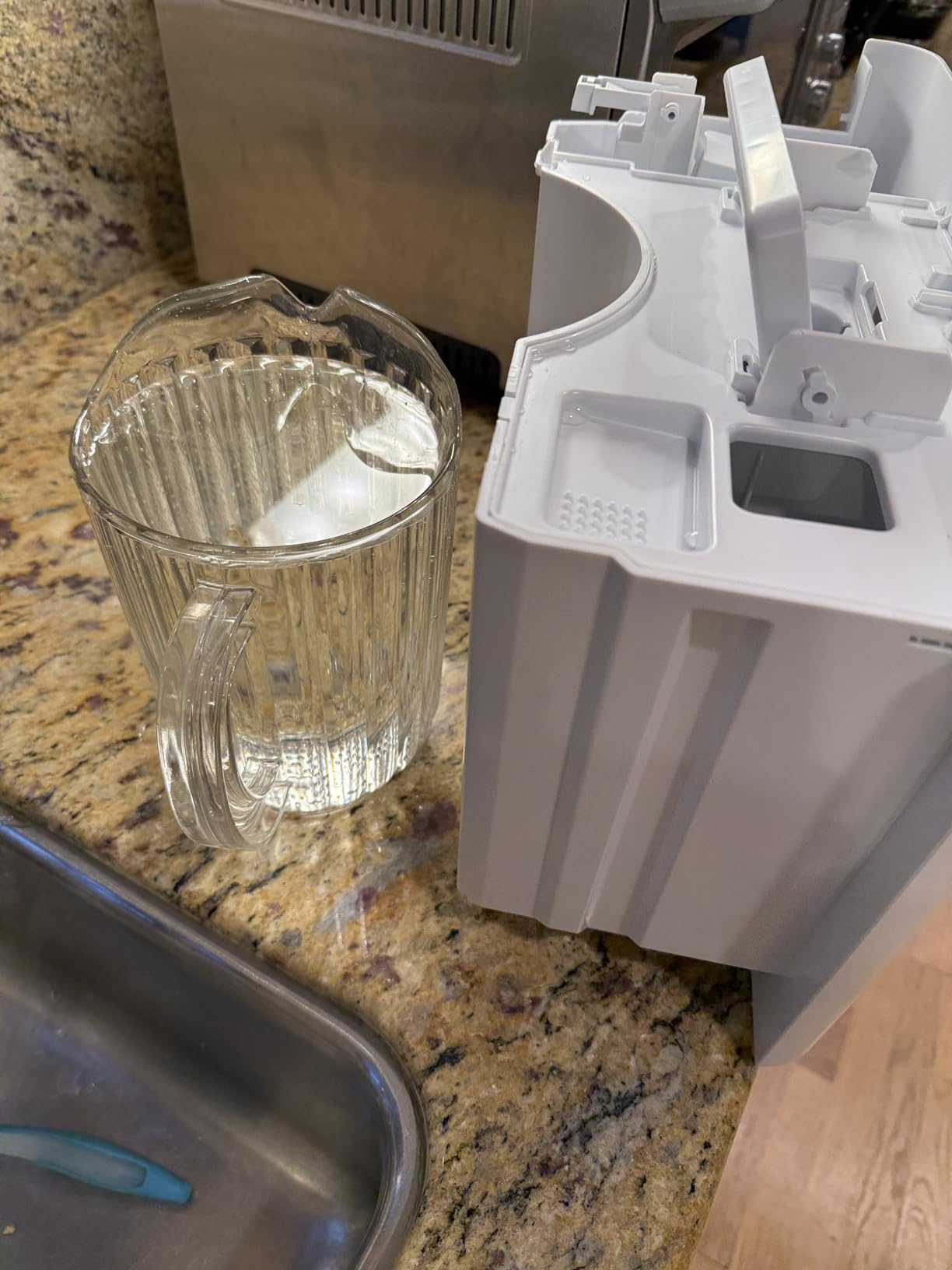
Top control panel of the GE dehumidifier showing settings, display, and circular air outlet grille
Frigidaire FHDD5034 50-Pint - Best App Control
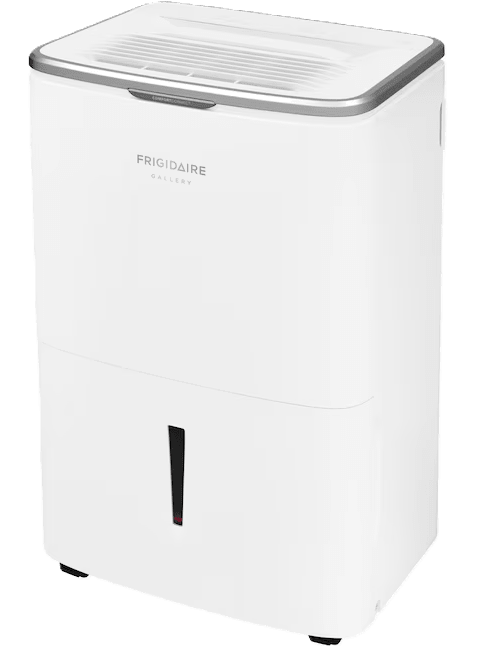
Frigidaire FHDD5034 50-Pint
The traditional-shape pick. Known brand, Wi-Fi, Alexa, Google control, and R-32 refrigerant with a lower climate impact. Not the quiet or efficient one, but the familiar, connected one.
Pros
- Modern R-32 refrigerant with a lower global-warming impact
- Large 2.7-gallon bucket and a familiar, sturdy cabinet
- Full app and voice control, plus operation down to 41°F
Cons
- Among the loudest picks here at roughly 62 dB
- No pump, and the app can be finicky to pair
- A notch less efficient than the Cube
Specifications
The familiar box with full connectivity
The traditional-shape pick, and the one to get if app control matters to you. Frigidaire became the default "normal-looking" 50-pint after Honeywell left the large-capacity market. It runs on R-32 refrigerant, which carries a far lower climate impact than the R-410A inside most rivals, including the Midea Cube. That matters if you care about the environmental footprint of your appliances, and it is the only unit on this list running the newer gas.
R-32 refrigerant and a big bucket
The 2.7-gallon bucket means fewer trips to the sink than average, and the auto-defrost operates down to 41°F, so it handles a cool basement better than units with no stated low-temperature limit. You get Wi-Fi, Alexa, and Google voice control, plus a washable filter with a cleaning alert that tells you when it is time to rinse. For a main-floor or basement job where you want a known brand and a phone app more than the last word in efficiency, it is the safe call.
Louder than most, and the app can be stubborn
Independent testing put its efficiency around 2.0 liters per kilowatt-hour, a step behind the Cube, and measured it among the louder units, in the low 60s dB at three feet on high. The app can be stubborn to connect on initial setup. So it is not the quiet or efficient option, but it is the connected, familiar one.
Midea Cube 35-Pint - Best Mid-Sized
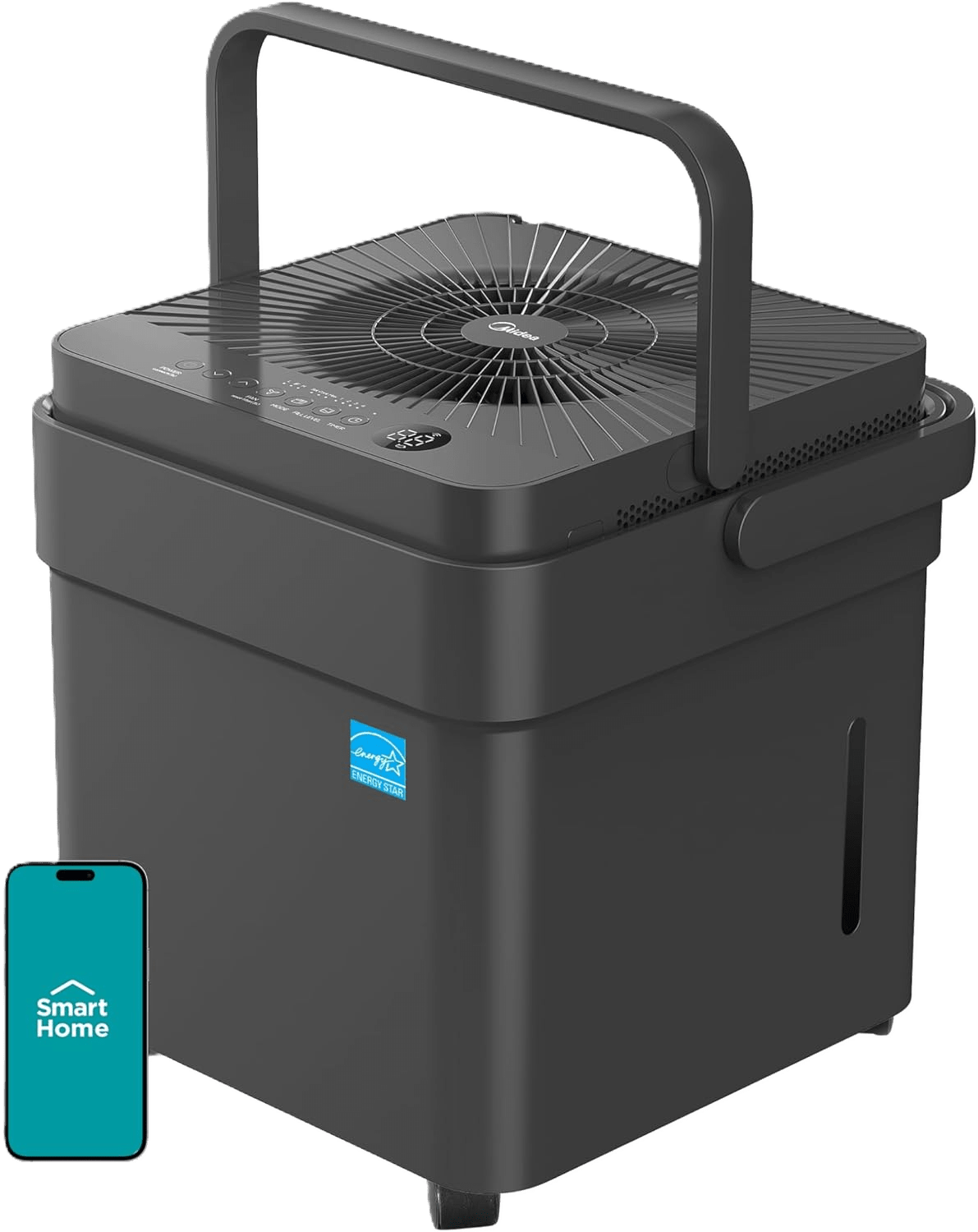
Midea Cube 35-Pint
The same design and efficiency as the basement Cube, sized for a floor you actually live on. Right for a damp main floor, large bedroom, or ground-level apartment.
Pros
- Best-in-class efficiency and the stacking design in a living-room size
- Raised bucket enables a gravity hose without a pump
- Quiet on low and slow to fill thanks to the large reservoir
Cons
- Older R-410A refrigerant
- Same early-failure reports as the rest of the Cube line
- Heavier than most rivals its size, and priced at a premium
Specifications
The Cube, sized for a floor you live on
The same design and efficiency as the basement Cube, scaled down for a space where a 50-pint machine is overkill that just spins your meter. A 35-pint unit is right for a damp main floor, a large bedroom, or a ground-level apartment. This is the capacity most testers point to once a room runs past 500 square feet, and the Cube form factor gives it the same stacking bucket and gravity-hose trick that makes the 50-pint version so practical.
Living-room-ready efficiency and noise
You get the same measured efficiency near 2.19 L/kWh and the same livable 45 dB on low that makes it tolerable overnight in a bedroom. The stacking bucket raises the tank for gravity draining, so you can run a hose to a floor drain or a sink without a pump, even in a living space where pump noise would be a dealbreaker. The large reservoir means you are not emptying a bucket every few hours, which matters a lot more on a floor where you actually see and hear the machine all day.
Same weaknesses as the bigger Cube
It shares the 50-pint line's two weaknesses: the older R-410A refrigerant and the same minority reports of early icing failures. Keep the filter clean, give it room to breathe, and buy from a seller with a fair return policy.
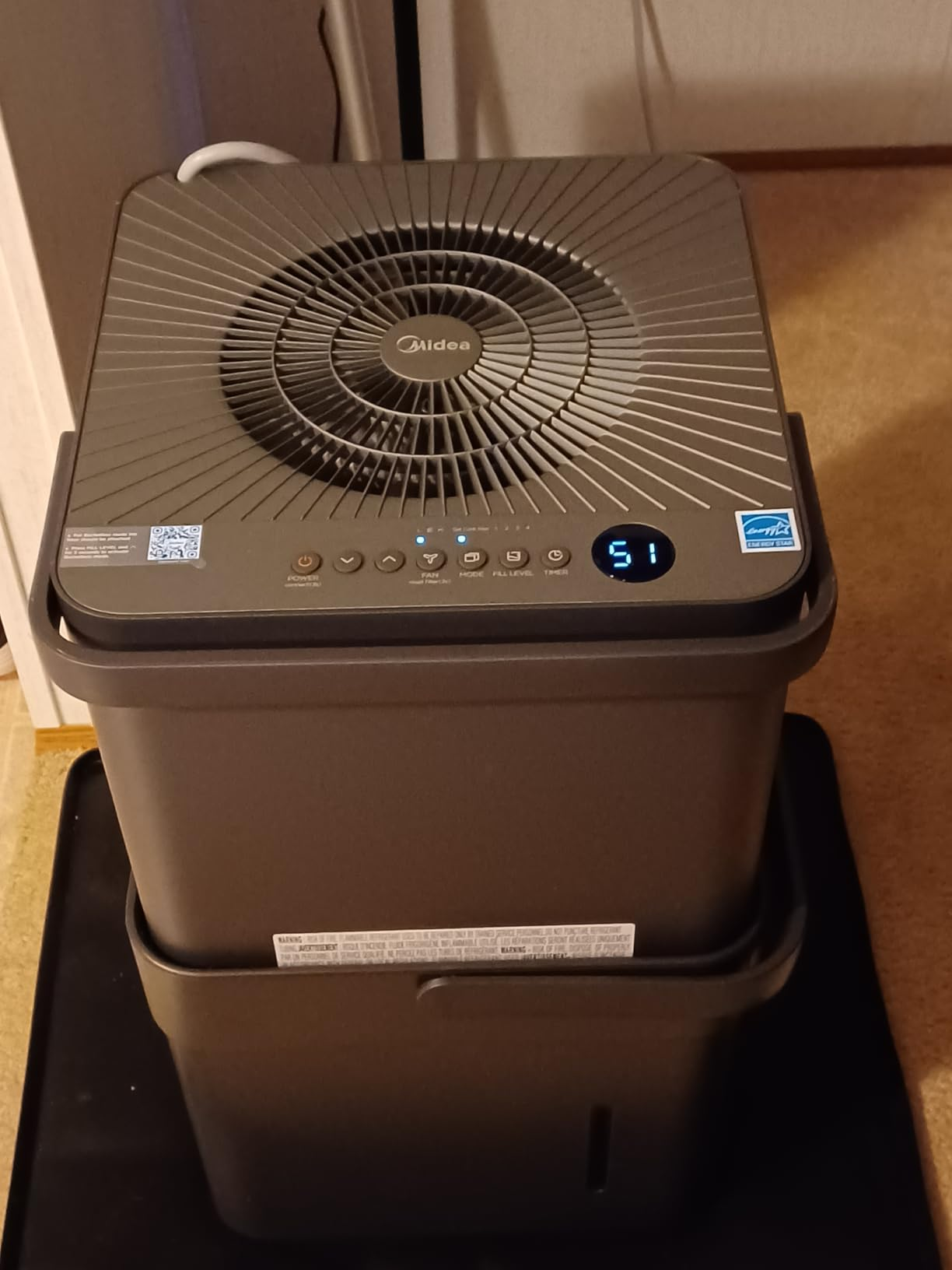
Top-down view of the Midea Cube dehumidifier showing the radial fan grill and digital controls display reading 51
Waykar 34-Pint (PD160B) - Best Budget

Waykar 34-Pint (PD160B)
The budget unit for a bedroom, small office, or craft room. Light, quiet, and cheap. Just read the spec sheet with clear eyes: the pint number and noise claims both lean on generous math.
Pros
- Strong value at roughly $160 to $176
- Light at 32 lb and quiet at 40 to 43 dB
- Includes auto-defrost and a washable filter
Cons
- The 34-pint number is measured at 95°F/90%, so real capacity is smaller
- Not Energy Star certified despite the title claim
- Small 0.66-gallon tank, and a 33 dB headline its own FAQ contradicts
Specifications
Light, quiet, and easy on the wallet
The Waykar is the budget unit that keeps selling: roughly $160 to $176, and light enough at 32 pounds to carry up the stairs with one hand. For a bedroom, a small office, or a craft room that just needs the damp taken off, it does the job without the bulk or the price of a basement machine. It includes auto-defrost and a washable filter, features you would normally have to spend more to get.
Genuinely quiet for a compressor unit
Waykar's own FAQ puts the noise at 40 dB on low and 43 dB on high, which is quiet enough to sleep through. For context, that is roughly the hum of a library or a quiet residential street at night. In a bedroom or a nursery, that noise profile matters more than raw pint capacity. The 6.6-foot gravity hose means you can set it up near a floor drain or bathroom sink and leave it running without touching the tank.
The spec sheet needs honest reading
The "34 pint" rating is measured at 95°F and 90% humidity, the most generous test there is, so its real output in a normal room sits well below a true 35-pint DOE unit; size it as a small-room tool, not a basement one. That same FAQ admits the unit is not actually Energy Star certified, even though "Energy Star" appears in the product title, and the 0.66-gallon tank is small, so a damp room means frequent trips unless you connect the hose.
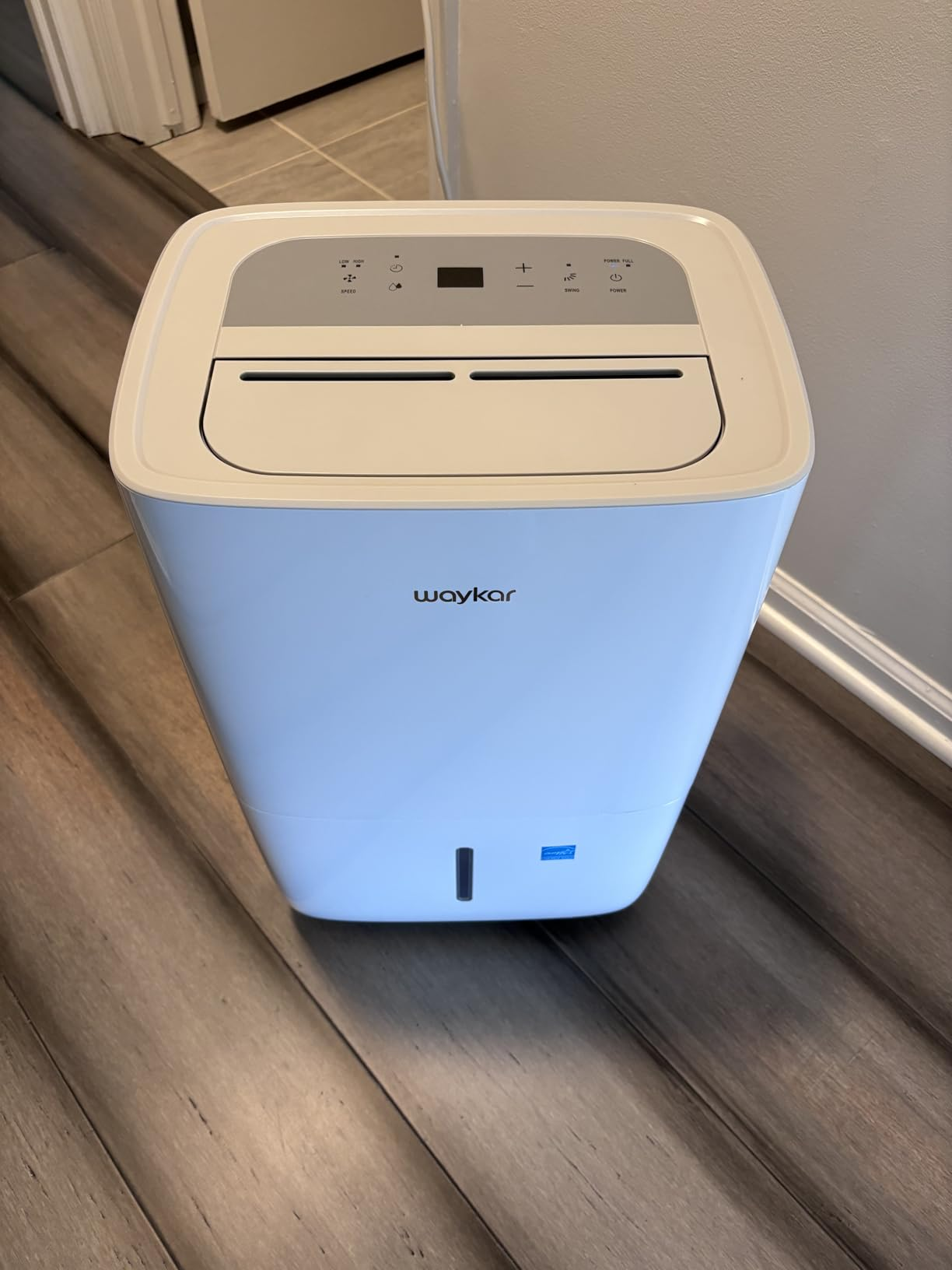
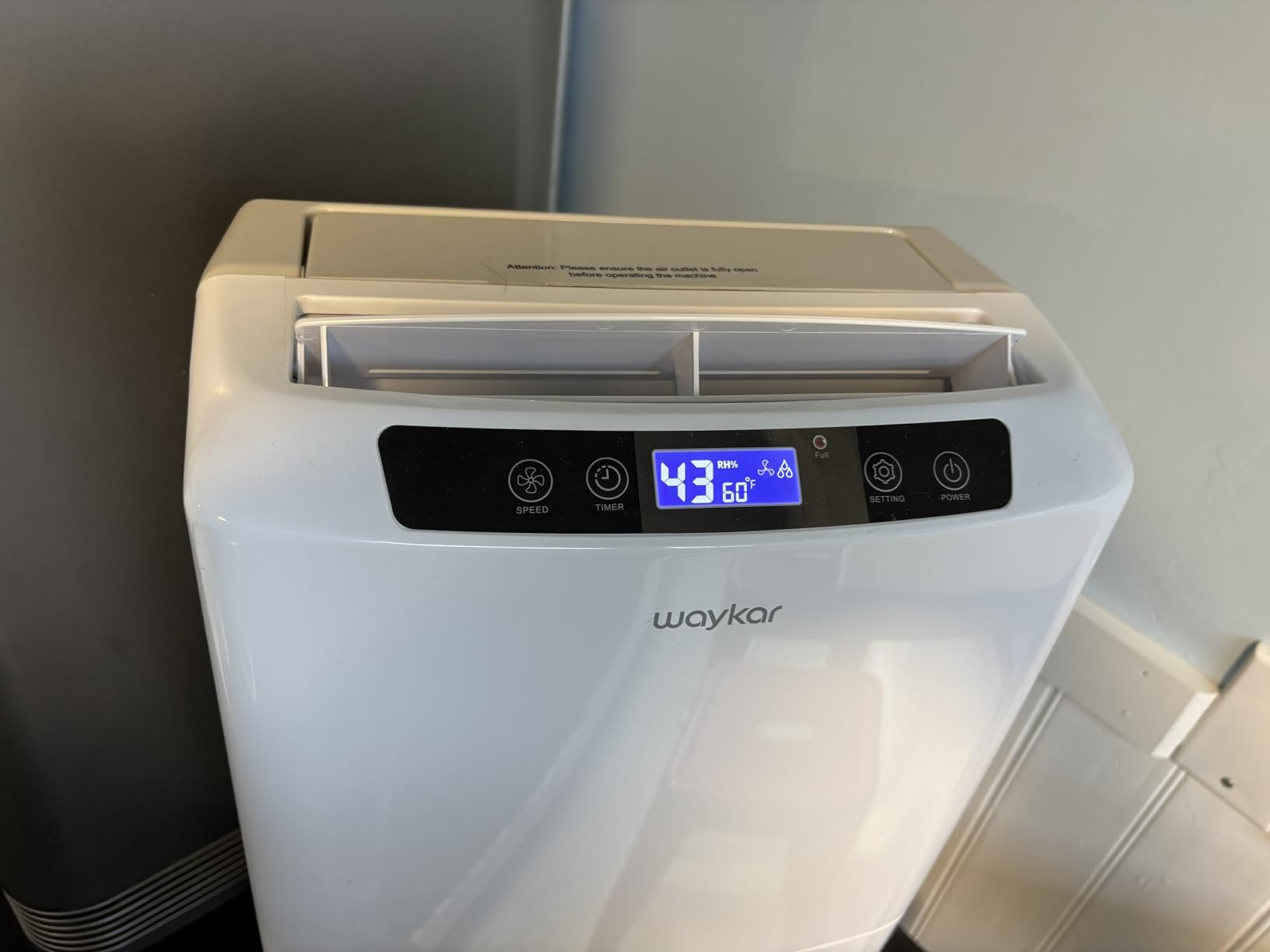
Front-facing view of the white Waykar dehumidifier showing the control panel and water level indicator window
Ivation 13-Pint (desiccant) - Best for Cold Rooms

Ivation 13-Pint (desiccant)
The small-room pick, and the only mini worth your money. A desiccant unit that keeps working in cold conditions where compressor models frost over and quit.
Pros
- Keeps working in cold rooms where compressor units freeze
- Tiny, light, and easy to move or store
- Far more capable than the Peltier minis it competes with
Cons
- Less efficient per pint, since it runs a heater
- Warms the room slightly
- Small tank needs frequent emptying, and it is not for large spaces
Specifications
A different technology for cold spaces
The small-room pick, and the only mini worth your money. Skip the cute $60 thermo-electric units; testing shows they cannot pull a real room down or hold it there. The Ivation is a desiccant unit, which dries the air with an absorbent wheel instead of a cold coil. That makes it small and light, about 14 pounds, and it keeps working in the cold, exactly where compressor units frost over and quit. For a closet, a cold garage, a boat, or an RV, that cold-weather reliability is the whole selling point.
Surprisingly capable for its size
In a sealed-tent test it dropped humidity nearly as fast as machines twice its size, at about 53 to 54 dB. That puts it in the same noise range as the larger compressor units, but in a package you can tuck into a corner or carry one-handed. The gravity hose option means you can set it and forget it near a drain, just like a full-sized unit. Nothing else this size performs anywhere close.
Built-in tradeoffs of desiccant technology
A desiccant uses more electricity per pint than a compressor because it runs a heater, it warms the room a few degrees, and its small tank, under half a gallon, fills quickly. Run the gravity hose when you can. For the spaces where it fits, closets, garages, boats, and RVs, none of that matters.
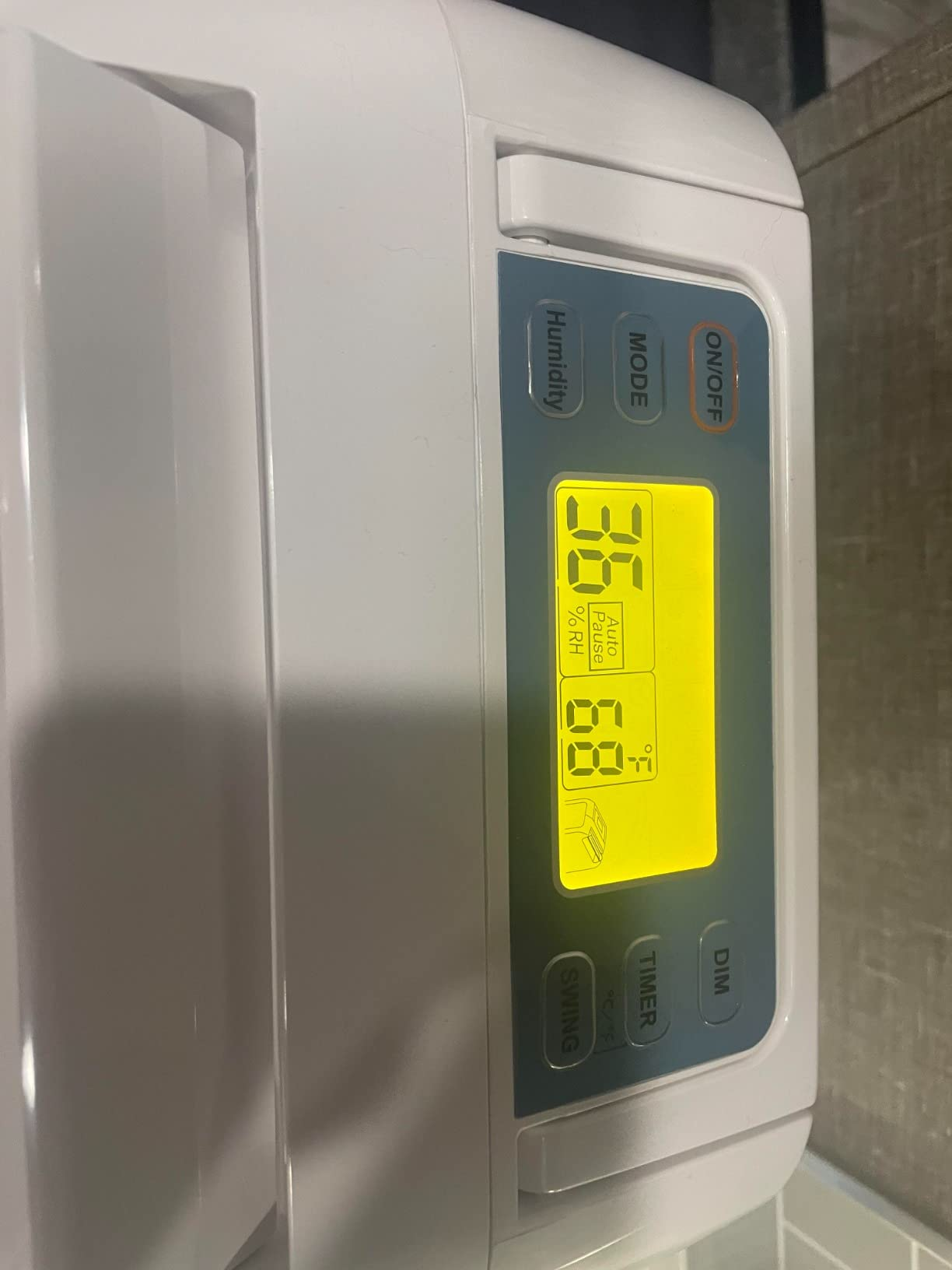
Bright yellow LCD control panel on the Ivation desiccant dehumidifier displaying 36% relative humidity and 68 degrees F
Dehumidifier or Air Purifier: Which One You Actually Need
They solve different problems with different physics. A dehumidifier runs warm, moist air across a cold coil so water condenses out and drips into a tank; it targets relative humidity. An air purifier pushes air through a HEPA filter that traps particles down to 0.3 microns at 99.97% efficiency, usually backed by an activated-carbon layer that grabs odors, smoke, and gas-phase chemicals; it targets particulate matter. Neither does the other's job. A dehumidifier will not capture pollen, and a purifier will not lower the humidity by a single point.
Buy a dehumidifier if you see or smell water:
- Condensation beading on windows or cold pipes
- A musty, earthy basement smell
- Visible mold or mildew on walls, grout, or stored boxes
- Wood floors, doors, or furniture that have swelled, cupped, or stuck
- A clammy feeling that lingers even when the room is cool
Buy an air purifier if your symptoms are about what is floating in the air:
- Seasonal allergies, with itchy eyes and a runny nose indoors
- Pet dander, or a household member who reacts to animals
- Dust that resettles within a day of cleaning
- Wildfire smoke or nearby construction dust
- Lingering cooking smells or other odors
Can you run both? Often you should, and a damp basement is the textbook case. Mold needs moisture to grow, so the dehumidifier is what actually stops new colonies by holding humidity below the threshold where spores take hold. But the spores already adrift from past growth are particles, and only a HEPA purifier will pull those down. The dehumidifier shuts off the water supply that feeds the mold; the purifier cleans up what is already in the air. One without the other leaves half the job done.
Getting the Most Out of a Dehumidifier
Placement comes first. A dehumidifier breathes through coils, pulling air in through the back or sides and pushing it out the top or front. Crowd it against a wall and you choke the intake, which drops its output and makes the compressor work harder for less water. Give it 6 to 12 inches of clearance on every side that has a vent, and set it somewhere central rather than jammed in a corner. The more freely air moves through it, the faster it dries the room.
Then dial in the target. The sweet spot for indoor relative humidity is 30% to 50%, and the EPA recommends staying below 60% to keep mold and dust mites in check. There is no prize for going lower. Drop below 30% and you are paying to dry air that is already dry, and you risk shrinking and cracking wood furniture, trim, and instruments. Climb above 50% and you hand mold the moisture it needs to multiply. Most units let you set a humidistat target; 45% is a safe, efficient set point for nearly any home.
Temperature is the trap nobody warns you about. The compressor units that make up most of this list rely on a cold coil, and when the room itself is cold, that coil drops below freezing and frost builds on it. A unit with no stated low-temperature limit starts icing over below roughly 65°F, then either cycles off to thaw, wasting hours, or keeps running while ice blocks the airflow and strains the motor. Models with auto-defrost rated to 41°F, like the Frigidaire here, handle a cool basement far better. But for a space that stays cold, an unheated garage or a 40°F cellar in winter, a desiccant unit like the Ivation is the better tool, because it dries with an absorbent wheel instead of a coil and has no coil to freeze.
Mistakes That Kill Performance (and the Machine)
Sizing it wrong, in either direction. A small unit assigned to a wet, full-size basement runs nonstop, never catches up, and wears out years early under the constant load. Go the other way with a 50-pint giant in a small bathroom and you mostly waste electricity for capacity you cannot use. Match the capacity to the space, remember that today's 50-pint rating is the old 70, and discount any pint number quoted at 95°F and 90% humidity.
Forgetting the filter. That washable screen is not decoration. Skip it and dust mats across the intake and then onto the cold coil, where it acts like a blanket. The compressor overheats, the unit short-cycles, and a machine that should last a decade dies in a few seasons. Rinse the filter every few weeks during heavy use; it takes two minutes and it is the single biggest thing you control.
Ignoring the drain. This is the quiet killer of results. A bucket fills faster than people expect, especially early on when a damp room is giving up its backlog of moisture. The unit hits a full tank, shuts itself off to avoid overflowing, and then sits dark for half the day while the humidity creeps back up. You think the machine is working; the room says otherwise. If your unit has a continuous-drain port, run a hose to a floor drain or sink. If the only drain is above the unit, that is the one case where a pump model like the GE earns its keep.
Bottom Line
Match the machine to the room and the climate: a Midea Cube for most basements and living floors, the hOmeLabs or Waykar when budget leads and you read the spec sheet honestly, the pump-equipped GE when water has to travel uphill, the Frigidaire if you want a familiar box with an app, and a desiccant like the Ivation whenever the room stays cold.
Product Comparison at a Glance
| Product | Our Score | Brand | Capacity (pints/day) | Coverage (sq ft) | Noise (dB) | Drain Type | Energy Star | Action |
|---|---|---|---|---|---|---|---|---|
#1Midea Cube 50-Pint | 9.5 | Midea | 50 (2019 DOE) | Up to 4,500 | 45 low / ~54 high | Stacking bucket / gravity hose | Yes (Most Efficient) | |
#2hOmeLabs 50-Pint Wi-Fi | 8.8 | hOmeLabs | 50 (at 80°F/60%) | Up to 7,000 | ~53 rated / ~58 tested | Bucket / gravity (pump separate) | Yes | |
#3GE 50-Pint w/ Pump (ADHE50PWF) | 8.5 | GE | 50 (2019 DOE) | Up to 5,000 | ~50 high | Bucket / gravity / built-in pump | Yes (APHR50LB variant) | |
#4Frigidaire FHDD5034 50-Pint | 8.3 | Frigidaire | 50 (2019 DOE) | Up to 4,500 | ~62 high | Bucket / gravity hose (no pump) | Yes | |
#5Midea Cube 35-Pint | 9.2 | Midea | 35 (2019 DOE) | Up to 3,500 | 45 low / ~54 high | Stacking bucket / gravity hose | Yes | |
#6Waykar 34-Pint (PD160B) | 7.8 | Waykar | 34 (at 95°F/90%) | Up to 2,000 | 40 low / 43 high | Small bucket / gravity hose | No | |
#7Ivation 13-Pint (desiccant) | 8.5 | Ivation | ~12 (desiccant) | Up to ~400 | ~54 high | Small bucket / gravity hose | No (desiccant) |