

Our Picks
Introduction
Robot vacuums crossed a line sometime in late 2025. They stopped being autonomous dustbusters and started becoming actual cleaning machines. The 2026 flagships can mop dried pasta sauce off tile, climb over bathroom thresholds that used to require human intervention, and in one case, physically pick up the socks you left on the floor.
That progress came with a price tag to match. Every robot on this list costs over $1,000, and one carries a sticker price north of $2,500. At that spend, "good enough" is not the goal. You need to know exactly what each machine does better than the others and where it falls short, because each of these four flagships made different engineering bets.
Narwal bet on mopping. Roborock bet on adaptability (and, separately, on a robotic arm). Dreame bet on fitting under your couch. Those are fundamentally different design philosophies, and the right pick depends entirely on your home and your priorities.
This comparison covers the Narwal Flow 2, Roborock Saros 20, Dreame X60 Ultra, and Roborock Saros Z70. Every spec cited here comes from manufacturer documentation, third-party testing labs, or independently measured data. Where a number is unverified, it is noted.
What Actually Changed in 2026
The suction arms race plateaued
In 2024, flagship suction hovered around 11,000-12,000 Pa. By 2025 it hit 18,000 Pa. This year's crop ranges from 22,000 Pa (Saros Z70) to 36,000 Pa (Saros 20). Those numbers are big, but the real-world difference between 31,000 Pa and 36,000 Pa on a hardwood floor is negligible. Suction matters most on carpet, and even there, diminishing returns kick in hard above 20,000 Pa for standard residential pile heights.
Mopping got serious
This is where the actual gap opened. Narwal's rolling track mop maintains constant surface contact and self-refreshes, which means it is not just smearing dirty water around after the first two feet. Roborock and Dreame still use spinning pads, but both now wash those pads with water at or above 200°F, which helps with sanitation if not with mechanical scrubbing force. The base stations on all four models auto-wash, dry, and refill. That used to be a premium feature. Now it is table stakes.
Navigation dropped the bump
All four robots here use AI-based obstacle recognition. The Saros 20 and Z70 use Roborock's StarSight 2.0 system with solid-state sensors and no protruding LiDAR tower. The X60 Ultra physically retracts its LiDAR turret to sit flush. The Flow 2 relies on dual RGB cameras and a vision-language model. The common outcome: these robots no longer need to bump into furniture to map a room, and they can identify shoes, cables, and pet waste before making contact.
Narwal Flow 2 - Best Mopping Performance

Narwal Flow 2
The Flow 2 is built specifically for homes dominated by hardwood or tile. Its track-style crawler mop applies 12N of downward pressure, making it far better at scrubbing sticky kitchen spills than standard spinning pads. The base station sanitizes the mop with boiling-temperature water to prevent mildew odors, and uses a reusable dust bag system to eliminate recurring monthly costs. However, it stands 3.74 inches tall, meaning it will get blocked by low-clearance furniture, and it lacks an extendable brush for corners.
Pros
- Unique track-style crawler mop replaces standard spinning pads, applying 12N of downward pressure to scrub away dried, sticky spills
- Reusable dust bag system inside the base station cuts out recurring monthly subscription costs
- Base station washes the track mop with boiling-temperature water to sterilize the fibers and prevent mildew odors
- Dual zero-tangle brush handles pet hair without wrapping, reducing hands-on roll maintenance
Cons
- At 3.74 inches tall, it struggles to fit under low-clearance furniture and kick-toe cabinets
- Lacks an extendable side brush, leaving edge and corner coverage slightly behind competitors
- Navigation routing can behave oddly in complex room layouts compared to more mature software
Specifications
Scrubbing Hard Floors with Real Pressure
If your home is mostly hardwood or tile, you don't want spinning pads that just smear dirt. The Flow 2 uses a track-style crawler mop that applies 12N of downward pressure directly to the floor. It continuously feeds clean water while pulling dirty water back into the internal tank. This setup handles dried coffee drips and sticky mud on the first pass, saving you from doing a manual follow-up mop.
Base Station Sanitation and Saving Money
Maintenance is where most robot vacuums get gross. The Flow 2's dock washes the track with boiling-temperature water to sterilize the fibers and prevent mildew smells. Even better, it skips the proprietary disposable bags for a reusable dust bag system. You don't have to keep buying replacements just to keep the machine running. The dual zero-tangle brushes also work as advertised, keeping long hair from locking up the rollers.
AI Obstacle Avoidance
The NarMind 2.0 system uses dual RGB cameras to spot shoes and pet bowls. It adjusts its path in real-time, although the software routing can still get confused in complex layouts, leading to some weird paths. However, it avoids collisions well and runs quietly.
The Design Friction
At 3.74 inches tall, this robot is a thick puck. It won't clear low-clearance furniture or the kick-plates under kitchen counters. Since it doesn't have swinging arm brushes, you'll also have to handle corners and baseboards yourself. But if you have vast stretches of hard flooring and hate buying proprietary dust bags, the mopping performance here is the clear winner.
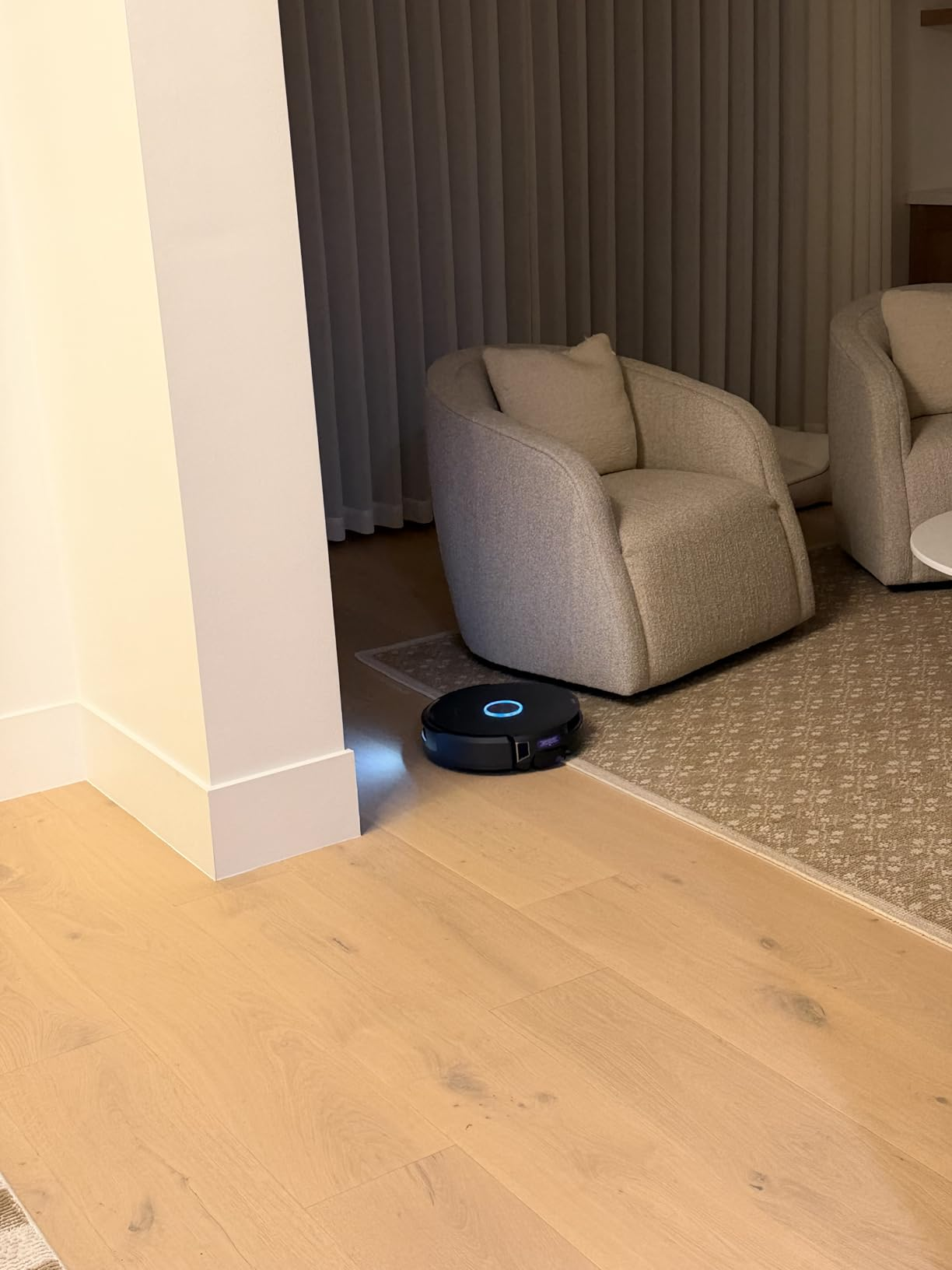
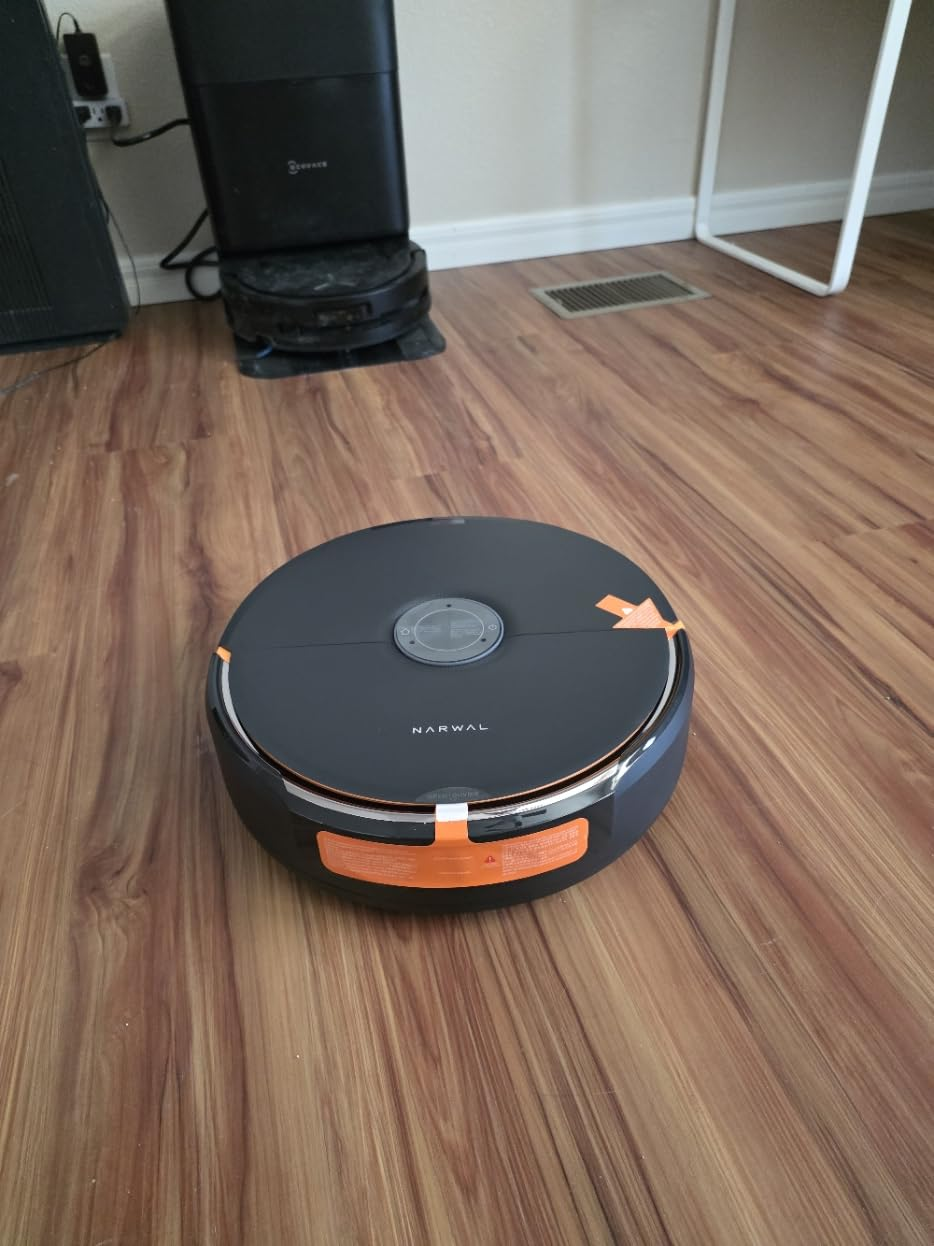
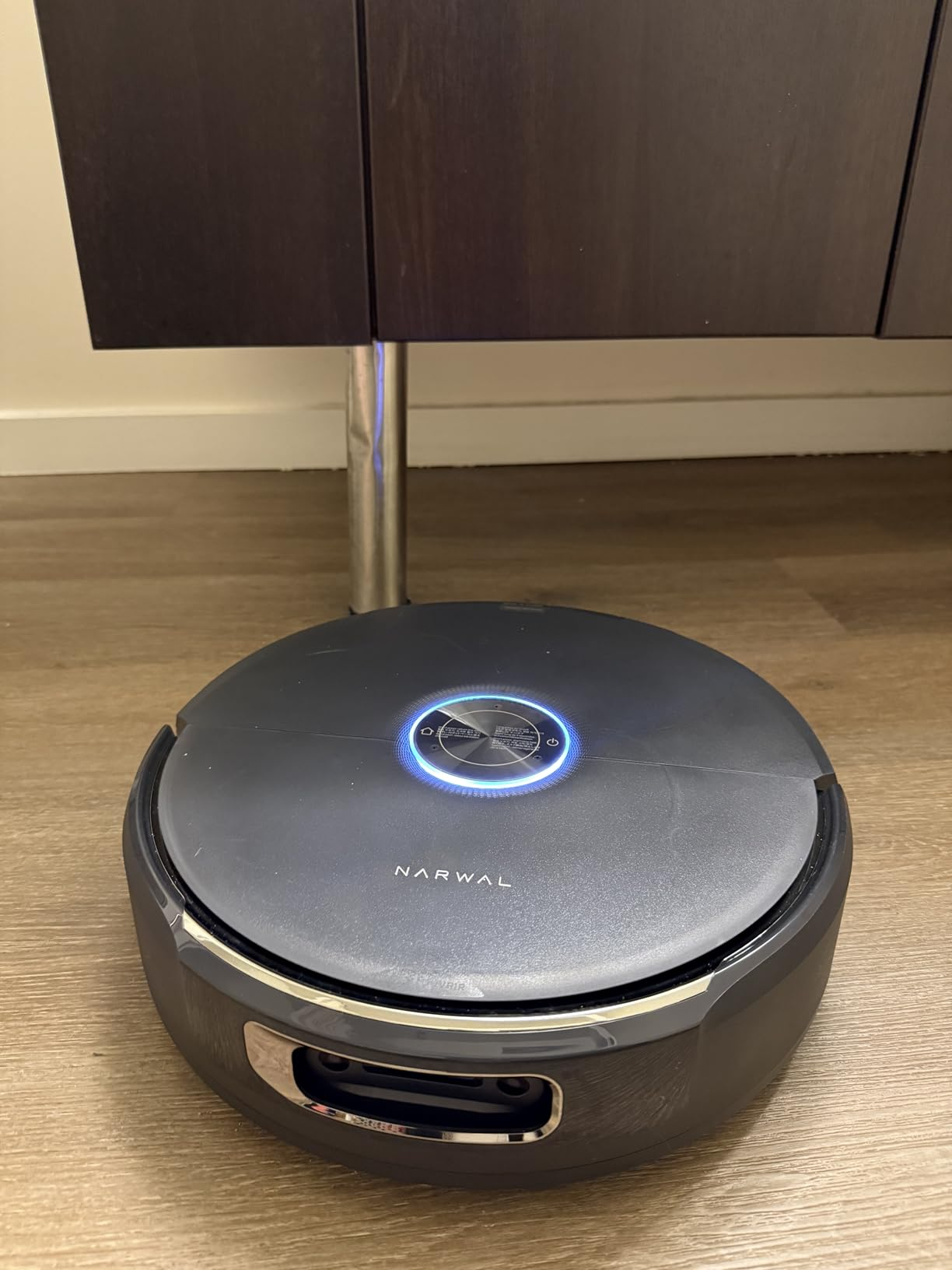
Narwal Flow 2 cleaning hardwood floor in a living room
Roborock Saros 20 - Best All-Rounder

Roborock Saros 20
The Saros 20 excels in tricky layouts with thick rugs and low-clearance furniture. By replacing the top LiDAR tower with the StarSight 2.0 camera system, it stays under 8cm tall to slide under low couches where dust gathers. The AdaptiLift Chassis lifts the unit over thick 3-inch plush rugs and tall thresholds that beach other robots. While the spinning mops won't match a dedicated track scrubber, the raw 36,000 Pa suction makes it a highly capable all-rounder for mixed-flooring homes.
Pros
- AdaptiLift Chassis lifts the unit over thick 3-inch plush rugs and tall room thresholds where other robots get stuck
- Ultra-slim design stands under 8cm tall by replacing the top LiDAR tower with the StarSight 2.0 camera system, sliding easily under low couches
- 36,000 Pa suction pulls deeply embedded dust and pet dander out of thick carpets
- Native Matter support allows direct integration into Apple HomeKit and SmartThings without extra bridge hardware
Cons
- Multi-pass cleaning logic makes cycles run long, draining the battery faster
- Spinning mop pads are competent but struggle with dried-on spills compared to track-style crawler mops
- The base station dock tray collects wet grime and requires regular manual scrubbing
Specifications
Climbing Thick Rugs and High Thresholds
The Saros 20 solves the biggest issue with automated vacuums: getting stuck on floor transitions. Its AdaptiLift Chassis lifts the entire machine to clear tall thresholds and roll onto thick 3-inch plush rugs. If you have rooms separated by high wooden transitions or deep carpet borders, this chassis climbs them instead of turning back or crying for help.
Ditching the LiDAR Tower for Low Furniture
Most flagships have a LiDAR hump on top that gets wedged under bed frames. Roborock replaced this with the StarSight 2.0 camera system, keeping the total height under 8cm. This ultra-slim design lets it glide under low couches and TV stands where dust actually gathers. Inside, the 36,000 Pa suction pulls debris out of carpet fibers effectively.
App Control and Smart Home Integration
The software is polished, and native Matter support means it connects directly to your existing smart home hub. You can schedule zones and set suction levels for individual rooms easily. The main downside is that the multi-pass cleaning logic takes a long time, running down the battery faster on big jobs.
The Maintenance Trade-off
While the vacuuming is top-tier, the spinning mop pads are merely average. They will refresh a floor but won't scrub away stubborn, dried stains. You also need to regularly clean the dock's bottom tray, as wet dust and dirt will collect there and smell if ignored. But for homes with complex layouts, rugs, and low furniture, the hardware design makes it worth the cost.
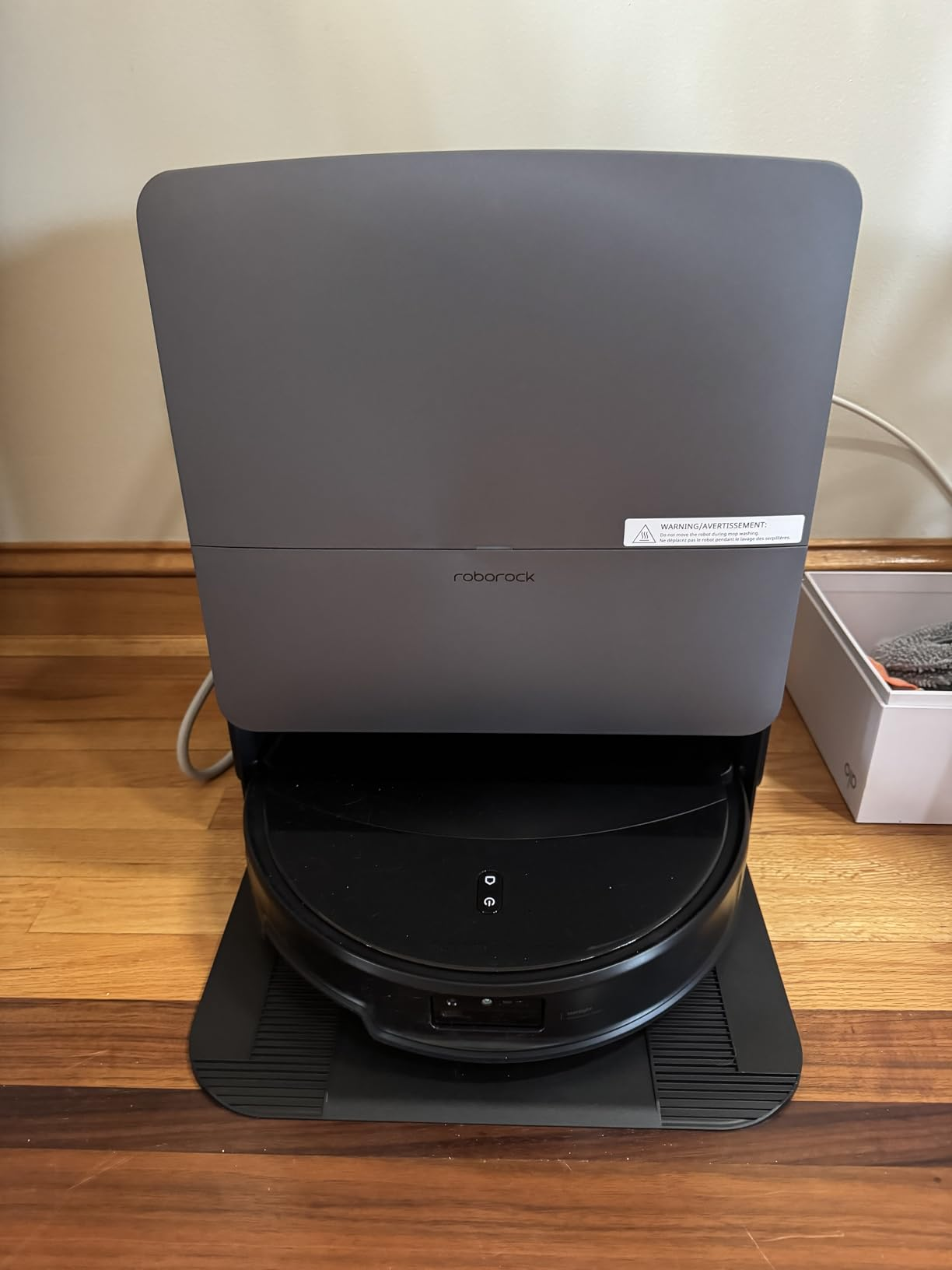
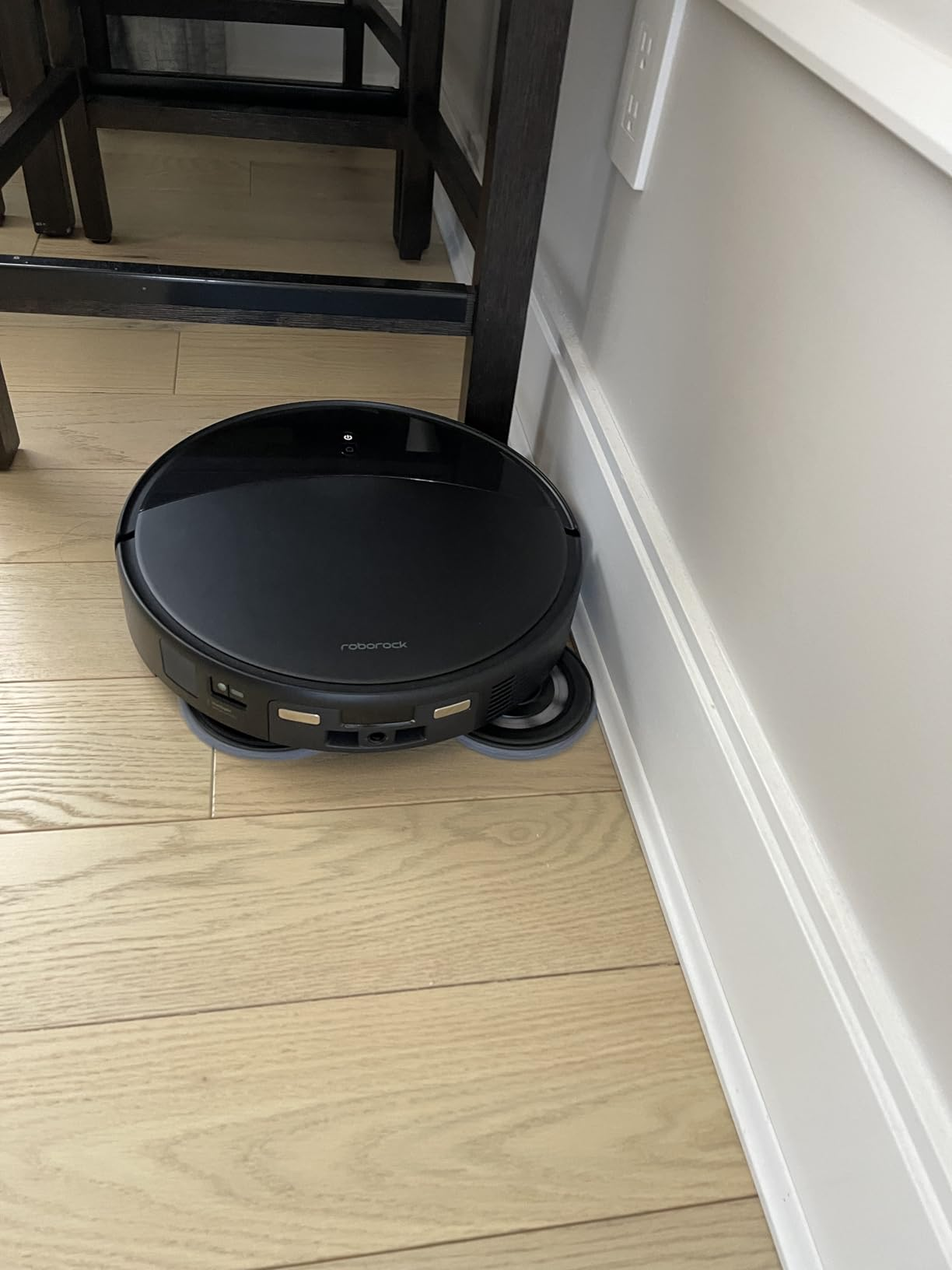
Roborock Saros 20 docked in base station
Dreame X60 Ultra - Best Under-Furniture Reach

Dreame X60 Ultra
The Dreame X60 Ultra is built for active households dealing with heavy kitchen traffic and shedding pets. Its active heated mopping uses hot water during the clean to dissolve dried pet drool and kitchen grease instead of smearing it. Despite its high suction power, it operates remarkably quietly, making it easy to run while working from home. However, it represents a heavy financial investment, and the cluttered mobile app can be frustrating to navigate.
Pros
- Active heated mopping uses hot water during the clean to dissolve dried pet drool and kitchen grease instead of just smearing it
- Operates remarkably quietly despite its high suction power, making it easy to run while working from home
- MopExtend arms push spinning pads out to clean directly against baseboards and corners
- Base station washes mop pads at 212°F to sanitize and prevent sour odors
Cons
- Represents a heavy financial investment, sitting at the top end of the price spectrum
- The Dreame Home app interface is cluttered and less intuitive than competitors
- Dirty water tank requires prompt emptying to prevent bad smells from settling in
Specifications
Heated Water vs. Kitchen Grease
Most robot mops drag a cold, damp pad across sticky floors. The Dreame X60 Ultra uses active heated mopping, applying hot water directly during the clean to melt away dried pet drool and kitchen grease. Paired with the extending mop pads that swing out to clean baseboards, it handles messes near the kitchen island far better than conventional systems.
Quiet Suction for Pet Hair
With massive suction power, this robot is designed for heavy shedding. But unlike loud industrial vacuums, it runs remarkably quietly. You can run it while working from home without it drowning out phone calls or meetings. It pulls dog hair and fine dust out of rugs easily, though you'll still have to clear the main roller brush of long hairs occasionally.
Software and Maintenance Struggles
The hardware is premium, but the software is a step behind Roborock. The Dreame app is crowded and hard to navigate, and mapping updates can sometimes glitch. You also have to empty the dirty water tank quickly; leaving dirty pet water in the sealed reservoir for a week will create an unbearable smell. It is also a very heavy financial investment.
The Buying Decision
If you have pets that shed, messy kids, and kitchen floors that get sticky, this heated mopping system is incredibly useful. It is expensive and the software needs polish, but the combination of quiet operation and active grease-cutting hot water makes it a powerhouse for busy homes.
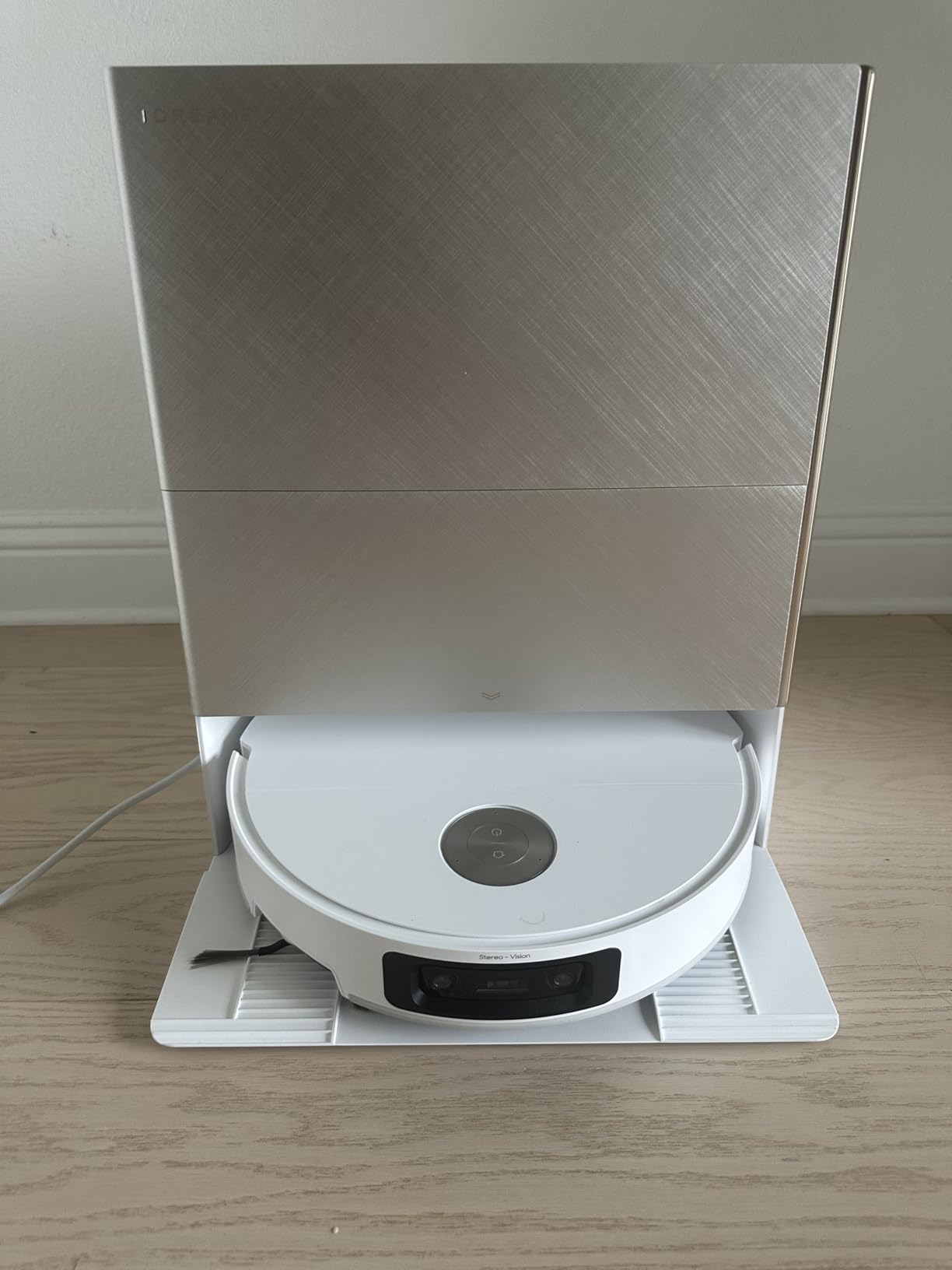
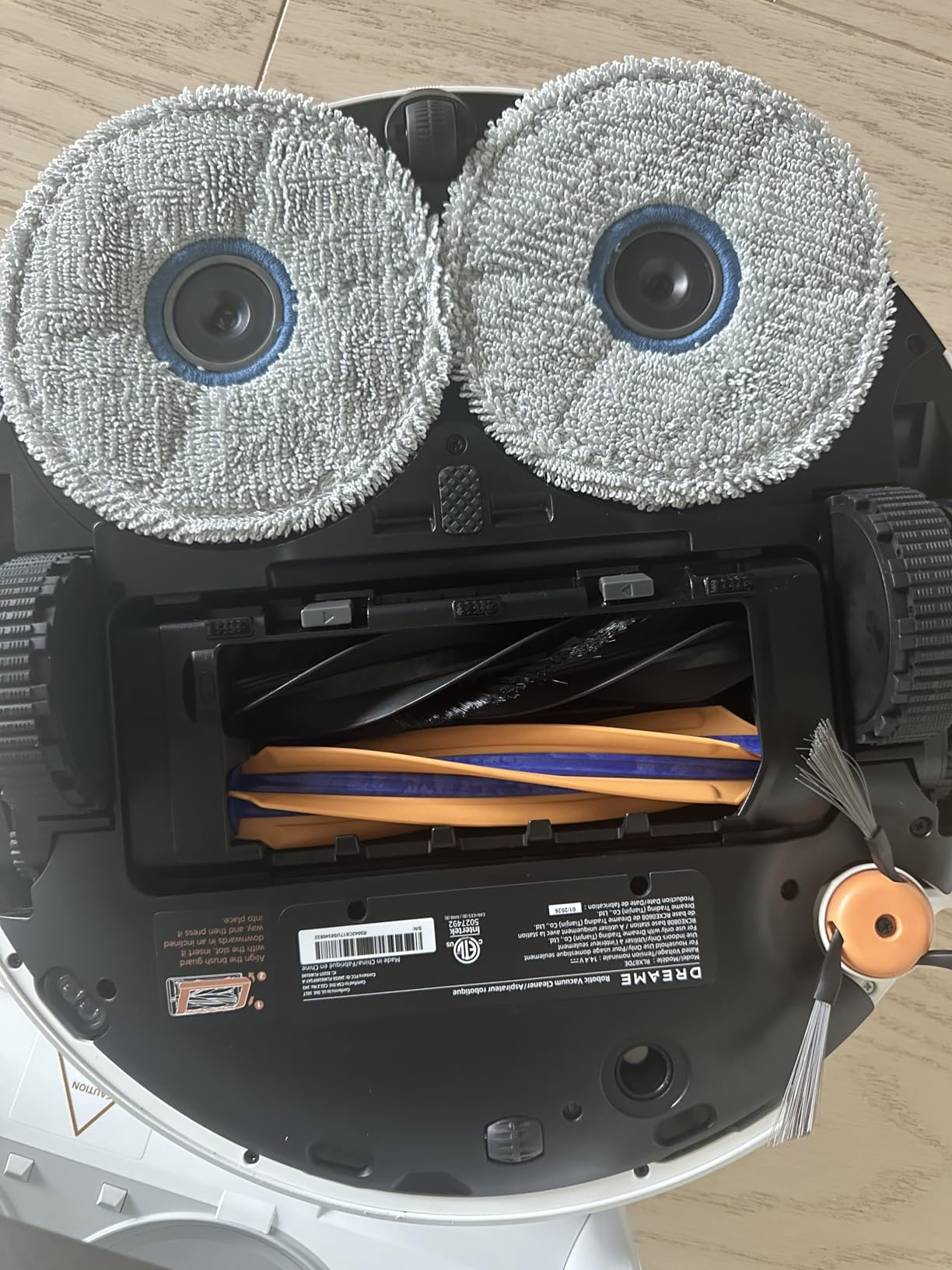
Dreame X60 Max Ultra docked in base station
Roborock Saros Z70 - The Future-Tech Outlier

Roborock Saros Z70
The Saros Z70 is designed for messy households with kids, toys, and scattered laundry. Its five-axis OmniGrip mechanical arm physically picks up stray socks and shoelaces, moving them aside instead of choking on them and shutting down. But this arm requires serious compromises: the internal dustbin is smaller, and it sacrifices raw suction power, offering only 22,000 Pa. If you want a hands-off machine that won't get stranded on clutter, it is a fascinating option, but pure cleaning performance lies elsewhere.
Pros
- Five-axis OmniGrip mechanical arm picks up socks, toys, and clothing, moving them aside instead of choking on them
- StarSight 2.0 camera navigation maps the home accurately without a protruding LiDAR tower
- Large 6,400 mAh battery provides up to 300 minutes of runtime for large layouts
- Manual app control allows you to direct the arm to pick up items and drop them in designated zones
Cons
- Offers only 22,000 Pa of suction, sacrificing raw cleaning power compared to simpler, cheaper models
- Fitting the mechanical arm means the internal dustbin is smaller and fills up quickly
- Folding arm mechanism adds complex mechanical parts that may present long-term durability issues
- Extremely high initial price tag compared to the actual cleaning performance it delivers
Specifications
The Sock-Picking Robot Arm
If you have kids or teenagers, your floors are probably covered in socks, charging cables, and small toys. The Saros Z70 handles this clutter with its OmniGrip mechanical arm. Instead of wrapping a stray sock around its roller brush and shutting down, the five-axis arm physically picks up the item, moves it to a drop zone, and cleans the floor underneath. It is a genuine step toward fully hands-off cleaning.
The Hardware Compromise
Fitting a five-axis folding arm inside an under-8cm robot requires serious design sacrifices. Because the mechanical arm assembly takes up so much space, the internal dustbin is significantly smaller than its competitors. It also sacrifices raw vacuum performance, peaking at 22,000 Pa of suction. While that is fine for dust on tile, it won't pull deep dirt out of thick carpets like simpler, high-suction models do.
Long-Term Durability and Cost
Adding a complex mechanical arm to an appliance that lives on the floor introduces new points of failure. The arm is slow, and its success rate on weirdly shaped toys is not 100%. The base station still handles auto-emptying, but you will find yourself clearing clogs or wiping sensors more often than you'd like. It also carries a massive price tag.
Is the Arm Worth the Trade-offs?
For messy homes where the pre-cleaning tidy-up is the main reason you don't run your robot, the Z70 is a relief. It climbs over small thresholds and moves clutter out of the way. But if your floors are usually clear and you just want deep carpet cleaning, the cheaper Saros 20 or Flow 2 will do a better job with less mechanical complexity.
How to Pick the Right One
Start with your floors
This is the main decision point, and most guides bury it. If your home is mostly tile or hardwood, mopping capability should dictate your purchase, not raw suction. The Narwal Flow 2 is built for this. Its track-style crawler mop uses 12N of downward pressure to scrub floors rather than just dragging spinning pads. The base station sterilizes the mop with boiling-temperature water to prevent mildew smells and features a reusable dust bag, saving you money over time.
If you have thick carpet or rugs, the Roborock Saros 20 is a better fit. Its 36,000 Pa suction pulls dirt out of fibers, and the AdaptiLift chassis raises the machine over thick 3-inch plush rugs and tall wooden thresholds where others get beached.
Consider your furniture
If you have low bed frames or couches, height is critical. The Roborock Saros 20 sits under 8cm tall because it replaces the LiDAR tower with a camera system, letting it reach tight spaces. If you need grease and dried drool cleaned, the Dreame X60 Ultra features active heated mopping that melts grime during the cleaning cycle, running surprisingly quietly while you work from home, though it is a massive financial investment.
Smart home integration
If you use HomeKit or SmartThings, the Roborock Saros 20 has native Matter support. The others rely on proprietary apps. For a fully integrated smart home, that avoids extra software friction.
What about the Z70?
The Saros Z70 is for messy households littered with toys, socks, and scattered laundry. The five-axis OmniGrip mechanical arm physically picks up clutter and moves it instead of choking on it. The catch is hardware compromise: fitting the arm means a smaller internal dustbin and lower suction at 22,000 Pa. If you want a hands-off machine and accept these tradeoffs, it is a fascinating option.
The Bottom Line
For hard floor homes that need stubborn messes scrubbed, the Narwal Flow 2 is the direct answer. The crawler track mop applies 12N of downward pressure, and the boiling-temperature wash keeps the base station from smelling like a wet dog, all while saving money with a reusable dust bag.
For homes with thick rugs, high thresholds, and low couches, the Roborock Saros 20 dominates. It stays under 8cm tall by removing the LiDAR tower and uses its AdaptiLift chassis to clear 3-inch rugs, backed by 36,000 Pa suction.
For busy homes with shedding pets and heavy kitchen traffic, the Dreame X60 Ultra offers active heated mopping to dissolve drool and kitchen grease. It operates quietly enough to run during working hours, though it requires a steep financial investment.
For messy households with kids and scattered laundry, the Roborock Saros Z70 uses its mechanical arm to move socks and toys out of the way. It is a slower clean with lower suction and a smaller dustbin, but it saves you from pre-vacuum tidying.
Product Comparison at a Glance
| Product | Our Score | Brand | Suction Power | Mop System | Battery | Height | Price (MSRP) | Best For | Action |
|---|---|---|---|---|---|---|---|---|---|
#1Narwal Flow 2 | 9.3 | Narwal | 31,000 Pa | FlowWash Track Mop | 7,000 mAh / 275 min | 3.74 in (95 mm) | $1,499 (often $1,099) | Hard Floor Mopping | |
#2Roborock Saros 20 | 9.2 | Roborock | 36,000 Pa | Dual Spinning Pads | 6,400 mAh / 200 min | 3.14 in (79.8 mm) | $1,599.99 | Complex Layouts & Carpets | |
#3Dreame X60 Ultra | 9.1 | Dreame | 35,000 Pa | Dual Omni-Scrub + MopExtend | 6,400 mAh | 3.13 in (79.5 mm) | $1,499.99 | Low-Clearance Furniture | |
#4Roborock Saros Z70 | 8.5 | Roborock | 22,000 Pa | Dual Spinning Pads | 6,400 mAh / 300 min | 3.14 in (79.8 mm) | $2,599 (street ~$1,300) | Early Adopters & Tech Enthusiasts |