
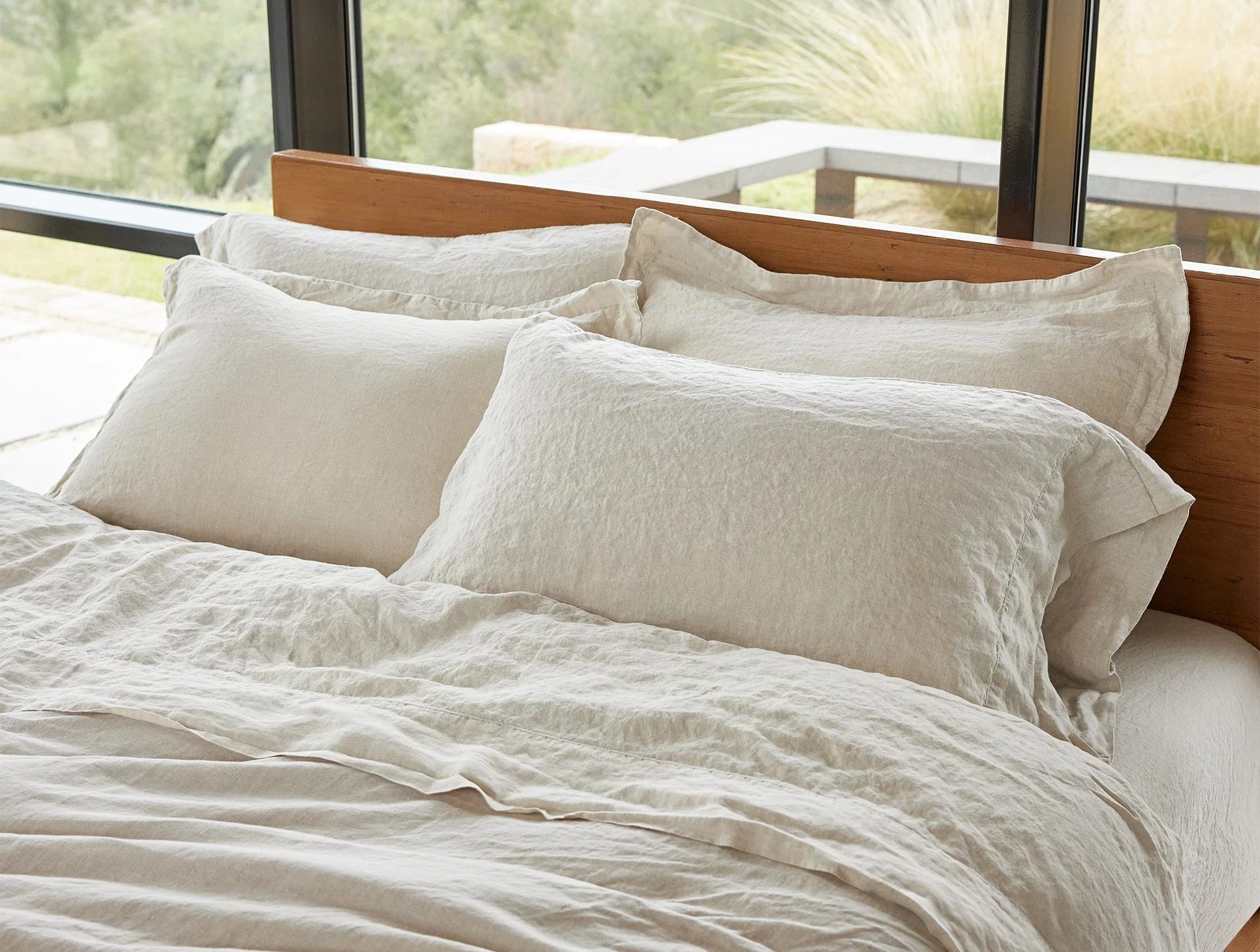
Our Picks
Introduction
Your bed is your haven. It’s a place of comfort and privacy, where you are free to doomscroll on Instagram for as long as you desire, or just rest your eyes and escape into dreamland. A bed holds significant importance in your life, and thus, it should reflect that accordingly. How, you may ask? Fret not, we’re here to give you a starting point.
A lot of people think a mattress is the most important aspect of your sleep, and they are right to some degree. But, the most essential part of your sleeping routine is— drumroll— the bedsheet. Bedsheets that cover said mattress and provide an extra layer of comfort. The most popular choices for bedsheets are the three mega competitors: bamboo, percale, and linen. When you’re picking out the right bedsheet, you don’t just focus on the cute patterns. This part is as important as selecting a green flag spouse: it can’t be based on looks alone.
You need to look for compatibility.
Bamboo, linen, and percale remain top choices, but they vary depending upon personal preferences, sensory feels, durability, and how cold or hot your body runs. We are here to guide you on the best material possible for you based on practical research, what the market says, and what the actual sleepers say.
How Bamboo, Linen & Percale Sheets Are Made
The name of the bedsheets may give it away at first glance, but let’s discuss how they are sourced, crafted by the weaver, and the excruciating process required to get the finished product into your local bedding stores.
Bamboo Bedsheets
There are three types of bamboo fabric, which differ in their manufacturing process. The manufacturing process is crucial when it comes to determining how cloud-like the bedsheets will turn out to be, with bamboo viscose/rayon being the softest and bamboo linen being on the stiffer end of the spectrum. However, in this article, we will reveal the process used to craft classic bamboo rayon sheets, as these are the ones we recommend when it comes to purchasing bamboo sheets in general.
Method:
- Source: Bamboo bedsheets are sourced from bamboo stalks, harvested from bamboo forests. The bamboo stalks are crushed and turned into usable material from which bamboo cellulose can be extracted.
- Chemical Dissolving (Viscose Process): The crushed bamboo pulp is dissolved in solvents like sodium hydroxide to break down its structure. The viscose solution is then pushed into an acid bath, where it solidifies into smooth, long fibres.
- Spinning: The extracted bamboo is spun using ring spinners to twist and draw it out into yarn. This turns the rough bamboo fibre into soft, durable bamboo yarn that can be used to create bamboo fabric.
- Weaving or Knitting: The bamboo yarn is then woven or knitted to craft bamboo fabric. The softness and durability of the fabric depend on this; with weaving creating rougher fabric, and knitting achieving maximum softness.
- Finishing: After the bamboo fabric has been woven or knitted, it’s bleached, then coloured with eco-friendly dyes. Often, the fabric is softened further for the purpose of crafting bedsheets that feel like you’re rolling around in the clouds.
Linen Bedsheets
Linen bedsheets, also known as flax bedsheets, don’t have as many categories as bamboo bedsheets. The production is pretty straightforward, though some variations are present in the finishing process. Regardless, the quality of the flax seeds may affect the final product. We recommend French flax, as European flax seeds tend to have longer grains that are typically required for smoothness.
Method:
- Source: Linen bedsheets are sourced from the stem of flax seeds. They are never cut; they are pulled up from the roots so as to preserve the length.
- Retting: Retting is a totally natural and biological process where the microorganisms break down the stalks’ pectin (starch contained in cell walls) and convert it into fibre.
- Scutching: The retted stalks are dried and then sent through rollers to crush their brittle core. This leaves behind only the usable plant fibres instead of the woody particles.
- Combing and Separating: The strong inner fibers are passed through metal combs to remove any sign of impurity, with the coarse strands being separated.
- Wet Spinning: The fibers are wet-spun into yarn. They are soaked in warm water to soften them up and create high-end sheets.
- Weaving: The yarn is typically woven on looms in a classic plain weave pattern, giving linen its crisp texture.
- Finishing: The fabric is washed, bleached, dyed, or mechanically softened through stone-washing to achieve the plush of linen bedsheets.
Percale Bedsheets
Percale bedsheets are the ones woven with a classic one-over-one pattern, making them breathable and lightweight. They are like linen bedsheets, categorized based on the quality of the cotton harvested to make them. This includes Egyptian and Supima cotton percale, with Egyptian being of the highest quality. Obviously, we recommend Egyptian percale when picking percale bedsheets as they offer the highest levels of comfort and durability.
- Source: Extra-long-staple cotton is preferred for percale sheets (basically cotton measuring 2 inches) and harvested with extreme care. Egyptian is considered superior in this regard, with Pima coming right under it.
- Combing: The cotton fibers are passed through intensive combing machines to separate the weaklings. This ensures uniformity and a smoother fabric to work with.
- Plain Weaving: Unlike the sateen weave, which uses a 3-over-1 pattern, percale uses a strict 1:1 ratio. Every single lengthwise crosses alternately over and under a crosswise. This locks in the fabric, which in turn increases durability.
- Singeing: The fabric is passed over flames to burn off stray fibers and lint, leaving a perfectly smooth surface.
- Washing & Bleaching: The fabric is washed to remove natural oils and bleached to create crisp white bedsheets.
- Finishing: If the crisp white sheets are to be dyed or printed, then they are passed through machines that may do so. Otherwise, the fabric rolls are sent out to seamstresses to be cut into precise dimensions.
Are They Eco-Friendly? The Environmental Check
Bamboo bedsheets: Bamboo bedsheets are widely considered sustainable because the raw bamboo plants are an eco-friendly source. However, bamboo viscose is where it gets complex; the harvesting is Earth-friendly, but the use of toxic chemicals may prove to have adverse effects. It’s definitely a trade-off for comfort.
Linen Bedsheets: Linen bedsheets are generally reviewed as environmentally friendly. As they are made from the flax plant, linen requires significantly less water and fewer pesticides to grow than conventional cotton. It is also 100% biodegradable.
Percale Bedsheets: Percale is a weaving method, not a particular material. But because cotton is often used to make them, we can judge whether it’s safe for the environment or not. Cotton that has a GOTS (Global Organic Textile Standard) label is the most eco-friendly option when it comes to percale bedsheets.
Durability: How Long Each One Lasts
Linen: Linen is made from the stalks of the flax plant, which are naturally on the sturdier end. The specialized spinning process only adds to this natural selection process, making it the most durable of the three. It can take decades before you even have to think about replacing your linen bedsheet. The statisticians review linen to be 30% stronger than cotton and 50% stronger than bamboo.
Cotton Percale: The unique method of percale ensures that your bedsheets won’t tear anytime soon. It can last a good 3 to 5 years before beginning to show signs of fading or fraying.
Bamboo Viscose: Bamboo viscose is the least durable of the three. It is vulnerable when wet and becomes easily receptive to tears and wear. Bamboo viscose bedsheets definitely show fading and pilling way faster, and come last (but not least) in the durability race.
Are the Markets Lying to You?
Everyone on the market is busy trying to make sales rather than actually providing you with what matters: comfort and reliability. That’s not on them, because business is a softer nickname for money-garnering. But we’re here to guide you on how to clock these scams and pick the right sheets at a good price.
Boasting About Thread Counts
Most companies love to advertise how their bedsheets use over 1,000 threads, but are actually just using low-quality fabric. Quality over quantity is the mantra to go by here. A bedsheet of 300-count Egyptian cotton threads is better than one using 1000-count short-staple cotton threads, and will endure significantly longer.
The Thread Count Sweet Spot
Experts have come up with a sweet range for thread count regarding the three types of bedsheets discussed in this article:
Cotton Percale: 300-600 is ideal, no less and no more. This range is perfect for a lovely balance of softness and durability.
Linen: The best thread count range for linen is between 80 and 150. As linen fibers are thicker, a lower thread count is preferred for breathability. If it’s too high, the fabric might be too stiff for comfort.
Bamboo: 250 to 350. That’s it. The ultimate sweet spot for the silkiest bamboo sheets you’ll ever sleep on. Since bamboo bedsheets are naturally dense, they don’t require those high thread counts that go well over 1,000.
Polyester Trying to Act Posh
Most companies try to sell their basic and cheap oil-based plastic fabrics by going around defining them as something totally different. Fancy names like ultra-fine microfiber or cooling blend are used to lead customers astray, when in reality, it’s just polyester, which is hell to sleep on.
GSM Lying in Linen Sheets
The marketing myth is that a higher GSM automatically equals better quality. It’s the same as boasting about a higher thread count, but one must know: huge numbers don't mean good stuff! GSM indicates how the bedsheets will perform in terms of breathability, with a GSM on the lower end (120-160) being the most air-permeable.
What to Buy
Market’s best sheets are laid bare at your feet. We compiled the best bedsheets, ranging from bamboo, linen, and cotton percale. These are bedsheets that have earned a name for themselves among the sleeping connoisseurs.
California Design Den Cotton Percale — Best for Crisp, Cool Sleep
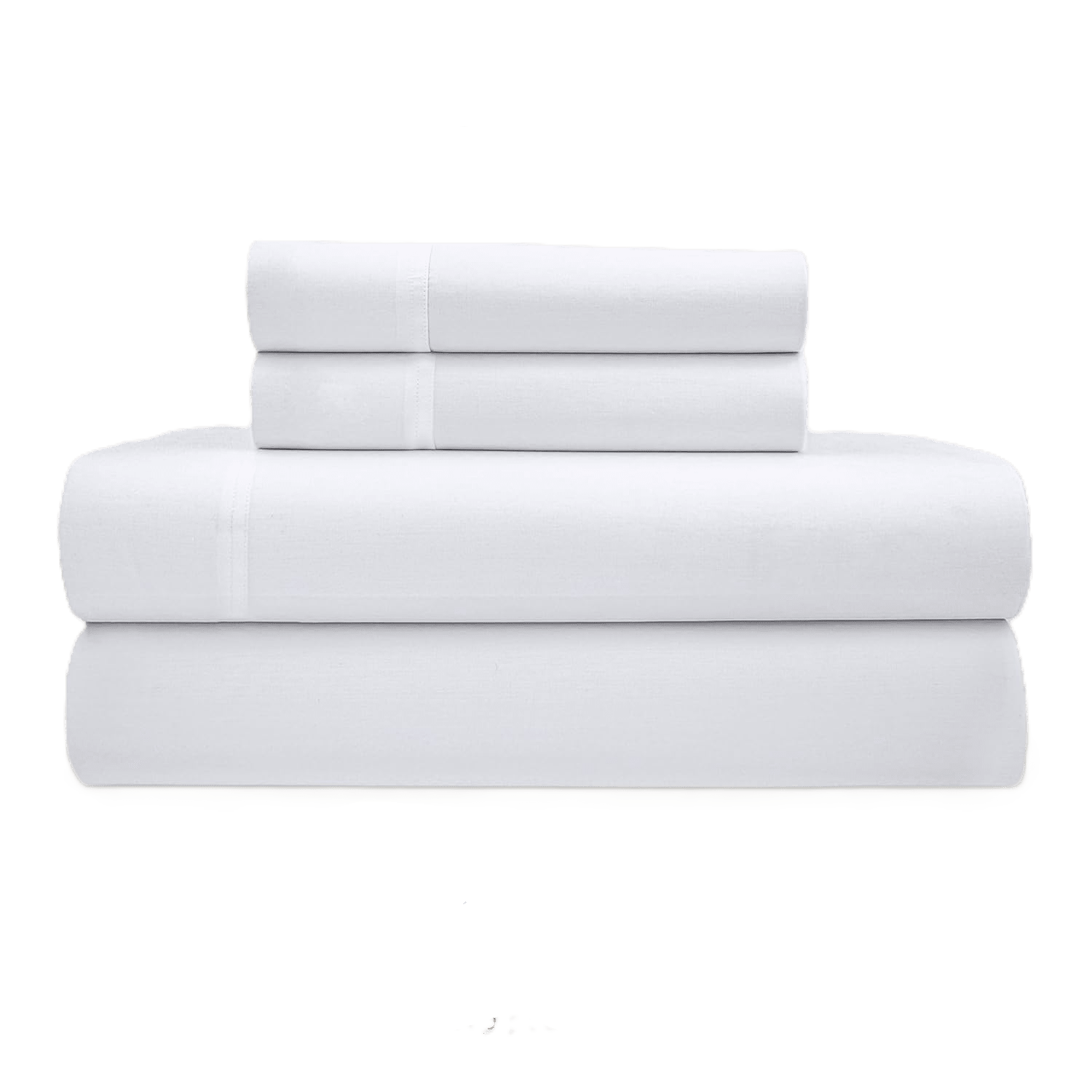
California Design Den Cotton Percale Sheet Set
The California Design Den Percale sheets are 100% long-staple cotton in a true one-over-one-under percale weave — which is exactly why hot sleepers keep coming back to them. At a 300 thread count and GOTS-certified organic, they check the boxes that actually matter without inflating the price. They feel a little stiff right out of the bag, but give them a few washes and they settle into that perfectly broken-in crispness that cotton percale is famous for.
- 100% long-staple cotton in a true percale weave, which gives the crisp, cool, breathable feel hot sleepers want.
- Durable 300 thread count, which is at the beginning threshold of the 300-to-600 range that textile experts recommend.
- GOTS-certified and backed by the Good Housekeeping Seal, so durability is independently verified.
- Cheapest of the three to buy and replace, and softens with every wash.
- Organic cotton is used. This ensures zero pesticide residue, which is great if you have easily irritated skin.
- Feels crisp and structured for the first week before it softens.
- Narrower color and pattern range than the bamboo or linen sets.
- It can and will shrink slightly on a hot wash if you skip the cold-water instructions.
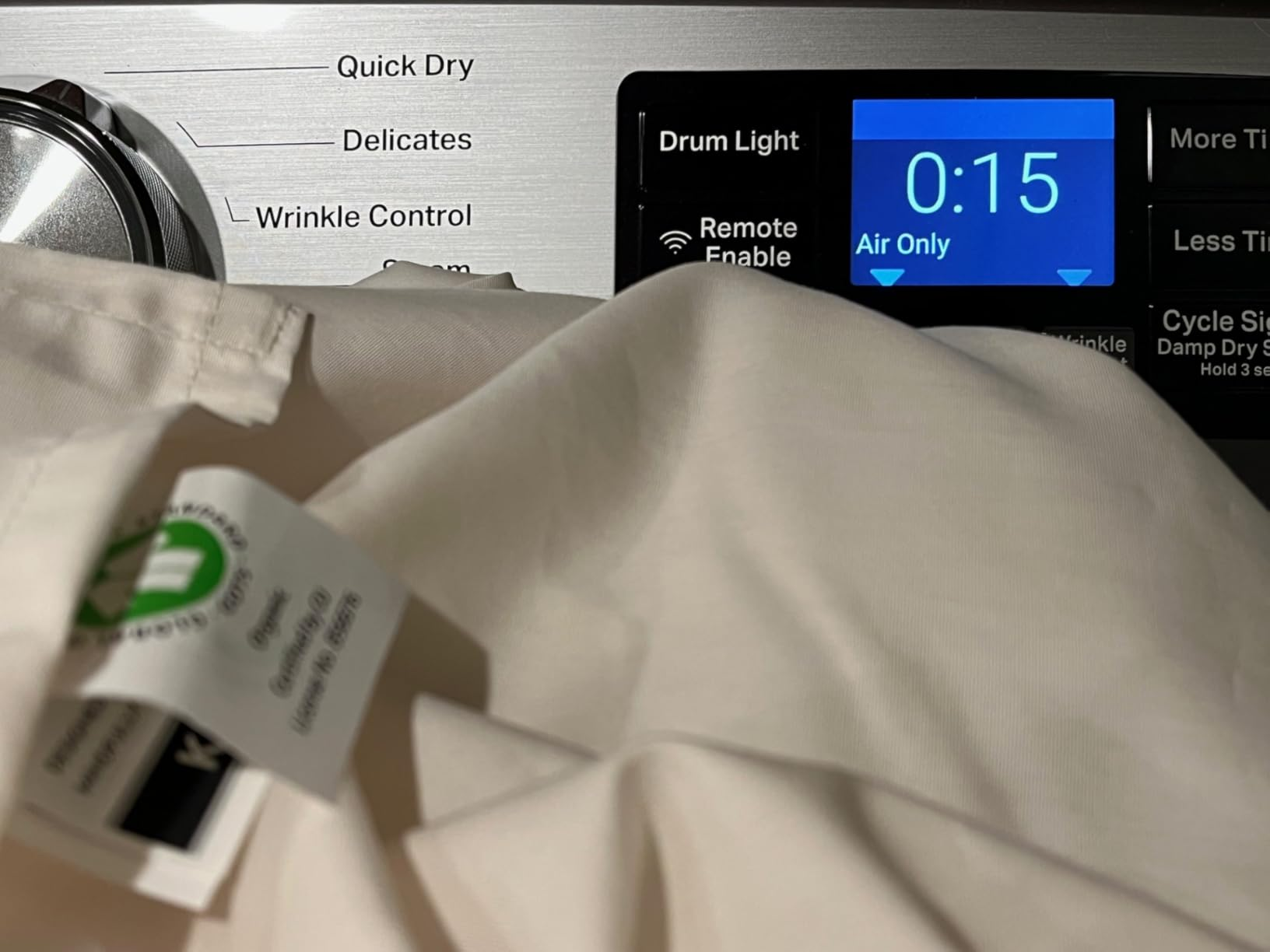
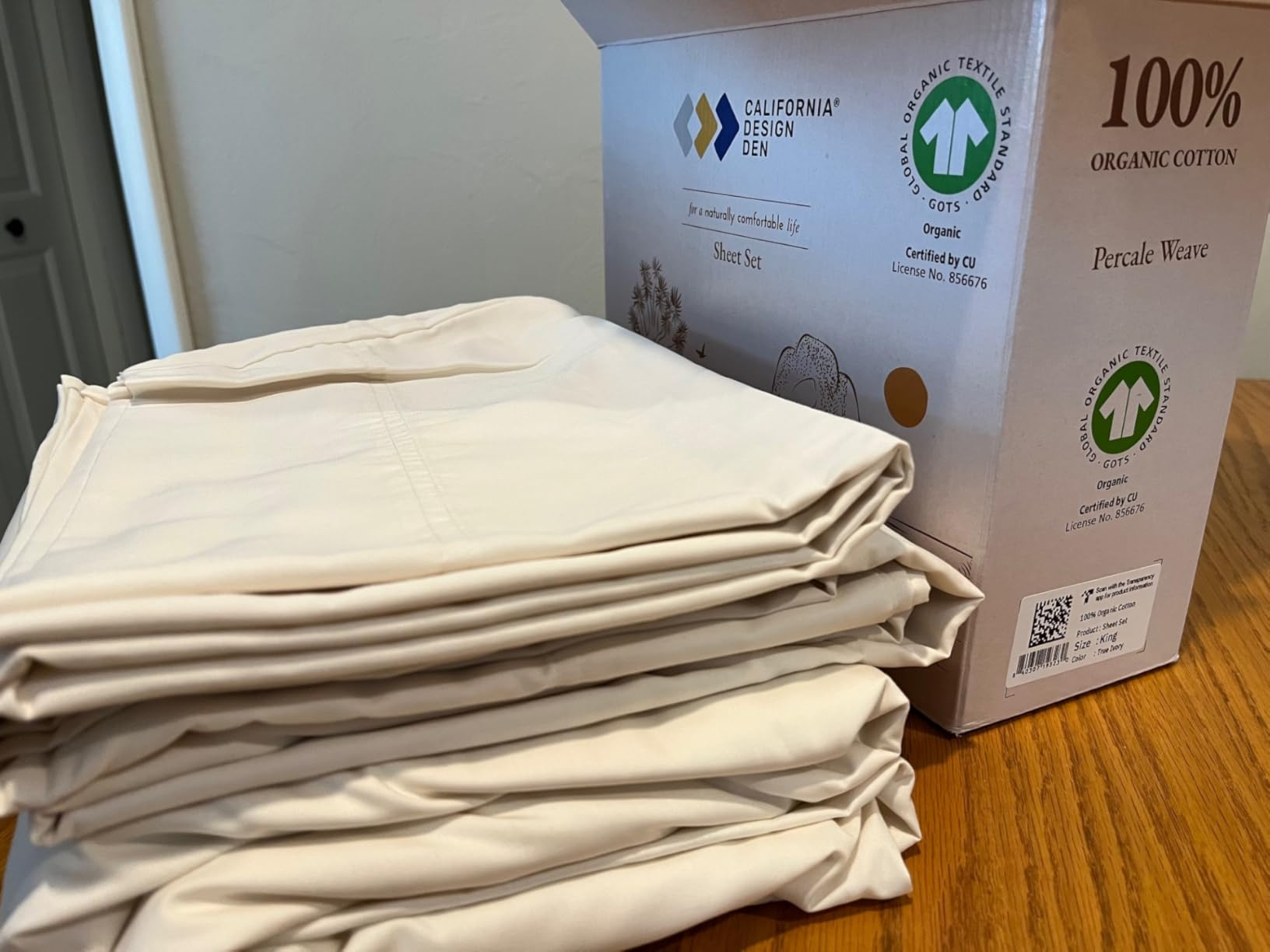
Close-up of the crisp one-over-one-under percale weave
LBRO2M 100% Pure Linen — Best-Reviewed Budget Linen
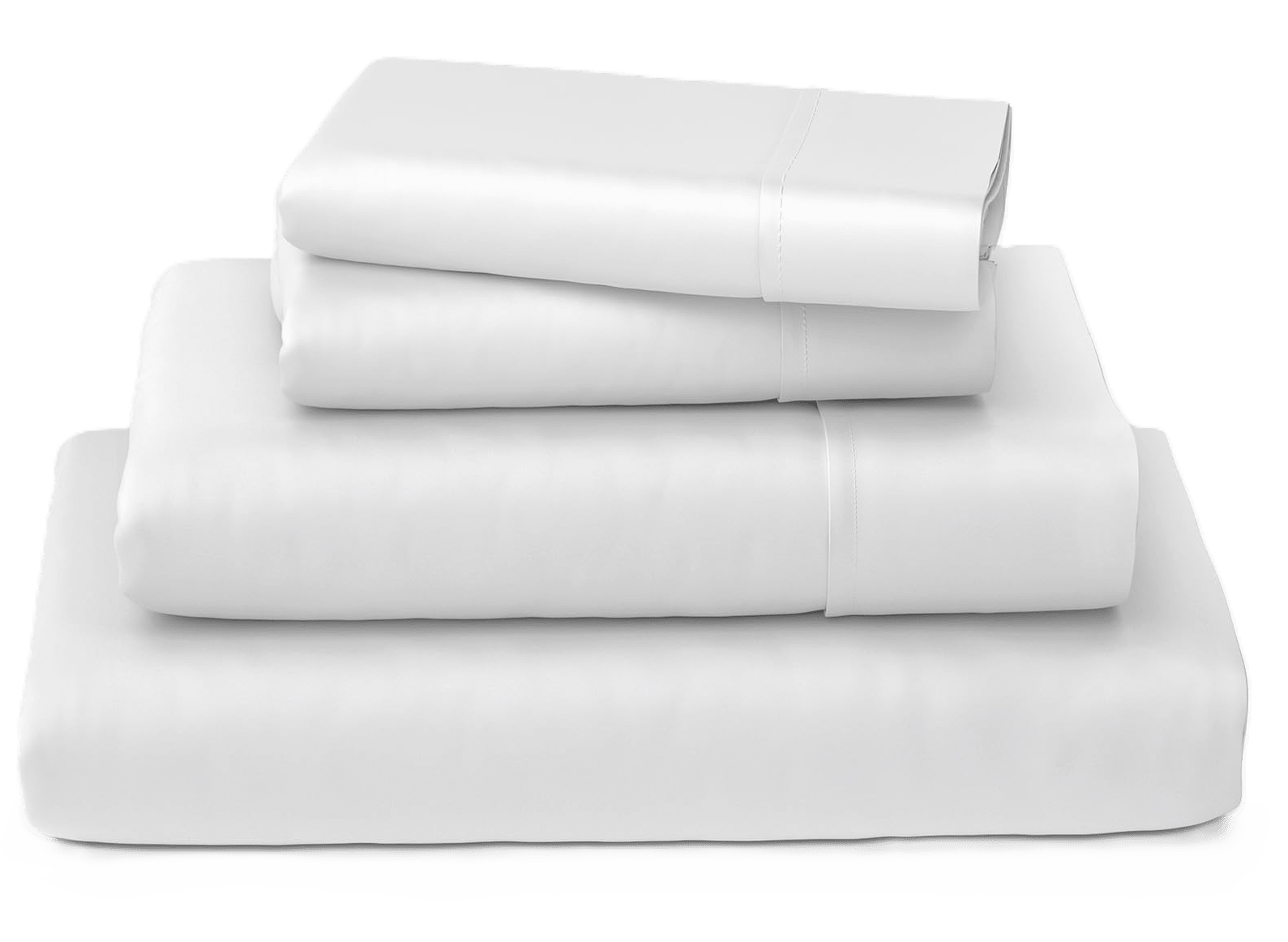
LBRO2M 100% Pure Linen Sheet Set
These LBRO2M bedsheets are 100% pure linen sheets, whose flax seeds are supplied from France and Normandy. They have excellent moisture absorption and temperature regularity capabilities. The OEKO-TEX standard means it’s free from any injurious chemicals.
- Superb flax seeds harvested in Normandy translate to bedsheets that feel premium and comfortable.
- It is able to fit any mattress with its elasticized corners and deep 16-inch pockets.
- The OEKO-TEX standard ensures the fabric is thoroughly tested and verified to be free from harmful chemicals and safe for human health
- They are budget-friendly, although pricier than the other two pure linen sheets listed in this section.
- Highly breathable and cooling to the touch. It doesn’t cling or drape.
- Another sign of the amazing flax seeds used in these bedsheets is how they soften over time as you wash them.
- One of the most-reviewed linen sets on Amazon, with around 5,665 ratings at about 4.5 stars
- Fresh out of the box, they may feel too coarse and stiff. This can be unpleasant.
- Linen fibers naturally wrinkle, making them too much to deal with if you prefer a clean, crisp look.
- They require delicate washing cycles and air-drying to avoid premature tearing or balling
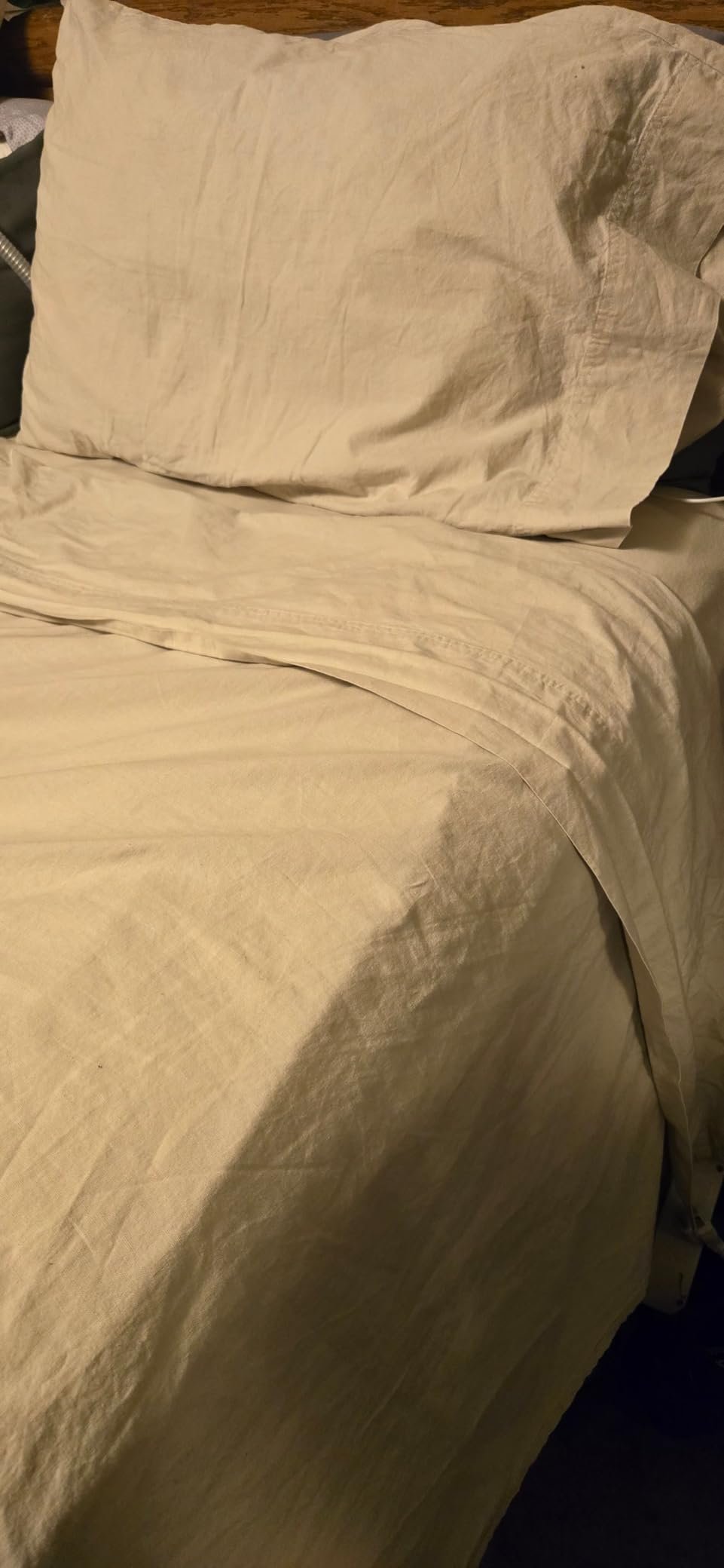
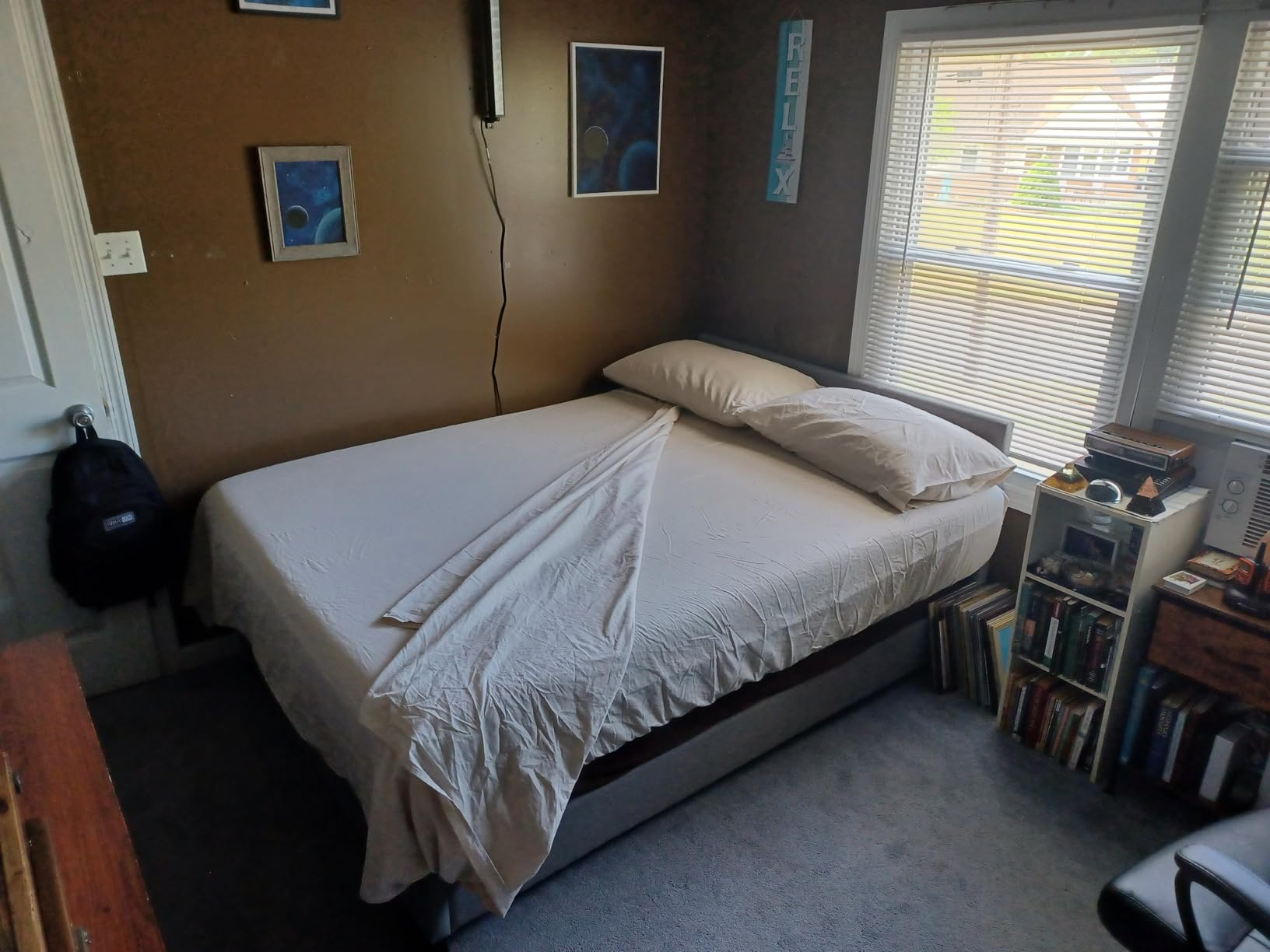
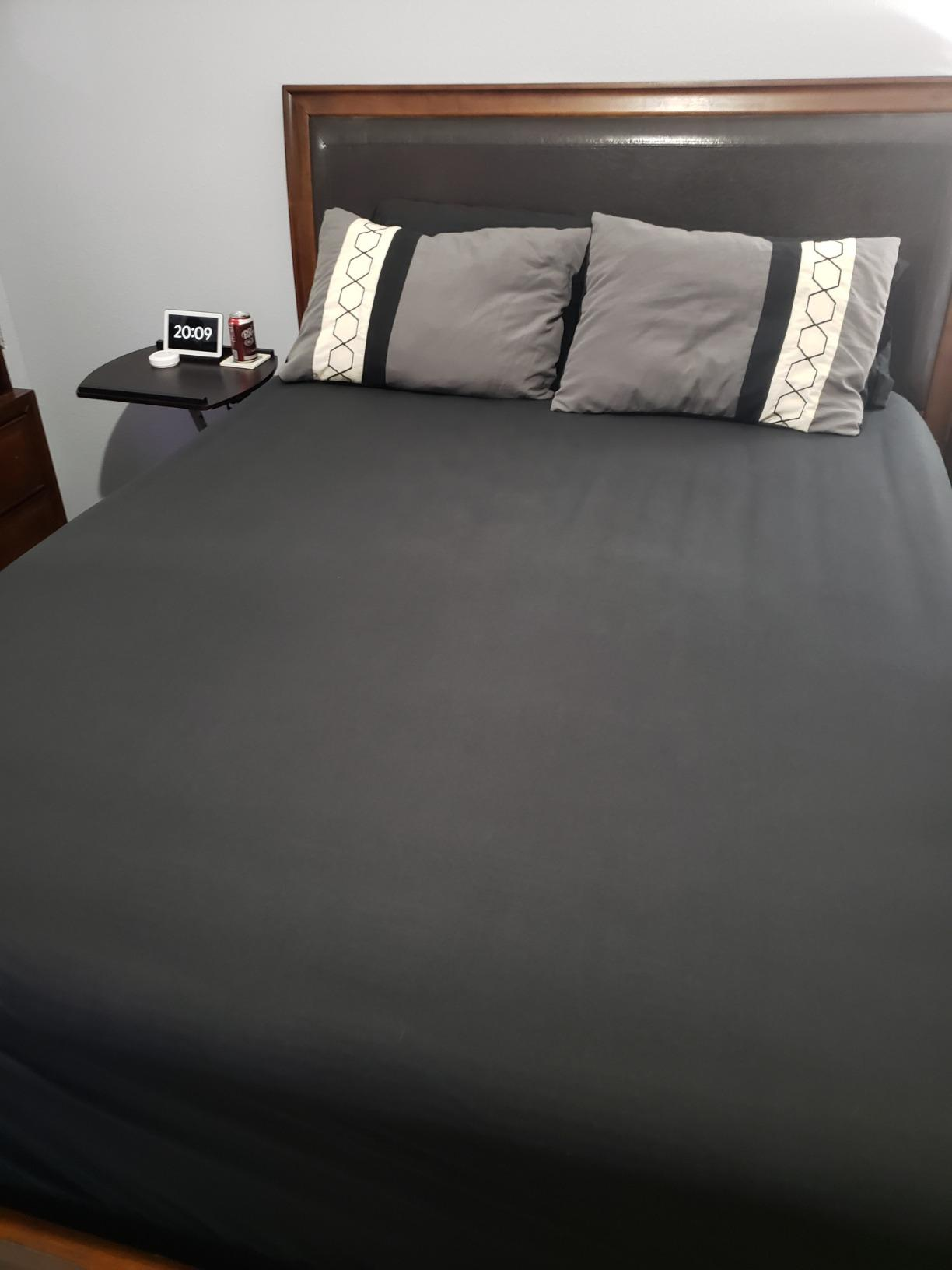
Beige sheets on a bed.
SONORO KATE 100% French Pure Linen — Most-Reviewed French Linen
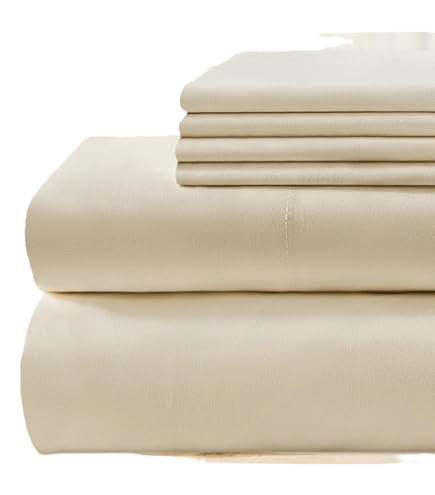
SONORO KATE 100% French Pure Linen Sheet Set
These SONORO KATE 100% French linen sheets are exactly what they think they are. They have been renowned in the market for their cooling, breathable nature.
- Superb flax seeds harvested in Normandy translate to bedsheets that feel premium and comfortable.
- It is able to fit any mattress with its elasticized corners and deep 16-inch pockets.
- The OEKO-TEX standard ensures the fabric is thoroughly tested and verified to be free from harmful chemicals and safe for human health.
- Highly breathable and cooling to the touch. It doesn’t cling or drape.
- Another sign of the amazing flax seeds used in these bedsheets is how they soften over time as you wash them.
- One of the most-reviewed linen sets on Amazon, with around 8,597 ratings at about 4.5 stars
- Fresh out of the box, they may feel too coarse and stiff. This can be unpleasant.
- Linen fibers naturally wrinkle, making them too much to deal with if you prefer a clean, crisp look.
- They require delicate washing cycles and air-drying to avoid premature tearing or balling
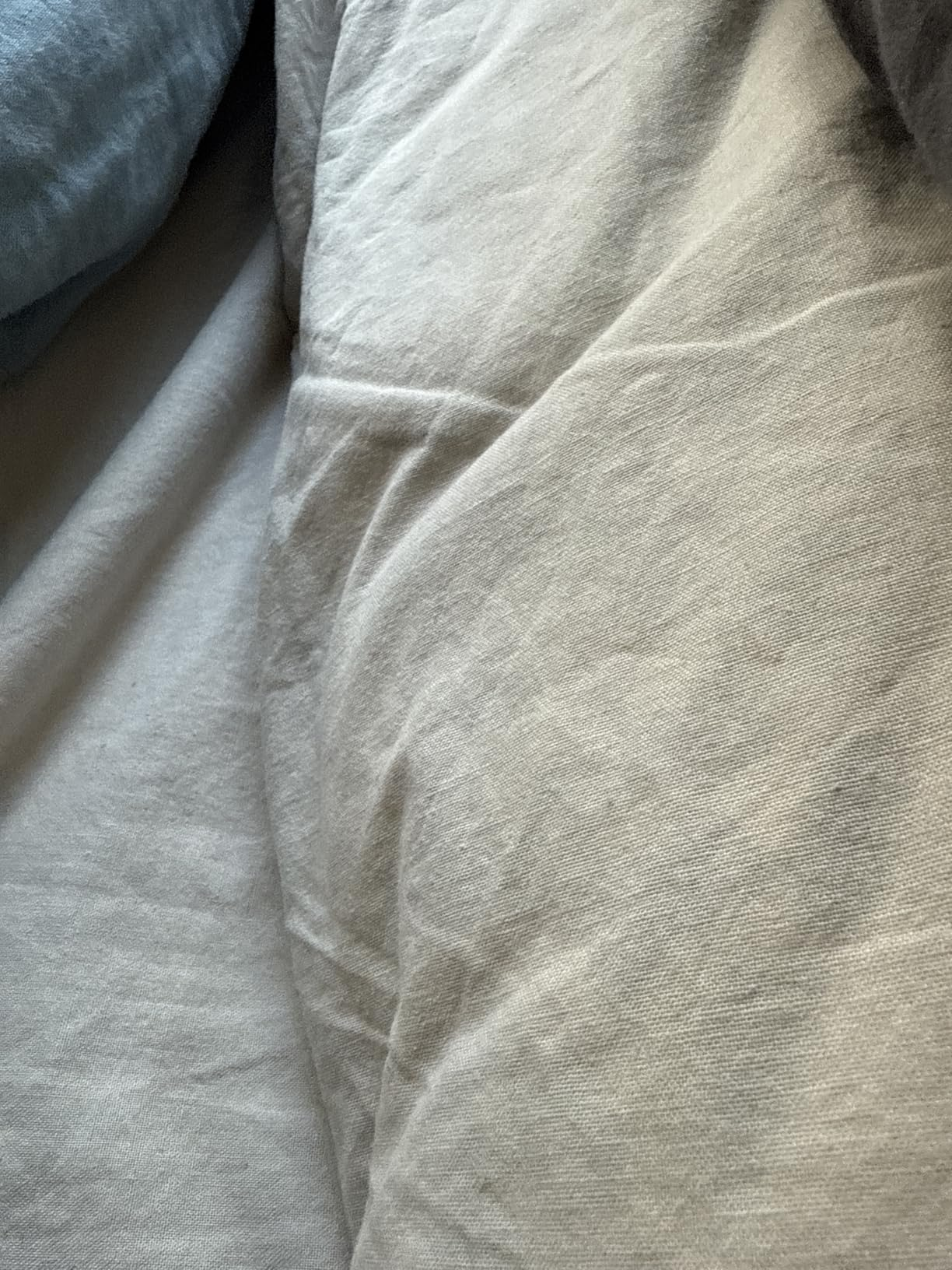
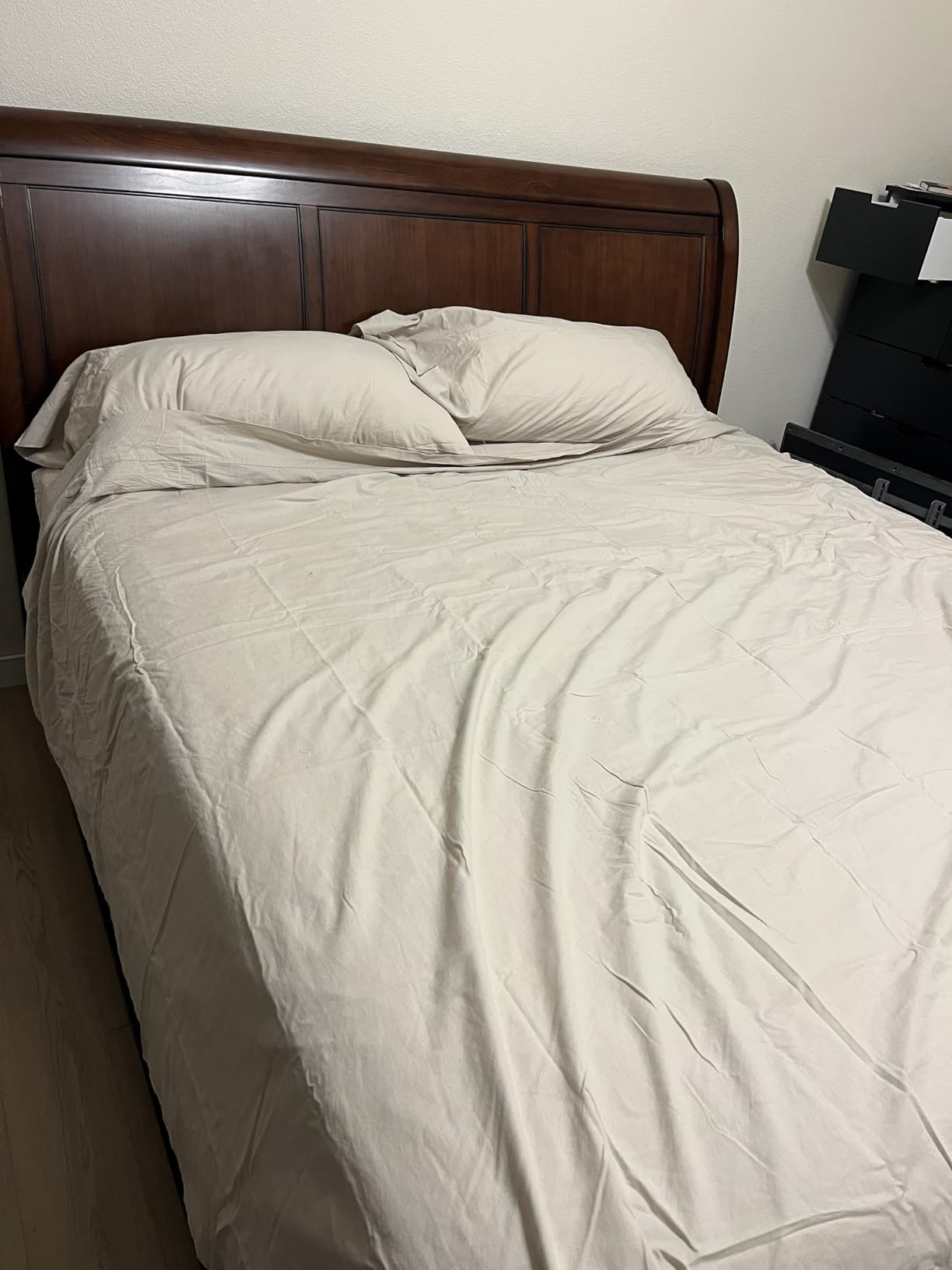
Close-up of beige fabric texture.
DAPU French Flax Linen — Best for Breathability & Longevity
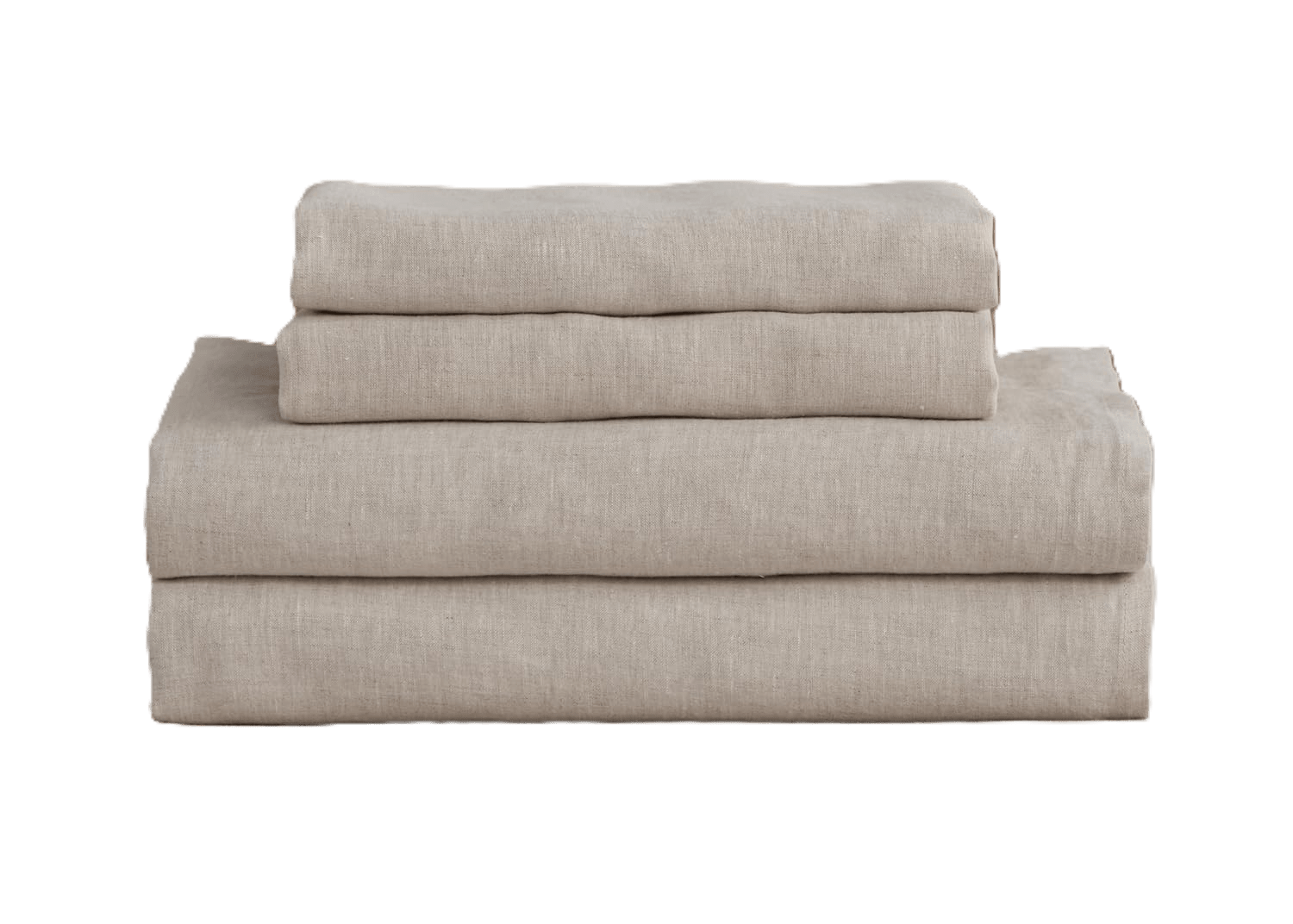
DAPU French Flax Linen Sheet Set
The DAPU French Flax Linen Sheets are one of their kind. They are eco-friendly, high-quality, and a great deal for what they offer. These linen sheets resist odor and need washing less often, so you can take a day off from laundry. What more could a true sleeper want?
- 100% French flax from Normandy, one of the strongest natural fibers, at a sturdy 170 GSM mid-weight
- Arrives stone-washed and soft, skipping linen’s stiff break-in
- Most breathable and seasonless of the three; naturally resists dust mites, good for allergies
- OEKO-TEX Standard 100 certified, and far cheaper than boutique linen brands
- Their odor resistance means less washing, which ultimately translates to a longer life span without fading.
- Sheds some lint in the first few washes
- Wrinkles heavily by nature; the rumpled look is the aesthetic
- Slubby texture never feels as slick as cotton or bamboo
- Heavier flax takes longer to air-dry than thin, gauzy linen.
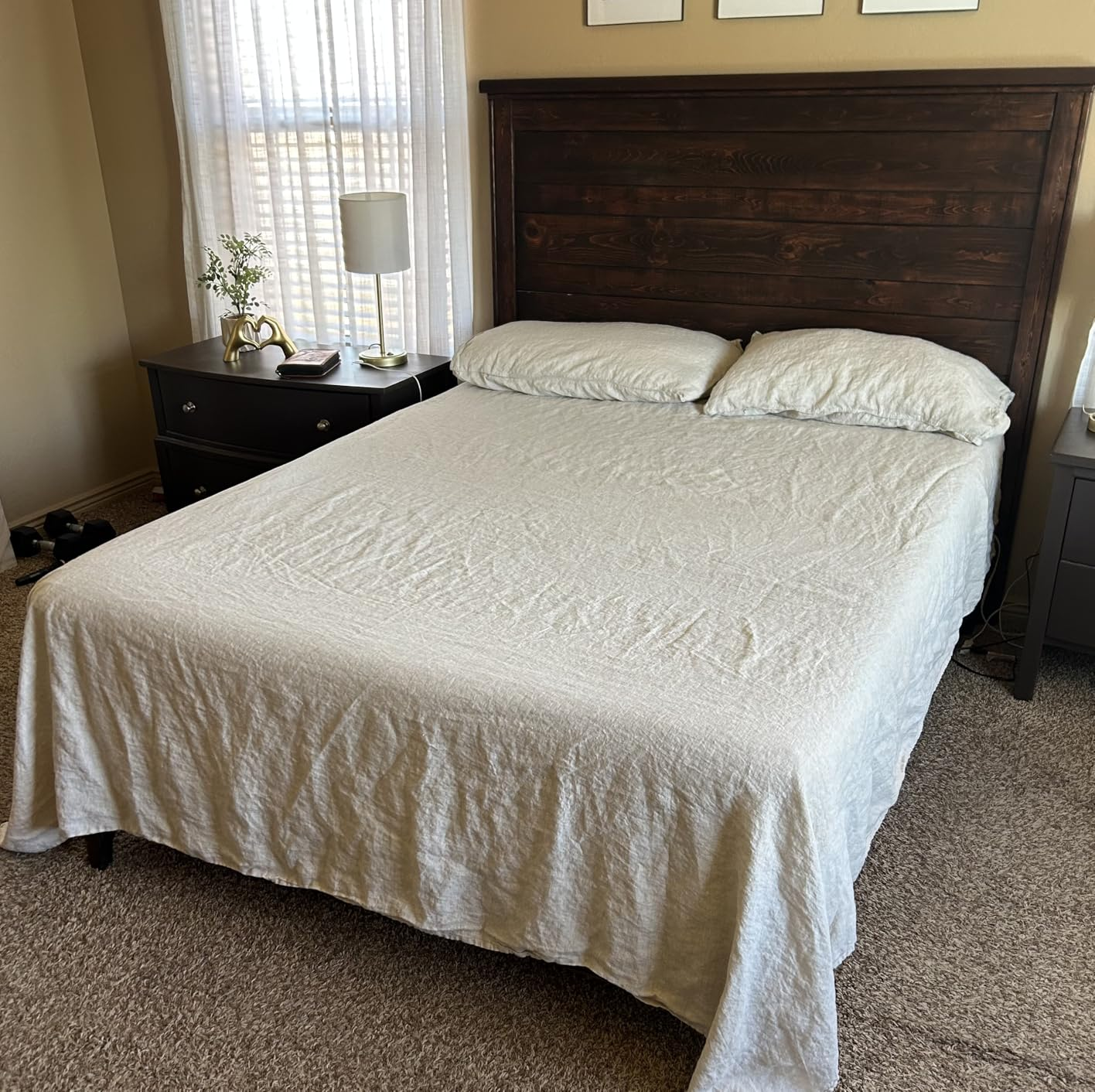
DAPU flax sheets styled on a bed with a lived-in look
Pure Bamboo King Sheets — Purest Viscose Pick

Pure Bamboo King Sheets
Graceful, no polyester blend, and 100% pure viscose from bamboo bedsheets. Pure Bamboo King Sheets are reputable when it comes to crafting the best bamboo bedsheets in the market without the crazy price tag.
- Crafted from bamboo that has been ethically sourced, so you can sleep guilt-free.
- OEKO-TEX Standard 100 Certified, and tested to be free from over 100 harmful substances, meaning it’s perfect if you have irritant skin.
- 300 verified thread count, which is at the threshold for an ideal thread count in bamboo viscose bedsheets.
- Thermoregulating, therefore, it doesn’t feel too hot in the summer, nor too cold in winter.
- Elasticized borders and 16-inch deep pockets ensure a perfect snug fit for thick mattresses.
- Every bedding purchase is backed by a 2-year warranty, so you can buy and forget about the hassle of exchanging your bedsheets because of uncharacterized pilling or fraying.
- It’s definitely on the pricier end compared to the other two options listed in this section.
- Bamboo bedsheets are prone to pilling and developing tears in general, so this is definitely something to look out for.
- It is highly rated for hot sleepers, but not ideal for colder regions or people who often feel chilly at night because of its moderate thermoregulatory and moisture-wicking capabilities.
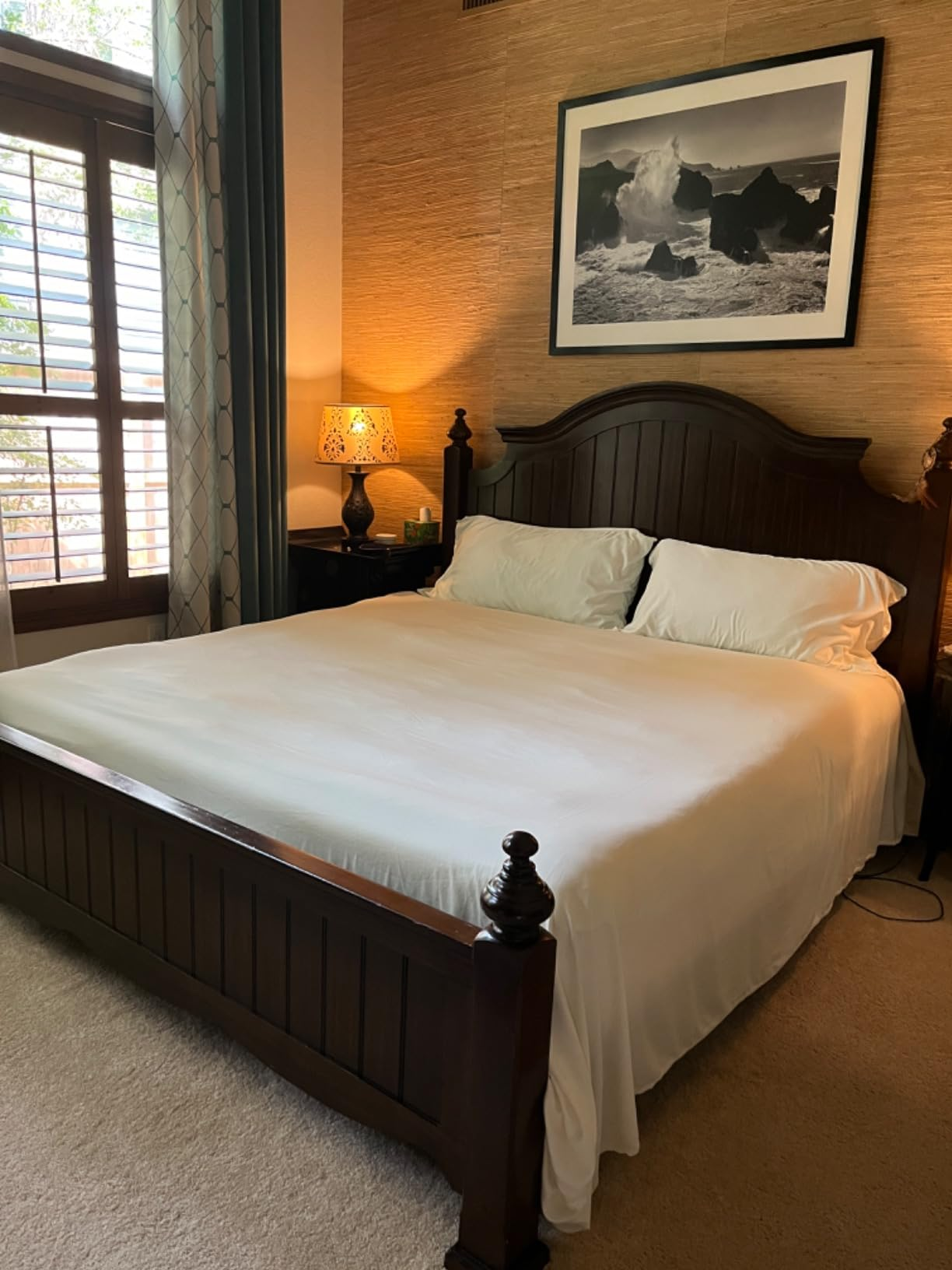
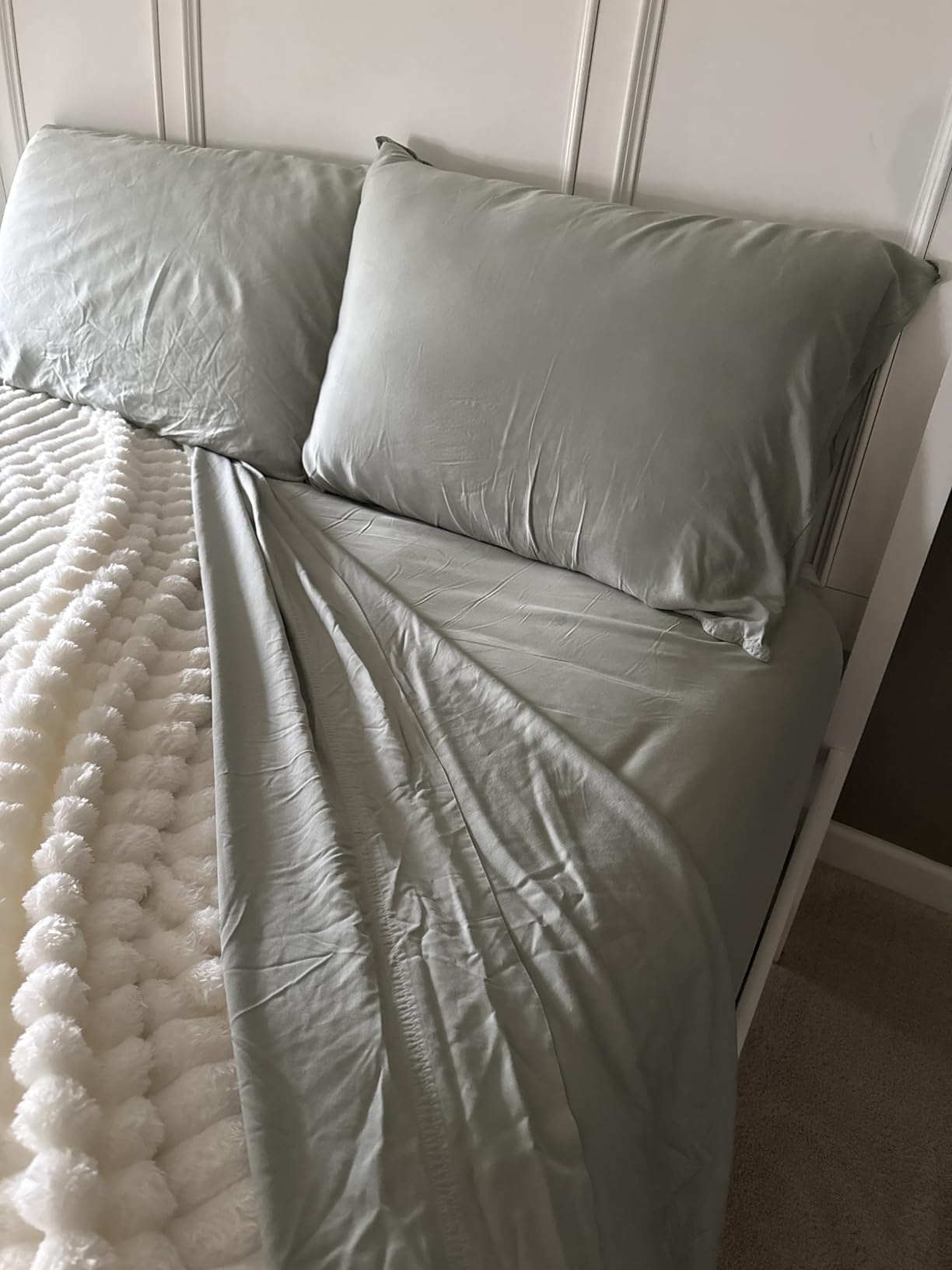
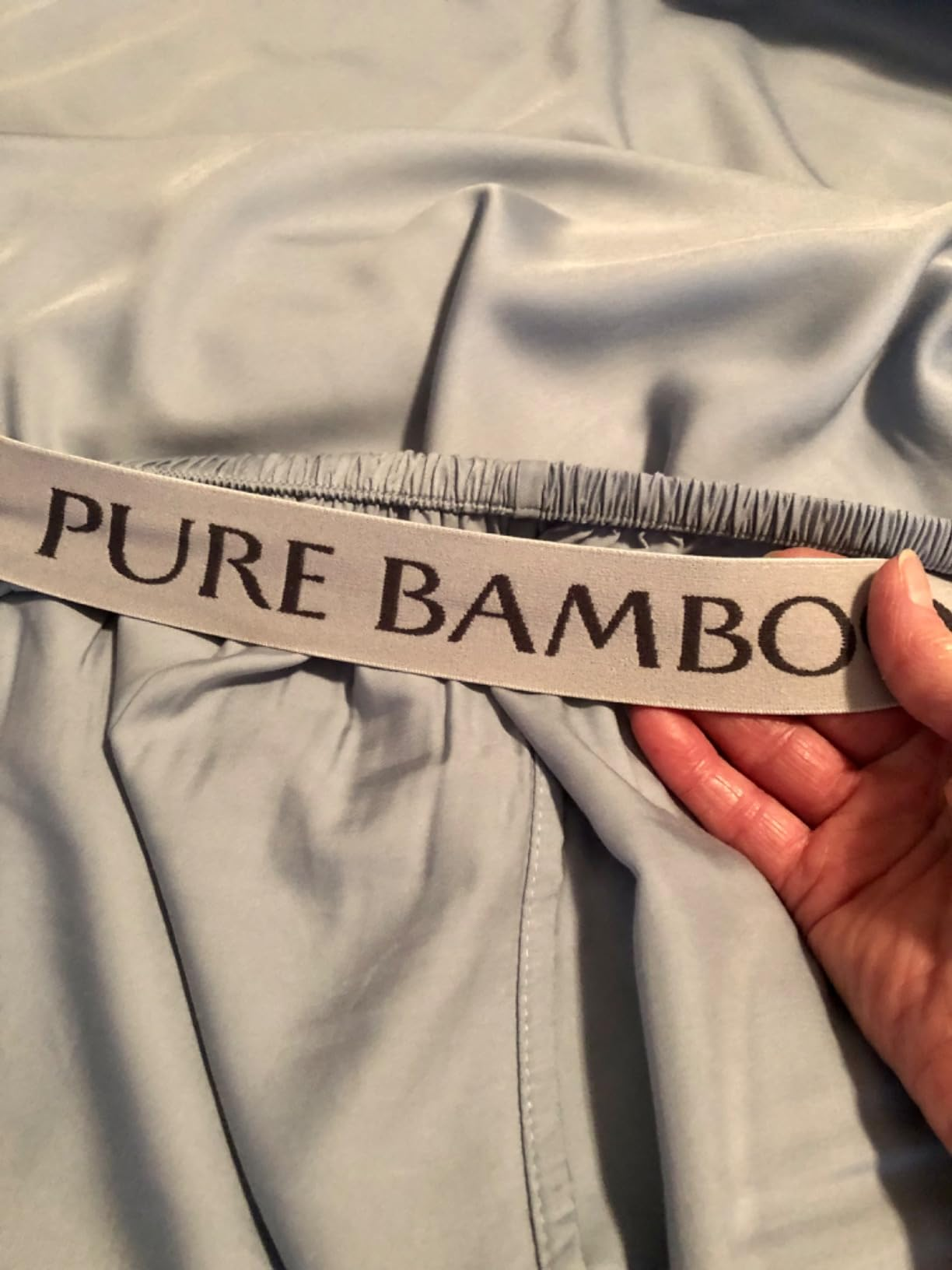
Cream sheets on a wooden four-poster bed.
Hotel Sheets Direct Bamboo Viscose — Best for Softness
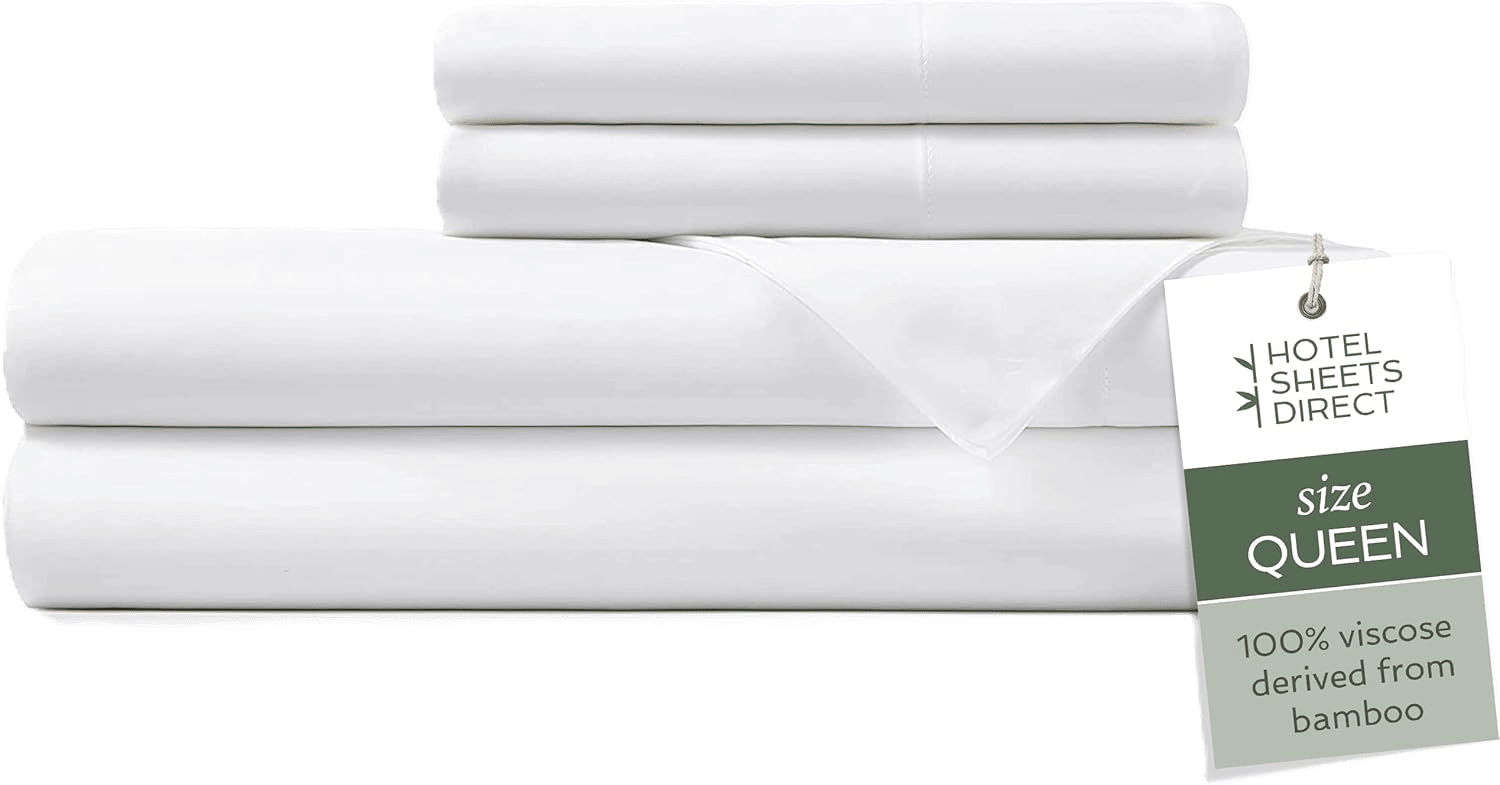
Hotel Sheets Direct Viscose from Bamboo Sheet Set
These 4-piece bedsheets are 100% viscose with no shabby polyester blend, which means no sweating all over your bed. Its moisture-wicking capability also prevents your bedding from becoming drenched in sweat during hot summer days.
- Among the softest, silkiest sheets at this price, with a smooth sateen drape and faint sheen
- One of the most-reviewed bamboo sets on Amazon, with around 28,000 ratings at about 4.5 stars
- Year-round comfort with peak thermoregularity, ensuring you’re not too hot or too cold.
- OEKO-TEX Standard 100 certified and correctly labeled 100% viscose from bamboo; it is not a poly blend.
- Wicks sweat and promotes breathability, at a fraction of the price of premium bamboo brands
- Deep pockets fit mattresses up to 16 inches, which means it can fit snugly around your mattress.
- Viscose is the weakest of the three fibers when wet, so it can pill or thin within a few years
- Smooth and breathable rather than cold to the touch, despite the cooling marketing
- Like all viscose, it clings to pet hair and needs gentle, cool washing to last.
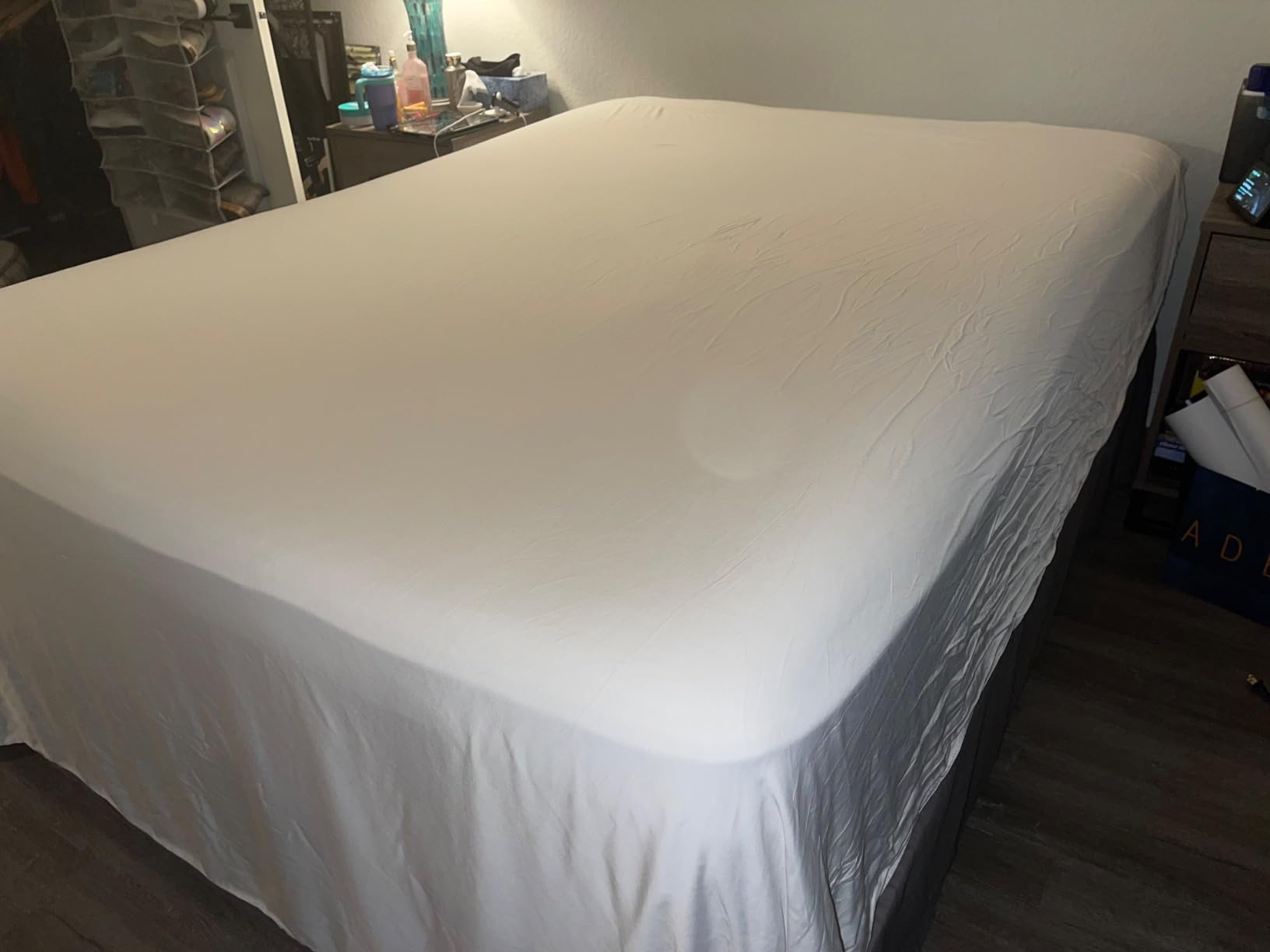
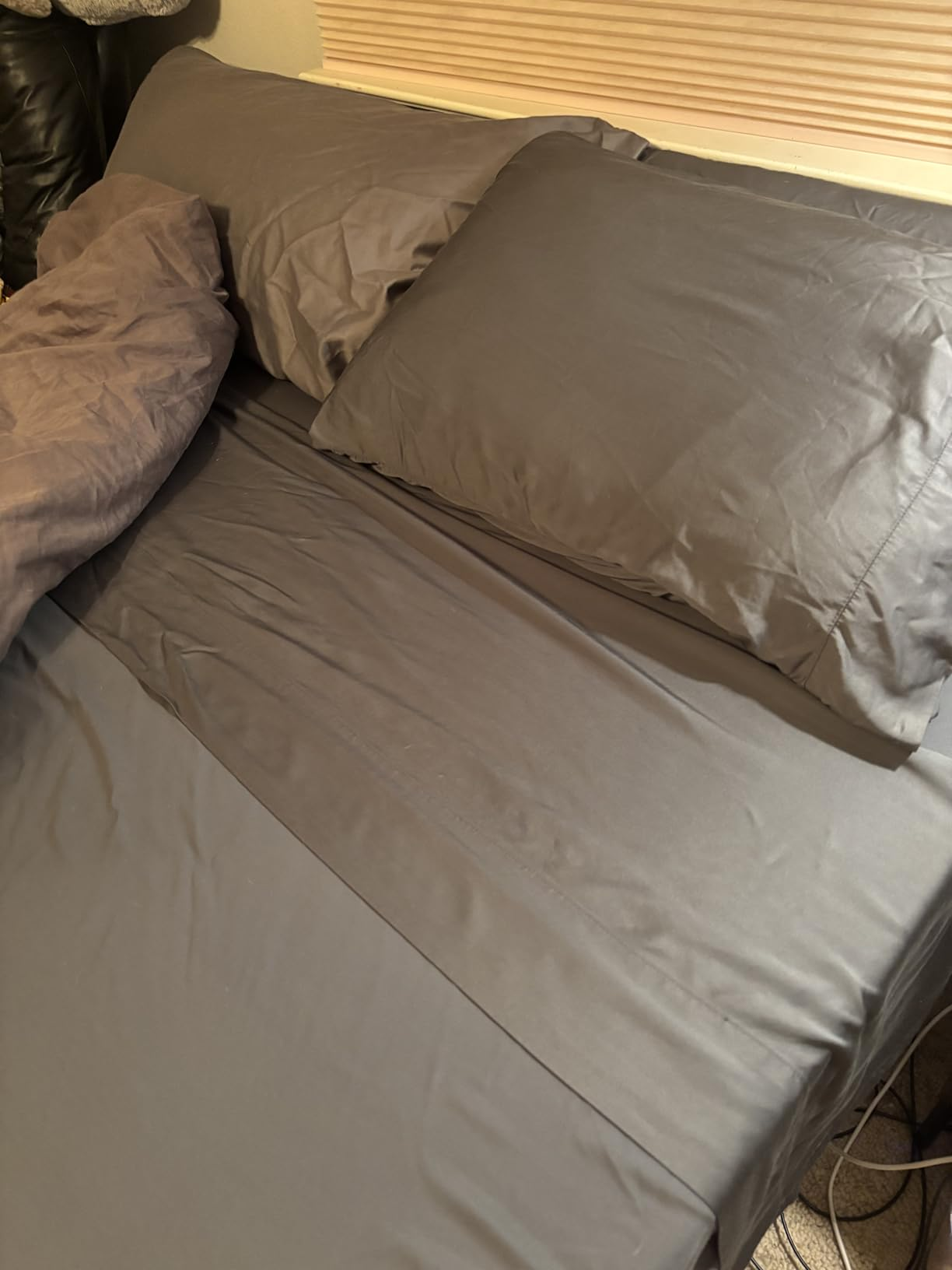
The fluid drape and light sheen of Hotel Sheets Direct bamboo viscose
Bedsure Queen Sheet Set — Best-Reviewed Cooling Bamboo

Bedsure Queen Bamboo Sheet Set
These bedsure pure bamboo bedsheets are 100% rayon made from bamboo and designed to be cooling on the skin. They’ve been famously endorsed by Forbes Vetted and the New York Post– a double whammy, for sure. These sheets are perfect for those who run hot, offering a silky-smooth feel and excellent thermal regulation for a steal.
- 100% Rayon guarantees the trademark buttery-smooth feel that bamboo rayon bedsheets tend to have.
- These fitted sheets have deep pockets that can go up to 16 inches, and their 360-degree elasticity totally puts an end to endless fussing
- It is OEKO-TEX Standard 100 (24.HCN.19195) certified and tested for harmful substances, a plus-point if you have sensitive skin or babies.
- Award-winning cooling and a trustworthy customer base.
- One of the most-reviewed bamboo sets on Amazon, with around 63,666 ratings at about 4.5 stars.
- Requires extreme care, with very specific and gentle wash settings.
- It is susceptible to wrinkling and crinkling even after a wash cycle, so you will have to iron it quite frequently to get that crisp look.
- Not the most durable of the three, and may show faster wear and tear, with some people reporting fading within a year or two of purchase.
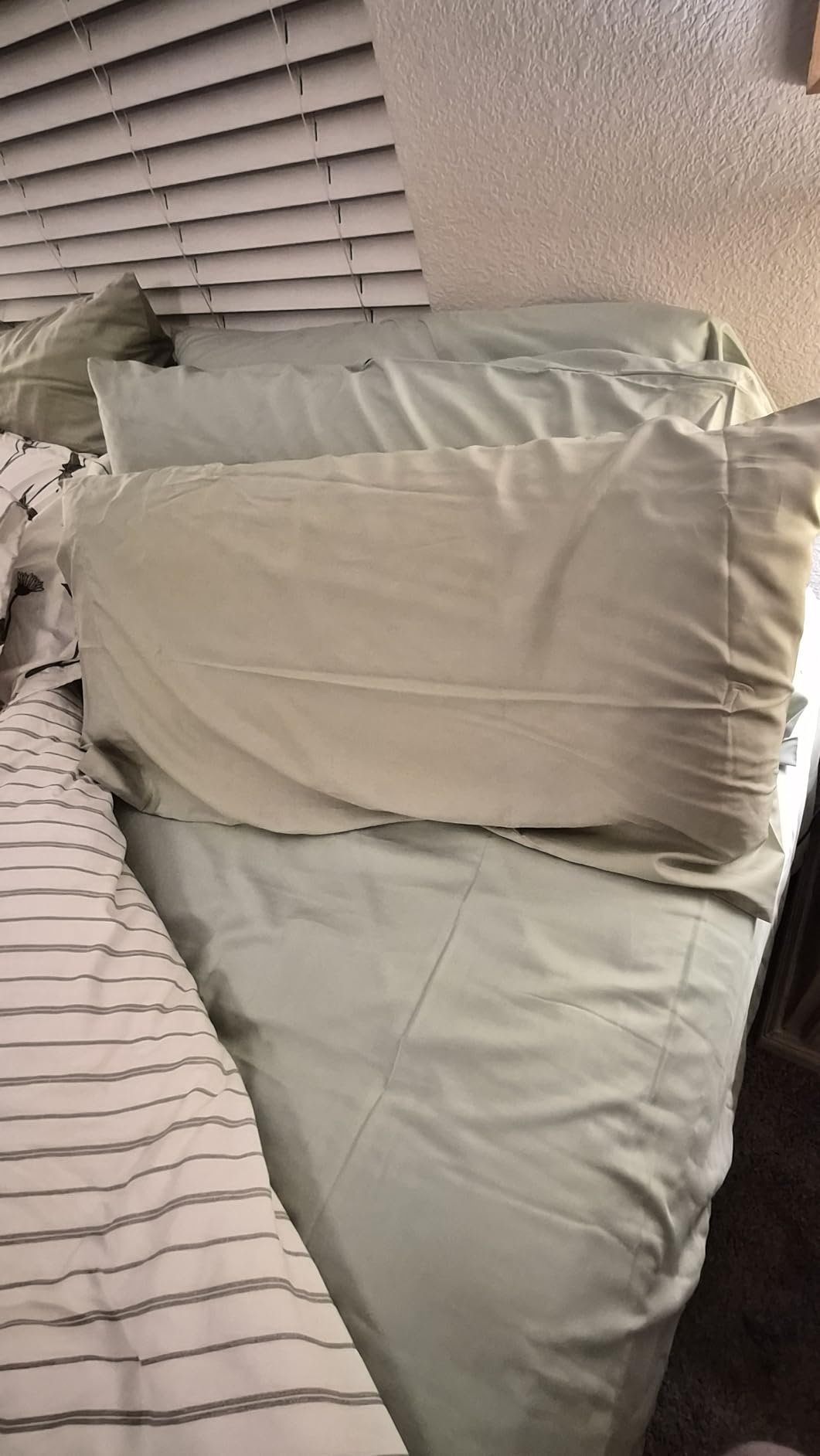
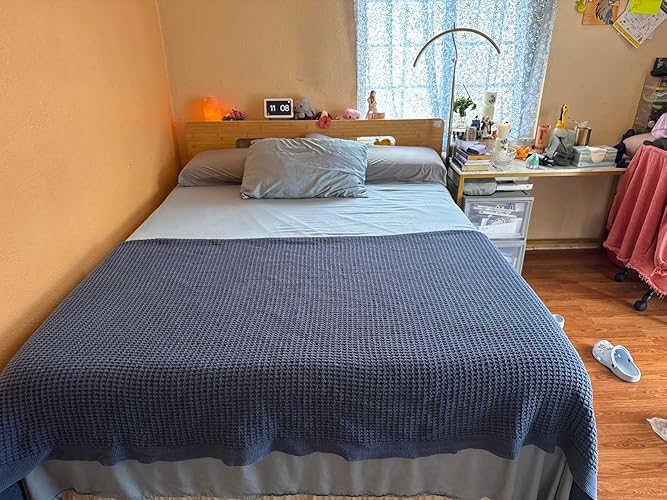
Sage green sheets next to a window.
What Should You Pick?
Every child of Adam on this planet is vastly different from the others, and so are their sleeping habits. That’s why we’re here to give you an extensive guide on how to pick the best bedding option in the market, because we totally understand how important a good night’s sleep is. (Even if this article’s editor hasn’t slept in two days.)
If You Run Hot
Cheap ‘cooling’ sets are often secretly polyester blends, but if you want that cool-to-the-touch feel from a natural fabric, then percale or bamboo is your go-to, with percale leading in actual breathability. However, if you want to feel like you’re being swaddled by a cloud, then go for bamboo bedding as the sensation is akin to butter on a hot summer day.
Ranking:
- Percale: The best pick overall. Percale is crisp, cool, and breathable. However, it won’t feel silky underneath you. As this is lightweight and maximizes airflow, it doesn’t cling to your skin on a hot summer night. The final verdict is that this is best for sleepers who run hot but don’t sweat heavily.
- Bamboo: Silky and smooth to the touch. It is heaven-sent if you want to cool down during the night. However, the bamboo bedsheets may cling to your skin when it gets too hot.
- Linen: Linen bedsheets are insanely structured. They have fibers that allow air to pass through, but the sensation may feel scratchy and stiff rather than relaxing. But if you live in exceptionally humid environments and sweat buckets, then this is your best pick.
If You Run Cold
Feeling cold when you’re trying to sleep isn’t a good feeling, especially when the chill air is directly aiming for your nose and feet. In this case, bamboo bedsheets offer the best thermal regulation. Meanwhile, percale and linen are primarily designed for breathability and won’t retain body temperature.
- Linen: Linen is every cold sleeper’s dreamboat. It acts as a natural insulator, allowing body heat to be trapped within and warming up your space in an instant.
- Bamboo Bedsheets: Bamboo fibers have natural micro-gaps that provide excellent thermoregulation. Though it is great at absorbing moisture if you sweat, it traps heat efficiently when it is cold, providing a cozy space for you to snuggle into.
- Cotton Percale: Because they feature a breathable, crisscross weave, they allow heat and airflow to pass right through. For cold sleepers, this can make the bed feel breezy or chilly, but it isn’t as bad.
If You Want the Softest Possible Bedding
As we established before, bamboo is the best when it comes to sensory feels. It feels silky and cool on the skin. Percale and linen offer distinctly different features, prioritizing a crispier feel rather than a smoother one.
- Bamboo Bedsheets: The softness is felt immediately. The moment you lie down on bamboo bedding, you can feel the way it drapes around you and coddles you like you’re a newborn after a hard day of work.
- Percale Bedsheets: The softness is moderate. It is crisp when you initially buy the bedsheet, but high-quality cotton softens up with use. But who wants to wait out weeks for a soft, comfortable sleep?
- Linen Bedsheets: Linen is extremely textured and thus not the best when it comes to softness. Brand-new linen has a rough feel and requires weeks of washing to break in before the comfort settles in.
If You Have Sensitive Skin or Skin Allergies
Skin conditions like eczema require care and consistent treatment to avoid flare-ups. In this regard, bamboo is the best because of its anti-microbial properties. Cotton percale and linen don’t offer this, but they are good options if you have mildly oily skin.
- Bamboo Bedsheets: Bamboo is generally hypoallergenic and gentle on skin. The raw plant contains a unique bio-agent called “bamboo kun” (No, not the Japanese honorific suffix), though processing into viscose strips out most of it. It automatically reduces friction because of its silky feel and reduces the chances of extremely reactive skin allergies flaring up.
- Cotton Percale Bedsheets: Percale’s one-over-one weave allows for good airflow and moisture absorption. It prevents dampness, which is actually a common eczema trigger, and therefore can be a good alternative.
- Linen Bedsheets: The textured, crisp sensation of linen bedsheets may be abrasive and rough for someone with an active skin condition. If you have severe texture sensitivities, then this one isn’t for you.
If You and Your Partner Disagree on Temperature
Disagreements and arguments about how chilly or warm the bedroom should feel when you’re already sleepy don’t result in the best output. That’s why linen can be more forgiving compared to your spouse, who won’t be when they’re sweating, and you’re shivering. (or vice versa)
- Linen Bedsheets: As established, linen sheets are known to be amazing thermoregulators. They can manage the hot and the cold and keep them harmonizing.
- Cotton Percale: Percale promotes breathability and cooling. With its amazing airflow capabilities, they let the gentle breeze pass through and regulates the bedding’s temperature.
- Bamboo: Bamboo bedsheets are known to be cooling to the touch. They are a paradise for people who run hot, but a nightmare for those who feel chilly.
Care That Extends Their Lifespan
Don’t ignore the washing instructions, please: It is not a myth that linen bedsheets last entire eons before showing even a speck of fading, but this only comes true when you are mindful of your wash settings. This goes for any type of bedsheet, regardless of material or weave: don’t use hot water. Always wash your bedsheets in cold or lukewarm water.
Your sheets will soften on their own. Skip the fabric softeners: Linen and cotton percale often feel a bit structured or rough when first bought, but this isn’t your sign to drench them in fabric softeners. Fabric softeners tend to leave behind a waxy residue, which reduces the breathability of your bedsheets over time.
Don’t be hasty, stop pouring detergent on dry sheets: This is akin to asking for your precious bedsheets to irreversibly stain. The detergent will not disperse properly when your sheets are dry, which will leave a sticky residue.
The Bottom Line
This guide matches bedsheet types to sleeper needs based on body temperature, and tells you how to pick the right one for you. For environmentally conscious individuals, linen sheets prove to be the best overall.
We’ve listed off products that you can buy, depending on which type fits you best. Not only are these affordable picks, but they have been warranted by trustworthy reviews and certifications.
For a complete guide on making the perfect sleeping space for yourself, you can also read our article where we ranked the best BIFL pillows by sleeping styles.
Product Comparison at a Glance
| Product | Our Score | Brand | Fabric | Feel | Temperature | Lifespan (with care) | Best For | Action |
|---|---|---|---|---|---|---|---|---|
#1California Design Den Cotton Percale Sheet Set | 9.0 | California Design Den | Cotton (percale) | Crisp, cool, matte | Coolest, most airflow | 5-10 years | Hot sleepers who like crisp | |
#2LBRO2M 100% Pure Linen Sheet Set | 8.7 | LBRO2M | Linen (flax) | Textured, crisp, premium | Highly breathable, cooling | 10+ years | Most-reviewed budget linen | |
#3SONORO KATE 100% French Pure Linen Sheet Set | 8.8 | SONORO KATE | Linen (flax) | Textured, crisp, premium | Highly breathable, cooling | 10+ years | Most-reviewed French linen | |
#4DAPU French Flax Linen Sheet Set | 8.9 | DAPU | Linen (flax) | Textured, relaxed, slubby | Season-flexible, best wicking | 10+ years | Sensitive skin & long life | |
#5Pure Bamboo King Sheets | 8.5 | Pure Bamboo | Bamboo viscose | Silky, smooth | Thermoregulating | 2-4 years with gentle care | Pure viscose, warrantied | |
#6Hotel Sheets Direct Viscose from Bamboo Sheet Set | 8.6 | Hotel Sheets Direct | Bamboo viscose | Silky, smooth, light sheen | Smooth & breathable (not cold) | 2-4 years with gentle care | Softness on a budget | |
#7Bedsure Queen Bamboo Sheet Set | 8.6 | Bedsure | Bamboo rayon | Buttery-smooth, silky | Cooling, thermoregulating | 1-3 years with care | Cooling on a budget |