
Our Picks
Introduction
Most kitchen drawers are full of junk: garlic presses with bent handles, "stainless" peelers covered in orange rust, and dull shears that struggle to cut packaging. You buy them cheap, they break in a year, and you buy them again.
The Buy It For Life (BIFL) approach is about breaking that loop. Instead of review-site fluff, this list focuses on tools that r/BuyItForLife, r/Cooking, and r/KitchenConfidential actually recommend. We chose two solid options for each of the eight categories: a reliable, budget-friendly workhorse and a premium upgrade. These are tools that will survive daily use for a decade or more, not sit in a landfill.
Kitchen Shears
A good pair of kitchen shears is incredibly handy. You'll end up using them for everything: snipping herbs, cutting pizza, prepping chicken, and opening packages. Unfortunately, cheap shears are terrible. The plastic handles crack, the blades go dull quickly, and the pivot screw eventually wobbles loose.
When shopping for shears that last, look for two details: all-metal construction and blades that pull apart. Separable blades let you clean out raw chicken juice and sharpen each side easily. If you can't take them apart, bacteria will build up in the pivot, and you'll never get a clean edge again.
Tojiro Pro FG-3500 - The BIFL Legend

Tojiro INOX Kitchen Shears (FG-3500)
The Tojiro FG-3500 is the ultimate kitchen shear. All-steel, fully separable, and built to last decades with basic hand drying.
Pros
- All-stainless steel, one-piece construction--no plastic handles to crack or stain
- Fully separable for deep cleaning and individual blade sharpening
- Sharp enough to spatchcock a chicken straight out of the box
- Japanese craftsmanship with decades-long durability reports from users
Cons
- Price is steep compared to consumer-grade shears
- Can rust if not hand-dried after washing--stainless doesn't mean stain-proof
- Heavier than plastic-handled alternatives, which some users dislike
Specifications
Ask r/BuyItForLife for a kitchen shear recommendation, and the consensus is almost always the Japanese-made Tojiro INOX FG-3500. They are solid, heavy-duty stainless steel from tip to handle. There are no plastic pieces to crack or rubber grips to degrade. The blades pull apart at the pivot for easy cleaning and sharpening.
They are sharp enough to easily cut through chicken bones, and the handles have a built-in bottle opener and nutcracker. They cost around $35, which is steep for scissors, but they will easily outlast four or five cheap pairs.
Wüsthof Pull-Apart Shears - The German Workhorse
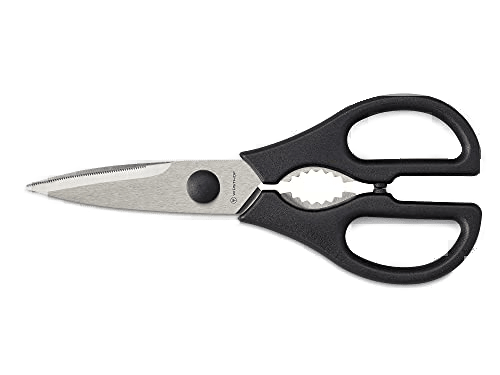
Wüsthof Pull-Apart Kitchen Shears (5558-1)
The Wüsthof shears are the western workhorse alternative. Serrated blades, German steel, and a come-apart design at a friendlier price.
Pros
- High-carbon stainless steel blades hold an edge for months of daily use
- Micro-serrated blade grips food and packaging without slipping
- Come-apart pivot for thorough cleaning between the blades
- Built-in bottle opener and jar lid gripper in the handles
Cons
- Handles are partially plastic, unlike the all-metal Tojiro
- Must be hand-washed and dried--dishwasher will damage the edge
- Some users report the pivot loosening over years of heavy use
Specifications
If you don't want to spend $50 on shears, Wüsthof's Pull-Apart shears (5558-1) are a great middle ground. They use German high-carbon stainless steel with micro-serrated blades that grip food and slick packaging without slipping. Just like the Tojiro, they pull apart for cleaning.
The main difference is the handles, which have a plastic coating. While the steel itself will last forever, the handles will show wear eventually. Still, for $29, these are highly durable shears that hold their edge for a long time.
Chef's Knife
The most important thing to know about kitchen knives is that a cheap $50 knife that you sharpen will always outperform a $200 knife that you neglect. Skip the massive block sets. You only need one good 8-inch chef's knife, a honing rod, and a basic whetstone.
There is, however, a real difference between stamped and forged blades. Stamped knives are lighter and cheaper; forged knives are heavier, have better balance, and hold their edge longer. Here is the best budget workhorse and the top premium choice.
Victorinox Fibrox Pro 8" - The $53 That Beats $200 Knives

Victorinox Fibrox Pro 8" Chef's Knife
Every single BIFL thread about chef's knives starts with the Victorinox. It's affordable, performs like a high-end knife, and lasts forever with regular honing.
Pros
- America's Test Kitchen winner for over a decade running
- Takes a razor edge and is extremely easy to resharpen at home
- Slip-resistant Fibrox handle stays grippy even when wet
- Used in professional culinary schools worldwide
Cons
- Stamped blade lacks the heft of a forged German knife
- Handle aesthetics are purely functional--not a showpiece
- Edge retention is average; needs regular honing
Specifications
No knife is recommended as often as the Victorinox Fibrox Pro. It's the standard entry-level knife in commercial kitchens and culinary schools because it's cheap, tough, and gets the job done.
It is a stamped knife, so it's light and doesn't have the heavy feel or bolster of a forged German blade. But it takes a very sharp edge, is easy to resharpen, and the textured plastic handle is incredibly grippy even when your hands are wet. For $53, it's all the knife most home cooks will ever need.
Wüsthof Classic 8" - The Heirloom
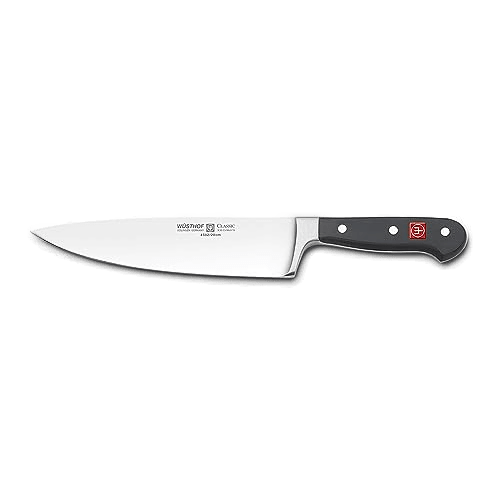
Wüsthof Classic 8" Chef's Knife
If you want the chef's knife you hand down to your kids, this is it. Forged in Solingen, full tang, triple-riveted, and built for a lifetime of cooking.
Pros
- Precision-forged from a single piece of high-carbon stainless steel
- Full tang with triple-riveted handle for perfect balance
- 58 HRC hardness holds an edge significantly longer than the Victorinox
- Solingen, Germany manufacturing with lifetime warranty
Cons
- At $170, it's 4x the price of the Victorinox for incremental improvement
- Heavier blade profile isn't for everyone--some prefer lighter Japanese styles
- Still needs regular honing and periodic professional sharpening
Specifications
If you want a classic, heavy forged knife to pass down to your kids, get the Wüsthof Classic. It's forged from a single piece of high-carbon steel in Solingen, Germany, featuring a full tang and a triple-riveted handle.
At 58 HRC, it uses harder steel than the Victorinox, meaning it stays sharp longer. It's heavy, well-balanced, and feels reassuringly solid in the hand. It is expensive, but it's a lifetime tool that handles daily prep beautifully.
Can Opener
Can openers are notoriously short-lived. Most cheap supermarket options have weak plastic gears that strip after a few months, and electric models are just unnecessary clutter.
A durable can opener is simple: manual, all-metal, and built with solid carbon steel or stainless steel gears. We picked two models that won't break on you: a basic $14 US-made classic and a rust-proof German upgrade.
EZ-DUZ-IT Deluxe - The American Classic
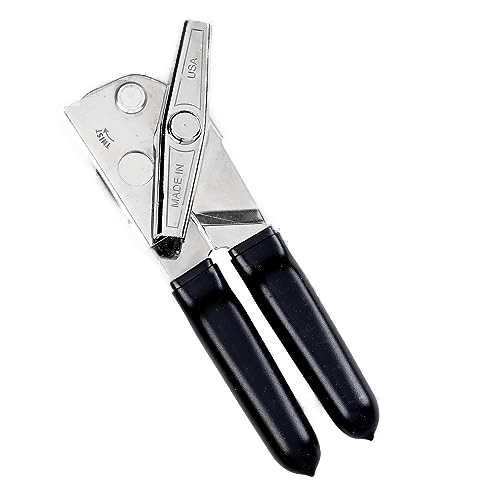
EZ-DUZ-IT Deluxe Can Opener
The EZ-DUZ-IT is the spiritual successor to the original Swing-A-Way. It's cheap, American-made, and simply works forever with basic drying.
Pros
- Heavy-duty carbon steel gears--the same design that made Swing-A-Way famous
- Made in the USA with thick, durable construction
- Smooth, effortless cranking action on any can size
- Under $15 for a tool that genuinely lasts decades
Cons
- Carbon steel components can surface-rust if left wet--dry after washing
- Some QC complaints on recent batches--buy from a reputable seller
- Traditional top-cut design leaves sharp edges on the can lid
Specifications
The EZ-DUZ-IT is the closest thing you can buy to the old-school, indestructible Swing-A-Way openers. It's made in the US, constructed from heavy-duty plated carbon steel, and uses thick gears that bite into cans cleanly.
Since it's carbon steel, it can rust if you leave it soaking in water. Just rinse it and dry it off immediately. It's basic, runs about $14, and does its job without any unnecessary gimmicks.
Rösle Stainless Steel - The Upgrade

Rösle Stainless Steel Can Opener
If you want a can opener that cannot rust and leaves safe, smooth edges, the Rösle is the premium pick. 18/10 stainless steel with no gears to strip.
Pros
- Full 18/10 stainless steel construction--zero rust potential
- Side-cut mechanism creates smooth, safe edges on the can
- Pliers-grip design locks onto any can size without slipping
- Dishwasher safe without degradation
Cons
- At $40, it's 3x the price of the EZ-DUZ-IT
- Side-cut mechanism has a learning curve if you're used to top-cut
- Slightly harder to turn than gear-driven models
Specifications
For an opener that will never rust, the Rösle Stainless Steel Can Opener is the best choice. It is made of 18/10 stainless steel and uses a side-cutting wheel that opens the can from the outer rim, leaving smooth, safe edges instead of sharp metal.
It works a bit differently than standard openers, so it takes a few tries to get used to the clamping motion. But it requires very little effort, keeps the blades clean from food contact, and can go straight into the dishwasher.
Citrus Squeezer
Citrus squeezers are technically unitaskers, but they save a lot of time. If you use fresh lemon or lime juice often, a clamshell metal press is much faster and cleaner than using a fork or a wooden reamer.
The main rule for a durable squeezer is to avoid plastic. Under pressure, plastic handles flex and snap. Stick to solid metal. We highlighted a basic painted metal juicer and a geared version that makes squeezing effortless.
Zulay Professional Citrus Juicer - The Best Seller

Zulay Professional Citrus Juicer
The Zulay 2-in-1 squeezer is a classic painted aluminum press. It squeezes citrus flat and catches seeds reliably.
Pros
- 2-in-1 design handles both lemons and limes without switching tools
- Heavy-duty metal construction with durable enamel coating
- Ergonomic handles require minimal hand strength to operate
- Seed-catching bowl extracts maximum juice with no mess
Cons
- Enamel coating can chip over time with heavy use
- Aluminum body may react with acidic juice if coating wears off
- Not ideal for oranges or grapefruits--too large for the bowl
Specifications
The Zulay 2-in-1 squeezer is cheap, heavy, and works. It has nested bowls to handle both limes and lemons, and it squeezes them flat without letting seeds slip through.
The painted enamel coating can chip over time if you throw it in the dishwasher regularly, which eventually exposes the raw aluminum beneath. Hand-wash it or buy their slightly more expensive all-stainless version to ensure it lasts indefinitely.
Chef'n FreshForce - The Ergonomic Pick

Chef'n FreshForce Citrus Juicer
The FreshForce citrus juicer utilizes a dual-gear mechanism to reduce hand strain. The zinc body is exceptionally durable and won't flex under force.
Pros
- Dual-gear mechanism amplifies your grip--uses 60% less effort than standard squeezers
- Reinforced die-cast zinc body won't flex under heavy pressure
- Large enough to handle lemons, limes, and even small oranges
- Comfortable even for users with arthritis or hand strength issues
Cons
- More moving parts than a simple press means more potential failure points
- Bulkier than the Zulay--takes up more drawer space
- The gear mechanism can gunk up if not cleaned promptly
Specifications
If standard squeezers hurt your hands, the Chef'n FreshForce is worth the extra money. It features a geared hinge mechanism that multiplies your squeezing power, requiring significantly less hand strength.
The body is made of die-cast zinc, which is much stronger than aluminum and won't bend under pressure. It's a bit bulky, but the gears are incredibly sturdy. If you have joint pain or regularly squeeze dozens of limes for drinks, this is the one to buy.
Silicone Baking Mat
A silicone baking mat is a simple way to stop buying rolls of parchment paper. It provides a naturally non-stick surface, distributes heat evenly so cookie bottoms don't burn, and cleans up with warm soapy water.
To make it last, you just have to follow three rules: never use knives on it, don't fold it (roll it up loosely instead), and keep it away from the broiler. Do that, and a good mat will easily last you ten years.
Silpat Silpain - The Crispy Crust Specialist
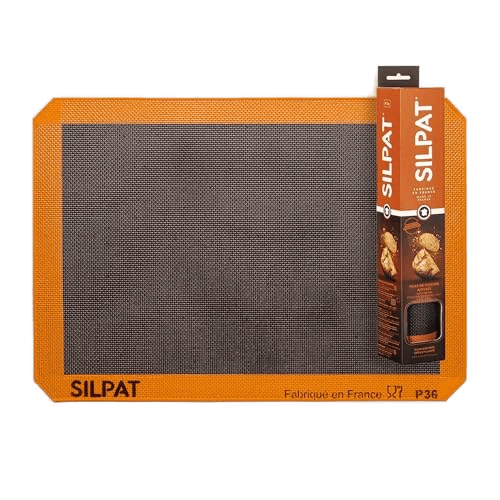
Silpat Silpain Premium Non-Stick Silicone Baking Mat
The Silpat Silpain uses perforated silicone-coated fiberglass to let steam escape, making it the BIFL choice for baking crispy breads and crusts.
Pros
- French craftsmanship since 1965--the original premium baking mat brand
- Perforated mesh design allows steam to escape for exceptionally crispy crusts
- Food-grade silicone over fiberglass core provides even heat distribution
- Eliminates disposable parchment paper and handles up to 480°F
Cons
- Cannot be cut on or used with sharp utensils--will destroy the surface
- Must be stored flat or loosely rolled--folding creates permanent creases
- Textured finish is not ideal for very sticky or runny batters
Specifications
The Silpat Silpain is a specialized version of the classic French silicone mat, designed with a perforated mesh texture. This open grid allows steam and moisture to escape during baking, which makes it perfect for achieving crispy crusts on homemade bread, pastries, and pizza.
It uses the same fiberglass-reinforced silicone as their standard mats. It spreads heat evenly, prevents burning, and outlasts cheap imitations. If you want bakery-quality bread crusts at home, this is the industry standard.
Fine Mesh Strainer
Kitchen strainers usually break in the same place: the handle snaps off the rim. Manufacturers often use a single, weak spot weld to attach the handle, which fails when you fill the basket with heavy food.
For a strainer that lasts, look for sturdy frames, clean rim seals (so food doesn't get trapped), and strong welds or double rods. We selected a highly rated Cuisinart set that gives you three sizes and a heavy-duty double-rod OXO strainer.
Cuisinart CTG-00-3MS Set - The Best Value Set
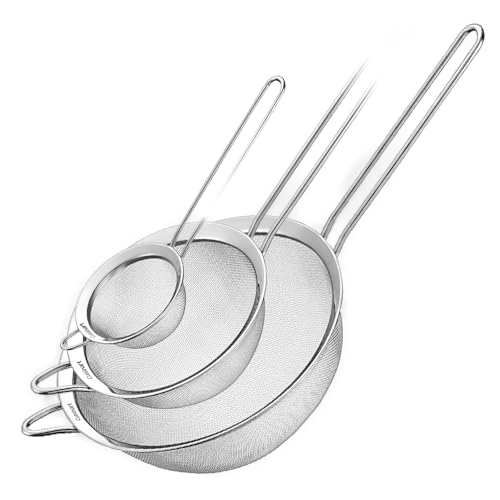
Cuisinart CTG-00-3MS Stainless Steel Strainer Set
The Cuisinart CTG-00-3MS is the go-to budget strainer set recommended across cooking forums. It's cheap, gives you three essential sizes, and handles daily kitchen tasks easily.
Pros
- Excellent value for a complete 3-piece kitchen strainer set
- Different sizes cover everything from sifting flour to rinsing berries
- Rim is sealed well to prevent food from getting trapped under the metal
- Dishwasher safe and simple to clean
Cons
- Handles are spot-welded wire, not heavy duty rivets
- Mesh can dent if pressed too hard with heavy utensils
Specifications
For a basic set of strainers, the Cuisinart CTG-00-3MS 3-piece set is the most popular choice. It costs around $16 and includes three sizes (approx. 3, 5, and 8 inches) which cover everything from sifting flour to rinsing berries or draining pasta.
The rims are sealed tightly so grains of rice or tea leaves won't get stuck under the metal lip. While the wire handles are spot-welded rather than riveted, Cuisinart's quality control is solid, and the wire frame extends around the mesh to support the basket when resting on bowls.
OXO Good Grips 8" - The Heavy-Duty Pick
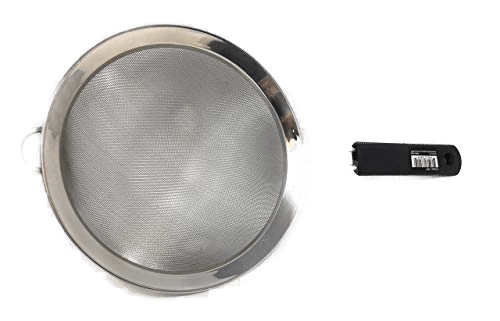
OXO Good Grips 8-Inch Double Rod Strainer
If you want a single, heavy-duty strainer rather than a set, get the OXO Good Grips 8-Inch Double Rod Strainer. The double-rod frame and comfortable grip make it built to last.
Pros
- Double-rod design adds extra structural support for heavy foods
- Signature soft, non-slip OXO handle is comfortable when wet
- Wide steel rim and resting hook keep it secure on pots and bowls
- Dishwasher safe without degradation
Cons
- Single size only--you'll need to buy additional sizes separately
- Wire welds can pop if dropped or handled roughly
- A bit heavier than basic single-rod strainers
Specifications
If you want a single, heavy-duty strainer rather than a set, get the OXO Good Grips 8-Inch Double Rod Strainer. It uses a thick, double-rod stainless steel frame that won't flex when you dump a pot of potatoes into it.
The standout feature is the thick, non-slip rubber handle, which stays comfortable even when wet or steamy. It also features a wide metal rim and a large front hook that securely balances the strainer over pots and mixing bowls.
Cut-Resistant Gloves
If you use a mandoline or a box grater, cut-resistant gloves are cheap insurance against emergency room visits.
There are two ways to go here: lightweight fabric gloves or heavy metal chainmail. Fabric gloves are comfortable and inexpensive but will wear out over time. Chainmail gloves are clunky and expensive but literally indestructible. Here are the top picks for both.
NoCry Gloves - Fabric Safety
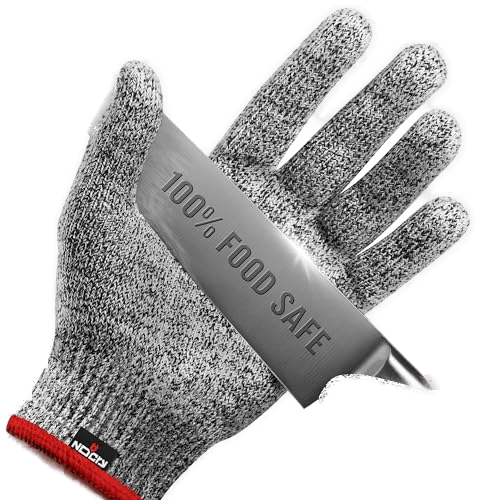
NoCry Cut Resistant Gloves
NoCry gloves are the standard choice for fabric mandoline safety. Comfortable, lightweight, and ANSI A4 rated.
Pros
- EN388 Level 5 / ANSI A4 cut resistance--protects against mandolines and graters
- Food-grade material is safe for direct food contact
- Snug, second-skin fit preserves dexterity for precision work
- Machine washable for easy hygiene maintenance
Cons
- Fabric gloves are inherently sacrificial--they will eventually degrade with heavy use
- Not puncture-resistant--a pointed knife tip can still penetrate
- Absorbs food juices; consider wearing a nitrile glove over it for messy prep
Specifications
The NoCry cut-resistant gloves are standard safety gear for home cooks. They fit like a second skin, allowing you to grip small ingredients while providing ANSI A4 cut protection.
Fabric gloves are inherently sacrificial; the fibers will eventually fray and wear down if they brush against sharp blades. At around $33, you should plan on replacing them every year or two. A great tip is to wear a disposable nitrile glove over the fabric to keep food juices and oils from soaking in.
Winco Reversible Mesh Glove - True BIFL

Winco Reversible Protective Cut-Resistant Glove
The Winco reversible metal mesh glove is the only indestructible cut protection glove. Ideal for oyster shucking and heavy carving.
Pros
- Stainless steel mesh literally cannot degrade, fray, or wear out
- Used by professional butchers and oyster shuckers worldwide
- Provides absolute cut protection against blades and edges
- Easy to clean--just rinse, or throw it in the dishwasher
Cons
- Zero dexterity compared to fabric gloves--feels like wearing armor
- Cold metal on your hand takes getting used to, especially in winter
- Only one hand protected per glove--reversible strap fits left or right hand
Specifications
The Winco Reversible Mesh Glove is the only cut glove that is truly Buy It For Life. It is made of linked stainless steel rings, just like chainmail armor. It cannot cut, tear, or wear out.
Dexterity is limited, and it feels heavy and cold at first. It is overkill for slicing an onion, but if you regularly shuck oysters, carve meat, or slice tons of vegetables on a mandoline, it offers complete protection. It is reversible, fits either hand, and cleans up easily in the dishwasher.
Over-Sink Drying Rack
Over-sink roll-up drying racks are incredibly useful, especially in tight kitchens. They sit over your sink to dry dishes, act as a heat-resistant trivet for hot pots, and serve as a colander for rinsing vegetables. When you're done, they roll up and fit into a drawer.
For a rack that lasts, look for solid stainless steel rods rather than thin coated wires, durable silicone edges that won't slide or scratch, and tight rod spacing.
Attom Tech Roll-Up Rack - Budget Space-Saver

Attom Tech Roll-Up Over-Sink Drying Rack
The Attom Tech Roll-Up Rack is a basic, budget-friendly dish-drying space-saver. Very durable for under $15.
Pros
- Food-grade stainless steel rods with non-slip silicone ends
- Rolls up for storage when not in use--fits in any drawer
- Doubles as a trivet for hot pots and a produce washing station
- Adjustable width fits most standard sinks
Cons
- Silicone can collect grime over time and needs periodic scrubbing
- Small items and utensils can slip between the rods
- Rods can bend under very heavy cast iron pots
Specifications
The Attom Tech Roll-Up Rack is a simple, budget-friendly option. It uses stainless steel rods and grippy silicone borders to stay secure over your sink.
It rolls up smoothly, fits most standard sinks, and costs under $13. The rods are thin, so they can bend slightly under heavy cast iron pans, and the silicone ends will need a scrub now and then to prevent soap scum build-up. But for the price, it is a highly durable space-saver.
Kraus KRM-11BL - The Premium Pick

Kraus KRM-11BL Multipurpose Over-Sink Roll-Up Rack
The Kraus KRM-11BL is a premium roll-up rack featuring thick rods, tighter spacing, and heavy silicone ends that stay put.
Pros
- Solid stainless steel construction from a premium sink manufacturer
- Heat-resistant silicone bumpers prevent scratching your sink
- Tighter rod spacing prevents small items from falling through
- Multi-use: drying rack, cooling rack, and prep station in one
Cons
- At $56, it's several times the price of budget alternatives
- Specific size--measure your sink before buying
- Heavier than budget roll-up racks
Specifications
Kraus makes high-end kitchen sinks, so their roll-up rack is built to match. The KRM-11BL uses solid, thick stainless steel rods that won't flex under heavy cast iron cookware.
It features heat-resistant silicone padding to protect your sink edges and tighter rod spacing so forks and spoons don't fall through. It costs about $56, but the extra rigidity and durability are well worth the upgrade if it lives on your sink full-time.
The Bottom Line
Building a durable kitchen takes time. You don't need to replace everything at once. Start with the tools you use daily—usually a chef's knife and shears— and upgrade as your cheap gear breaks.
A starter kit of the Victorinox knife ($53), Wüsthof shears ($29), EZ-DUZ-IT opener ($14), Cuisinart strainers ($16), and a Silpat mat ($32) costs around $144. That is a small investment for tools that will easily outlast a decade of cheap supermarket replacements. The premium upgrades are excellent, but the budget workhorses on this list aren't compromises—they are simply reliable tools that get the job done.