

Our Picks
Introduction
You plug in a new blender, fill the jar with frozen strawberries and ice, and flip the switch. Within thirty seconds, a distinct electrical smell fills the kitchen, followed by a sudden silence. The motor has burned out, or worse, the plastic teeth connecting the motor base to the blade assembly have stripped clean. This is the standard death cycle for modern consumer blenders.
Manufacturers hide these weaknesses behind inflated peak horsepower claims. A high wattage rating does not save a machine if its drive coupling is made of cheap plastic. The connection between the motor base and the jar is where the real work happens. If that joint strips, your high-powered motor is useless.
We examined the drive assemblies, jar geometry, and thermal safety systems of the market's leading models. We also tracked owner experiences across long-term user communities. The five machines selected below range from commercial-grade heirlooms to budget-friendly compromises. They are chosen specifically for how they handle real work over years of use.
What to Look for in a Blender Built to Last
The drive coupling is the weakest link
Most cheap blenders fail at the junction where the motor spins the blade. Plastic drive gears strip when they hit hard items like ice or frozen peach slices. Premium machines use metal-to-metal connections. Some designs use a hard nylon socket with a metal core. This socket acts as a sacrificial fuse. If the blade jams, the nylon strips to protect the expensive motor from catching fire. Replacing a socket takes five minutes and costs under ten dollars, while replacing a stripped motor base means buying a new machine.
Thermal protection prevents motor burnout
Heavy mixtures like peanut butter or thick bread dough create resistance. This resistance makes the motor run hot. High-end blenders contain automatic thermal sensors. When the internal heat reaches dangerous levels, the sensor cuts power before the copper windings melt. If your blender lacks this protection, it will run until the motor burns out completely. Look for machines with active cooling fans and automatic thermal shutoff circuits.
Blade design and jar geometry shape the vortex
Sharp blades are not the key to blending. High-speed blenders rely on blunt force. Heavy, blunt stainless steel blades pulverize ingredients rather than slicing them. Slicing blades dull over time, whereas blunt blades maintain performance for decades.
The shape of the jar is equally important. Tapered jars force ingredients down into a tight vortex, ensuring every piece hits the blade. Square jars disrupt the vortex, flinging ingredients off the walls to bounce back down. Tampers are useful tools for thick blends, allowing you to manually push ingredients into the blending zone without touching the blade.
Fixed vs removable blade assemblies
Removable blades seem convenient for cleaning, but they introduce a significant failure point. They require rubber gaskets and locking nuts. Over time, the gasket dry-rots, causing liquids to leak into the bearing housing. This leak ruins the bearings and rusts the spindle. Fixed-blade jars seal the bearings permanently inside the pitcher, preventing leaks and extending jar life by years.
Vitamix 5200 - Overall Best

Vitamix 5200 Blender
The Vitamix 5200 remains the benchmark for durability because of its simple mechanical controls and repairable design. The sacrificial nylon drive socket ensures a jammed blade will not destroy the motor. For daily smoothie makers and kitchen operators who want a machine for the next fifteen years, this is the safest investment.
Pros
- Hardened nylon drive socket acts as a sacrificial fuse to protect the motor base
- Tapered 64-ounce container forces ingredients down to form a continuous vortex
- Cold-forged steel blades are blunt by design and rely on force rather than sharpness
- Seven-year warranty covers two-way shipping costs for any repair needs
Cons
- Produces noise levels around 85 decibels at high speed
- Tall container design prevents it from fitting under standard kitchen cabinets
- Lacks pre-programmed buttons or digital presets
Sacrificial drive sockets protect the motor
The Vitamix 5200 is a classic machine that has remained largely unchanged for decades because its mechanics work. Its drive socket uses a hardened nylon outer shell over a metal spline. This connection transfers energy from the two-horsepower motor to the blade assembly. If you accidentally drop a metal spoon into the jar during blending, the nylon socket strips, acting as a mechanical fuse. This prevents the motor from destroying itself. Replacing the socket requires removing a single Allen screw, saving you from buying a new base.
Tapered container and blunt blades create a vortex
The narrow, tapered base of the 64-ounce container forces ingredients into the blades. This design creates a continuous vortex that pulls food down, minimizing pockets of unblended air. The laser-cut stainless steel blades are blunt by design, relying on motor speed rather than sharpness to break down ingredients. The bearings inside the jar are sealed permanently, preventing water from getting into the assembly during washing.
Performance limits and user quirks
This machine is not quiet. At high speeds, it produces noise levels around 85 decibels. It also lacks pre-programmed buttons. You control the speed using a manual dial and a high-low toggle switch. The tall height of the container makes it difficult to store under standard kitchen cabinets. However, the manual controls and simple design mean fewer electronic components can fail over time. The company backs the machine with a seven-year full warranty that covers two-way shipping for repairs.
Blendtec Total Blender Classic - Best Longevity / Built-to-Last

Blendtec Total Blender Classic
The Blendtec Total Blender Classic uses a rugged metal-to-metal coupling that transfers power directly without plastic wear points. Its square pitcher flings ingredients back into the path of the blunt blades, eliminating the need for a manual tamper. It is the best choice for set-and-forget blending where raw crushing power is the priority.
Pros
- Direct metal-to-metal drive spline eliminates plastic joints from power transmission
- Square jar design disrupts the vortex to blend thick mixtures without a tamper
- Blunt blades are eighty percent thicker than standard blades to smash through ice
- Built-in thermal sensors cut motor power instantly if a blade blockage occurs
Cons
- Jar bearings and rubber seals can degrade and leak after several years of use
- Requires replacing the entire jar assembly when the blade seal fails
- Warranty is limited to two years on the classic model
Metal-to-metal drive coupling reduces wear
Blendtec takes a different path than Vitamix. It uses a direct metal-to-metal drive gear. This steel spline fits into a metal socket on the jar, eliminating plastic parts from the drive system. This direct connection transfers the full power of the three-horsepower motor directly to the blades. While this system lacks a plastic fuse, the motor contains sensor circuits that cut power immediately if the blades encounter a hard block, preventing electrical burnout.
Square wildside jar eliminates the tamper
The square shape of the WildSide jar disrupts the circular vortex. Instead of spinning in a circle, ingredients hit the flat sides and fall back down into the blades. This design allows you to blend thick mixtures without using a tamper. The cold-forged stainless steel blade is blunt and extra-thick. It is up to eighty percent thicker than standard blender blades, allowing it to smash through ice and frozen ingredients without dulling.
Real-world wear and company support
While the motor base lasts for decades, the jar itself is the main wear item. The bearings and rubber seal at the bottom of the pitcher inevitably leak after several years of heavy use. Because the blades are permanently mounted in the jar, you must replace the entire container when the seal fails. Blendtec covers the Total Blender Classic with a two-year warranty. Although this warranty is shorter than Vitamix's offering, the mechanical base remains one of the most reliable systems on the market.
Breville Super Q - Best Smooth Blends

Breville Super Q Blender
The Breville Super Q combines high-velocity blending with a metal-to-metal connection and an active cooling system. It is quieter than its professional competitors and comes backed by a ten-year limited warranty. This is for users who want ultra-smooth textures and digital controls without sacrificing structural durability.
Pros
- Heavy-duty metal coupling connects base directly to the pitcher drive shaft
- Active cooling fan inside the base prevents overheating under heavy loads
- Ten-year limited warranty provides the longest coverage in the consumer class
- Sound-dampening insulation reduces high-frequency blending noise
Cons
- Digital interface introduces complex circuit boards vulnerable to moisture
- Slightly heavier base footprint makes it harder to move around the kitchen
- High retail price matches the cost of professional commercial models
High wattage motor with built-in cooling
The Breville Super Q runs an 1800-watt motor that drives the blades up to 186 miles per hour. To keep this motor from overheating under heavy loads, Breville installed an active cooling fan in the base. The base also uses a heavy-duty metal drive coupling. This metal socket connects directly to the metal drive shaft of the pitcher, preventing the stripping issues common in cheaper consumer blenders.
Noise suppression and personal jar options
High-power blending is loud. Breville handles this by adding sound-dampening insulation around the motor. This reduces high-frequency noise, making it quieter than both Vitamix and Blendtec. The package includes a personal blending cup with its own blade assembly, letting you blend single servings without dirtying the main 68-ounce pitcher. The blades are fixed in the jar, which prevents leaks and keeps the bearings dry.
Complex electronics and warranty terms
The base has digital timers and pre-programmed buttons for smoothies, ice crushing, and soups. While these programs add convenience, they also introduce complex circuit boards that are more vulnerable to moisture than simple manual dials. Breville stands behind the Super Q with a ten-year limited warranty, which is the longest warranty in this category. It covers home use but does not apply to commercial operations.
Ninja Professional Plus BN701 - Best Budget
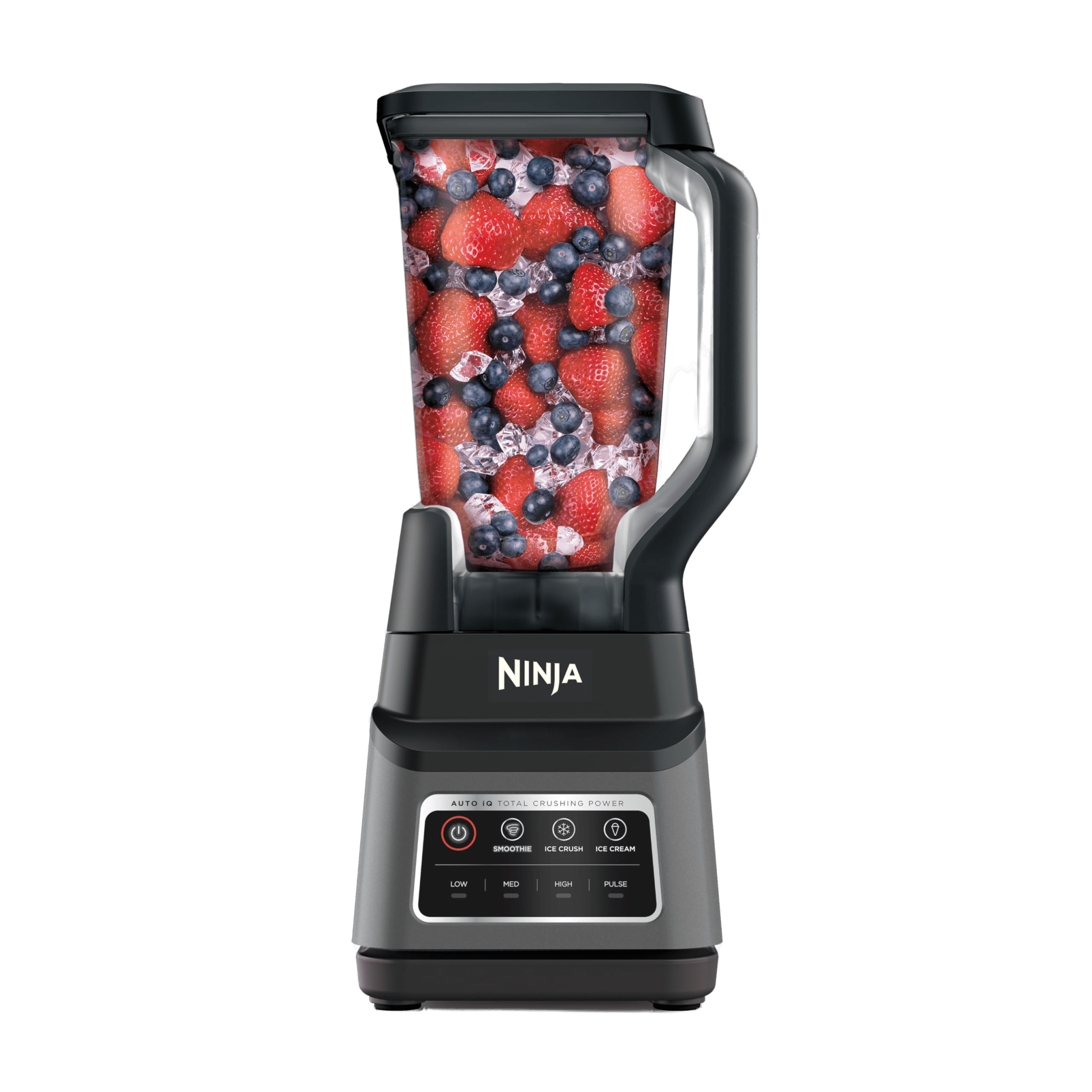
Ninja Professional Plus Blender BN701
The Ninja BN701 offers strong ice-crushing power at a fraction of the cost of premium blenders. However, its plastic drive coupling remains a significant longevity weak point. If you buy this model, you must use plenty of liquids to prevent stripping the gears before the thermal safety triggers.
Pros
- Affordable price point makes high-capacity blending accessible
- Removable stacked blade assembly processes large volumes of ice quickly
- Simple digital controls provide automatic pulse programs for common tasks
Cons
- Plastic drive gears on the base and pitcher wear down under thick loads
- Automatic thermal shutoff locks the machine for fifteen minutes to cool down when overloaded
- Removable blade spindle is sharp, loose, and difficult to clean safely
Plastic gears cut costs but reduce lifespan
The Ninja BN701 costs a fraction of the price of premium models. It runs a 1400-peak-watt motor that crushes ice easily. However, this power goes through a plastic drive gear. The coupling on the motor base and the gear on the pitcher are both made of hard plastic. Under heavy loads, like blending frozen fruit without enough liquid, these plastic teeth wear down or strip entirely, rendering the blender useless.
Removable blade spindle is sharp and dangerous
Unlike blenders that pull food into a bottom vortex, the Ninja uses a removable plastic spindle with three tiers of blades. This design processes large quantities of ice quickly. However, the blades are extremely sharp and loose inside the jar. They can fall out when you pour your drink, creating a safety hazard. Because the blade assembly is removable, it relies on a rubber seal that degrades over time, leading to leaks.
Performance limits and safety cutoffs
The BN701 includes an automatic thermal overload protection thermostat that shuts down the machine if the motor overheats. When triggered, the control panel flashes red and locks the user out for about fifteen minutes. While this prevents the motor from burning itself out, it is also loud, peaking around 95 decibels. Ninja offers a one-year limited warranty. While it is an excellent tool for crushing ice, you must add ample liquid to keep the plastic gears from stripping before the safety circuit is even tripped.
NutriBullet Pro 900 - Best Space-Saving/Personal
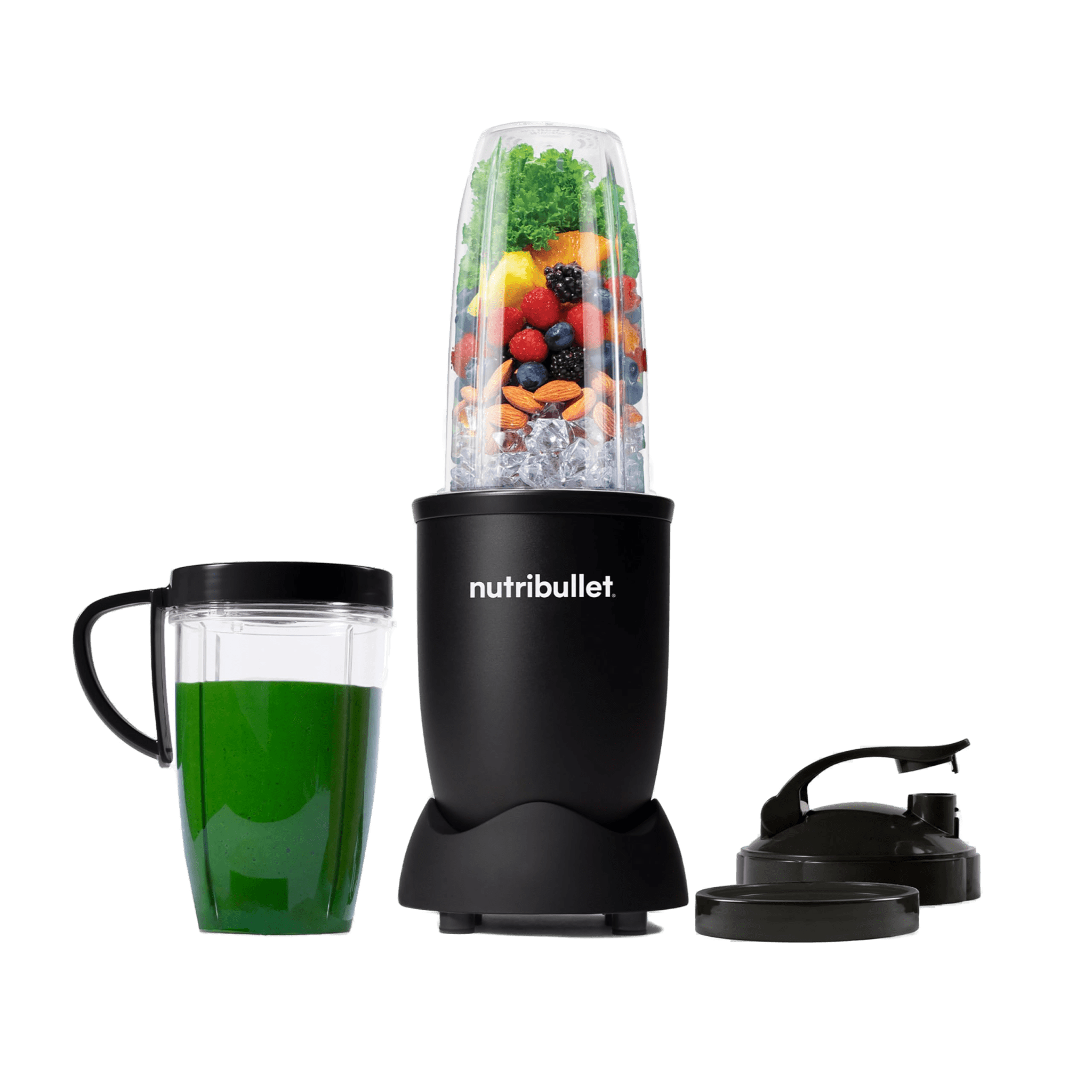
NutriBullet Pro 900
The NutriBullet Pro 900 is a convenient personal blender for quick smoothies, but it is not built for the long haul. The screw-on blade relies on a rubber gasket that must be checked for leaks to keep liquid from entering the motor. It is a solid short-term choice for light duties.
Pros
- Small footprint fits easily in compact kitchens and storage spaces
- 900-watt motor provides ample power for single-serving fruit smoothies
- Comes with travel cups that let you blend and drink from the same cup
Cons
- Rubber and plastic gears shed dust and wear out under daily use
- Rubber gaskets degrade and leak liquid into the bearing housing
- Sealed container cannot process hot soups or carbonated liquids
Plastic drive gear on a compact motor base
The NutriBullet Pro 900 uses a 900-watt motor housed in a small aluminum base. This compact size makes it ideal for single servings. However, the connection between the base and the blade is made of plastic. The motor base has a plastic gear that meshes with a rubberized gear on the blade assembly. These gears wear out and shed black dust over time, especially if you press down too hard during operation.
Screw-on blade assemblies require regular maintenance
To blend, you fill the plastic cup, screw the blade cap onto the opening, and invert it onto the motor base. This design relies on a rubber gasket to prevent leaks. As you blend, the pressure pushes liquid against the gasket. Over time, the gasket wears out. If liquid leaks past the seal, it enters the bearing assembly, causing the blade to seize. If the leak reaches the motor base, it can short-circuit the electrical components.
Limits on ingredients and warranty
This personal blender cannot process hot or carbonated liquids. Blending warm soup or soda builds pressure inside the sealed cup, which can cause the container to burst. NutriBullet provides a one-year limited warranty. To maximize its lifespan, you must replace the blade assembly every six to twelve months and avoid running the motor for more than sixty seconds at a time.
The Bottom Line
A blender's lifespan depends on the quality of its drive system and how you treat it. For a machine that lasts decades, the Vitamix 5200 is the standard, combining a powerful motor with a sacrificial nylon drive socket that protects the motor base. If you prefer a tamper-free setup and a metal-to-metal connection, the Blendtec Total Blender Classic offers commercial power, though you may need to replace the jar after several years when the seal degrades.
For the quietest high-power option with a long warranty, the Breville Super Q provides a ten-year commitment and a metal coupling, though its digital display adds electronic complexity. If you are shopping on a budget, the Ninja Professional Plus BN701 crushes ice well, but its plastic gears and removable blades limit its durability. For small kitchens, the NutriBullet Pro 900 handles daily smoothies in a compact footprint, provided you replace the blade assembly regularly to prevent leaks from killing the motor.
Product Comparison at a Glance
| Product | Our Score | Brand | Motor Power | Drive Coupling | Warranty | Best For | Action |
|---|---|---|---|---|---|---|---|
#1Vitamix 5200 Blender | 9.6 | Vitamix | 1380W / 2.0 HP | Metal-Nylon Socket | 7 Years | Overall Best | |
#2Blendtec Total Blender Classic | 9.3 | Blendtec | 1560W / 3.0 HP | All-Metal Shaft | 2 Years | Longevity & Built-to-Last | |
#3Breville Super Q Blender | 9.4 | Breville | 1800W / 2.4 HP | All-Metal Joint | 10 Years | Smoothest Blends | |
#4Ninja Professional Plus Blender BN701 | 7.8 | Ninja | 1400 Peak Watts | All-Plastic Gears | 1 Year | Budget Option | |
#5NutriBullet Pro 900 | 8.0 | NutriBullet | 900 Watts | Plastic/Rubber Gears | 1 Year | Space-Saving & Personal |