
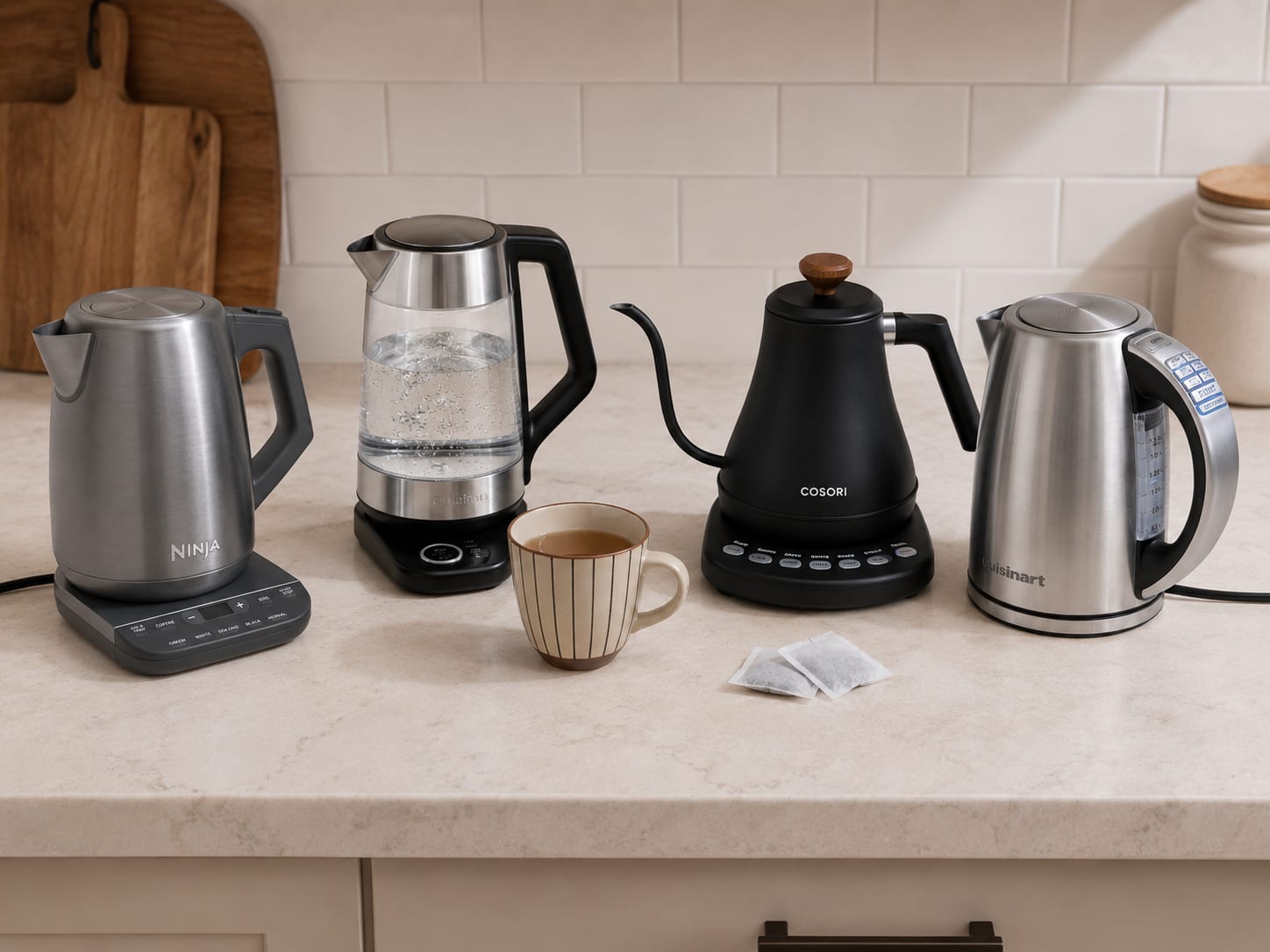
Our Picks
Why We Wrote This Guide (And Why Right Now)
On May 14, 2026, Zwilling recalled over 113,000 Enfinigy electric kettles in the U.S. under CPSC recall 26-489. The trigger was 163 reports of the handle loosening or separating from the body, including five where the handle came off mid-use, one of those causing a second-degree burn. Both the Enfinigy and the Enfinigy Pro 1.5L are covered. The CPSC remedy is simple: stop using it, unplug and cut the cord, photograph it, and file for a full refund at zwilling.com/us/kettle-recall.
If your Enfinigy is sitting on the counter right now, unplug it. Seriously. Then come back to this page, because you are going to need a replacement, and not every kettle is built to the same standard.
We dug through CPSC and Health Canada filings, manufacturer documentation, independent lab reviews, and hundreds of owner reports on r/Coffee, r/tea, and r/BuyItForLife to build this list. Zwilling is not the only cautionary tale this year: the CPSC also warned people in 2026 to stop using Sekaer travel kettles after 89 burn injuries. The goal here was simple. Six electric kettles that cover every common use case, each with real boil-dry and thermal cut-off protection, and none of them sitting under a current kettle recall. No sponsored placements. No filler picks.
What to Know Before You Buy
Gooseneck vs. Standard Spout
This is the first fork in the road. A gooseneck spout restricts water flow so you can place water exactly where you want it on your coffee grounds. For pour-over methods like Chemex, V60, or Kalita Wave, that precision is not optional. Without it, water floods the grounds unevenly and your extraction suffers. If you have ever wondered why your home pour-over tastes flat compared to the coffee shop, the spout is probably the reason.
But if you mainly boil water for tea, oatmeal, ramen, or a French press, a standard spout is faster and more practical. Gooseneck spouts are deliberately slow. Filling a 32oz French press through one takes patience you might not have at 6 AM.
Temperature Presets vs. Degree-by-Degree
Preset kettles give you 5 to 7 fixed temperature options. Press a button, walk away. Degree-by-degree kettles let you dial in any temperature from roughly 104 to 212 degrees Fahrenheit. The difference matters more than most people expect. Green tea brewed at 175 degrees tastes noticeably smoother than the same leaves at 180, and serious coffee drinkers will tell you that 2-3 degrees changes a light roast from bright to bitter. For daily use with bagged tea or French press, presets cover everything you need.
Material: The Plastic Question
Check what the water actually touches while it heats, not just what the marketing says. Plenty of kettles advertise a stainless body but run a plastic lid, window, or gauge right at the water line, and it matters more than it sounds. A 2024 University of Queensland study found a polypropylene kettle shed roughly 12 million nanoplastic particles per milliliter on the first boil of a brand-new unit. The count dropped sharply with use but was still around 820,000 per milliliter after 150 boils. Heat is the accelerant for the chemistry too: one study measured BPA leaching about 55 times faster from polycarbonate after boiling-water exposure, and BPA-free is not a clean bill of health, because the common replacements BPS and BPF show similar hormone activity (California added BPS to its Prop 65 list in December 2024).
Stainless steel is the safe default. For plain water at a neutral pH, a quality 304 stainless kettle leaches a negligible amount of nickel or chromium, and that transfer actually drops over time as the surface stabilizes. Borosilicate glass is the most inert of all, and it lets you watch scale build up so you descale on time. On this list, the COSORI runs a full 304 stainless interior with the lid included, and the OXO is borosilicate glass, so neither puts plastic in the water path. The Cuisinart and Ninja use BPA-free plastic components near the lid, and the Zojirushi has a nonstick-coated stainless interior. If you are buying anything with plastic in the water path, boil and discard the first ten or so fills, which slashes the early microplastic shedding.
Fellow Stagg EKG Pro - The Pour-Over Standard
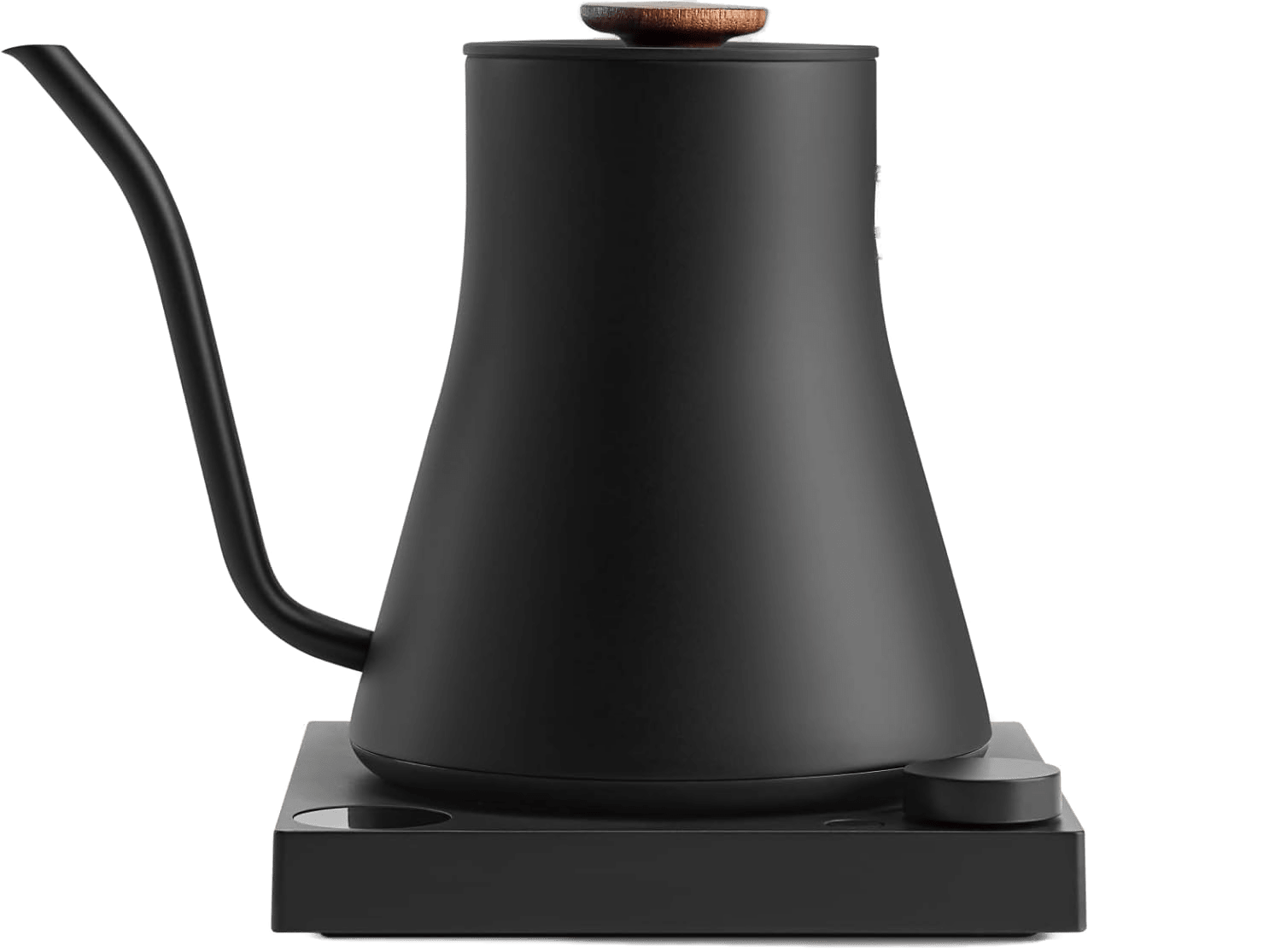
Fellow Stagg EKG Pro
The Stagg EKG Pro is the kettle that coffee people build their morning around. If you care about pour-over extraction and want total control over temperature and flow, nothing else here comes close. Just know that the precision is what your money buys, and the electronics are the part owners keep flagging.
Pros
- Degree-by-degree temperature control from 135 to 212°F
- Gooseneck spout gives you full control over pour speed and placement
- 60-minute keep-warm holds within about a degree of your target
- LCD display shows real-time temperature as the water heats
- Altitude calibration in the Pro model for high-elevation brewing
Cons
- Buttons and sensors have a reputation for failing after 2-3 years based on owner reports
- 0.9L capacity is tight for more than one or two cups
- At around $200, you are paying flagship money for electronics that owners report failing in 2-3 years
Specifications
Why it stands out
The Stagg EKG Pro is the kettle you see in every specialty coffee shop, and it earns that spot. The gooseneck spout lays down a thin, controlled stream exactly where you want it on a V60 or Chemex, and owners report the temperature holding within a degree of target, which matters when 2-3 degrees swings a light roast from bright to bitter. The base LCD shows the temperature climbing in real time, the Pro adds altitude calibration for high elevations, and the 60-minute keep-warm holds steady while you grind.
The catch
The electronics are the weak point. Scroll r/Coffee or iFixit and the pattern is hard to miss: the power button stops responding, or the control board or thermal fuse fails, usually just past the one-year warranty. The 0.9L capacity is tight too. At $199.95 this is flagship money, and if you want the look and the pour without the WiFi and color screen, the standard Stagg EKG does the same job for around $165.
Cuisinart PerfecTemp CPK-17 - The One That Outlasts Everything
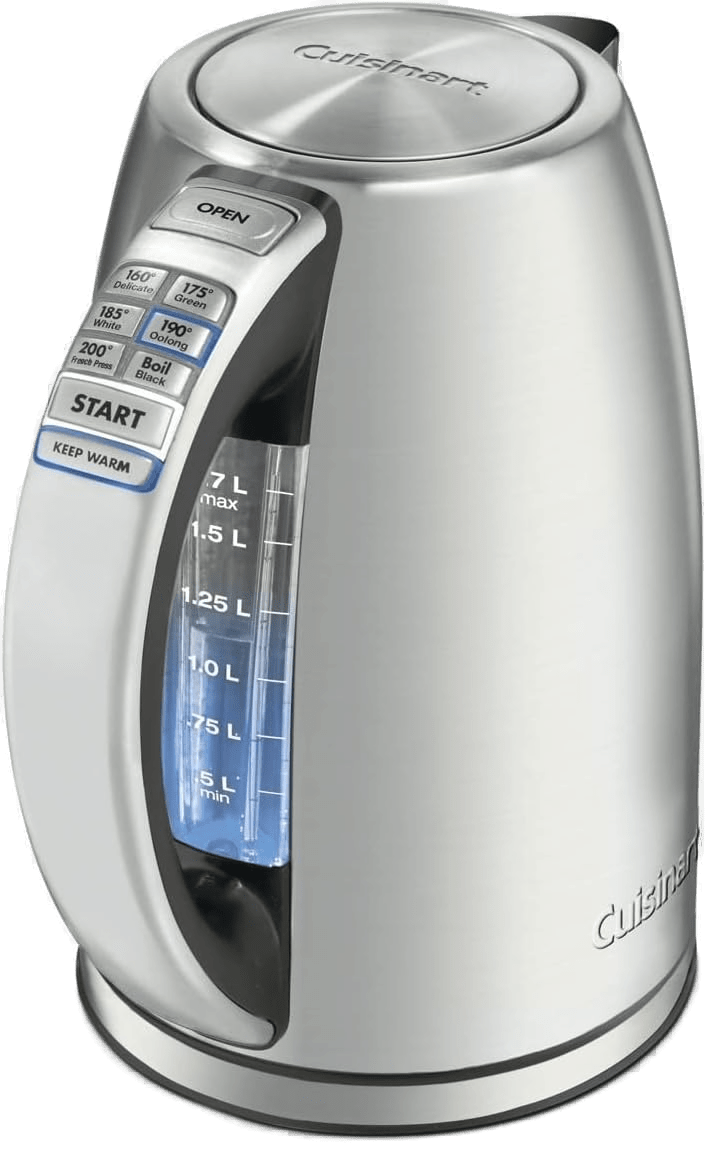
Cuisinart PerfecTemp CPK-17
Reddit calls this one the cockroach of kettles, and they mean it as a compliment. It is the one that outlasts everything else in your kitchen. If you brew tea or French press daily and want something that will still be working when your next phone is obsolete, this is the pick.
Pros
- Six temperature presets tuned for different tea types and French press
- 1500W heats a full 1.7L in about five and a half minutes
- Memory function holds your setting for 2 minutes off the base
- Owners regularly report 8-10 year lifespans with zero issues
- Blue backlit water window is visible from across the kitchen
Cons
- Standard spout only, not suitable for pour-over
- No degree-by-degree custom temperature setting
- Stainless body shows fingerprints and water spots quickly
Specifications
Why it stands out
The CPK-17 has been on the market for over a decade, and people keep buying it because it works and keeps working. Reddit threads are full of Cuisinarts on year eight or ten with zero issues, which is rare in small appliances. Six presets cover the tea spectrum from 160 for delicate whites up to a full boil, the memory function holds your setting for two minutes when you lift it off the base to pour, and the 1500W element brings a full 1.7L up to temperature in about five and a half minutes. The blue backlit water window lets you check the level from across the kitchen.
The catch
When a CPK-17 finally fails, it is almost always the lid: a small hinge spring wears out and it stops popping open on release, a mechanical annoyance rather than the heating guts giving up. You also give up precision, with no degree-by-degree setting and no gooseneck. If you need exactly 178 for a single-origin bean, look elsewhere; if you need 175 ready in five minutes every morning for a decade, this is it. It sits alongside our other buy-it-for-life kitchen appliances for that reason.
COSORI Original Gooseneck - The Stagg-Killer

COSORI Original Electric Gooseneck Kettle
The COSORI gets called a Stagg-killer on Reddit, and the math backs it up. Gooseneck spout, stainless interior, and usable presets for less than half the Fellow's price. You give up the LCD, the custom degree control, and the design clout. For most home brewers, that trade makes sense.
Pros
- Full 304 stainless steel interior with zero plastic contact on water
- Five temperature presets cover most tea and coffee brewing needs
- 60-minute keep-warm matches kettles at twice the price
- Balanced handle makes controlled pouring feel natural
Cons
- 0.8L capacity means refilling for more than two cups
- No degree-by-degree control, presets only
- Base feels lightweight and can slide on smooth countertops
Specifications
Why it stands out
The COSORI is what you buy when you want what the Fellow Stagg does but cannot stomach $200 on hot water. At around $70 it costs roughly a third of the EKG Pro and covers most of the same ground. The standout detail is the full 304 stainless interior, lid included, so water never touches plastic while it heats, a genuine edge if you have read anything about microplastics in hot liquids. Five presets from 170 to 212 degrees handle delicate green tea up to a full boil, and the 60-minute keep-warm matches kettles at twice the price.
The catch
At 0.8L it is the smallest kettle here, so you are refilling for a second batch. Control is preset-only, so you cannot dial in 197 if that is what your bean wants. A few owners note the light base can slide on a smooth countertop while pouring, though a strip of shelf liner underneath fixes it.
OXO Brew Adjustable Temperature Kettle - The Modern Standard
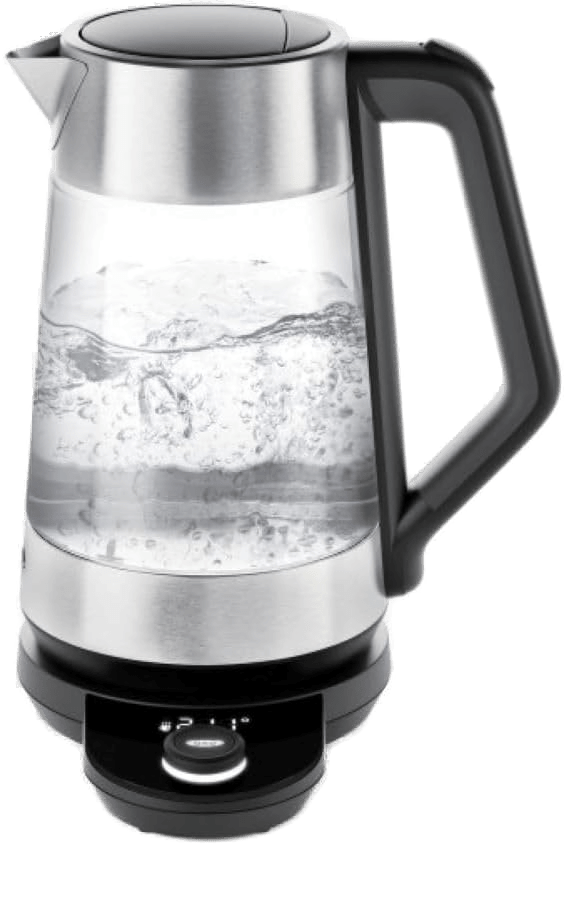
OXO Brew Adjustable Temperature Kettle
The OXO Brew Glass Kettle is the aesthetic choice for people who want to see their water boil without sacrificing precision. With single-degree adjustments and a generous 1.75L capacity, it's a significant upgrade over basic glass models. It's built like a tank, though it feels like one too at 4 pounds.
Pros
- Borosilicate glass body lets you monitor water level and cleanliness easily
- Precise temperature control from 104 to 212°F in single-degree increments
- Large 1.75L capacity is ideal for families and multiple servings
- 1500W heating element provides rapid boiling even when full
Cons
- Glass body gets extremely hot to the touch during operation
- Heavier than average at 4 lbs when empty
- No built-in brew timer like the gooseneck version
Specifications
Why it stands out
Most glass kettles look good and do nothing interesting. The OXO is the exception, pairing a borosilicate glass body with single-degree control from 104 to 212 degrees, which puts it in Stagg precision territory in a completely different form. You can watch the water heat through the glass, which turns out to be genuinely useful for catching scale early. At 1.75L it is the largest of the true kettles here, with room to fill a French press, a thermos, and a mug in one session, and the 1500W element handles that volume well.
The catch
The display shows your target temperature, not the live reading as it climbs, which annoys precision users. Keep-warm runs only 30 minutes, half what the Fellow and COSORI offer, and the glass body gets hot to the touch. At 4 pounds empty it is heavy to pour one-handed. But for a large glass kettle with exact temperature control at around $120, nothing else really competes.
Ninja KT200 - Built for Volume
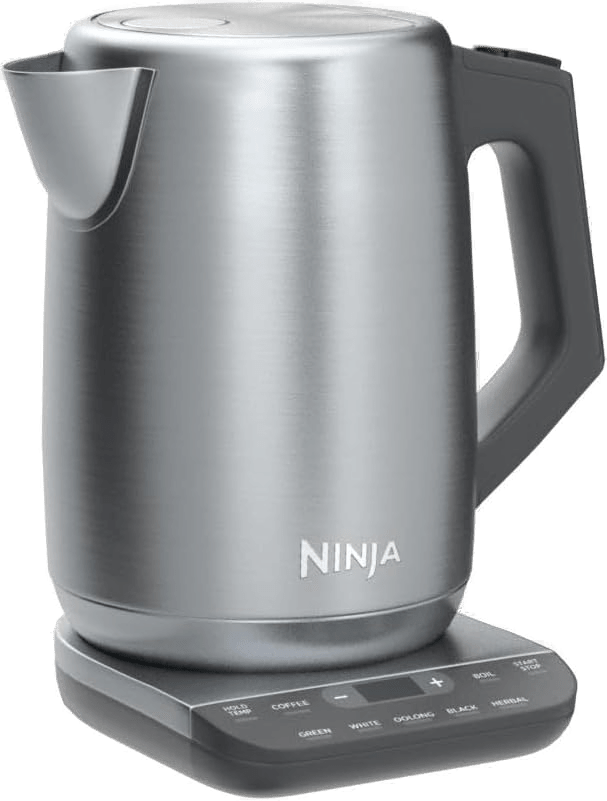
Ninja KT200 Precision Temperature Kettle
The Ninja KT200 is built for volume. If your morning involves filling a French press, a thermos, and a tea cup before anyone else is awake, the 1.7L tank and 90-second single-cup boil mean you are not standing around waiting. One caveat: it is being phased out at major retailers, so grab it only if you find it in stock at a fair price.
Pros
- 1.7L capacity handles a full household without refilling
- Seven one-touch presets plus manual degree-by-degree control
- Boils a single cup in about 90 seconds, fastest on this list
- Illuminated base with live temperature readout
Cons
- Standard spout, no gooseneck option for pour-over
- At nearly 4 lbs full, it is the heaviest kettle here
- Lid can be stiff to open and close when the kettle is hot
- Heading toward discontinuation at major retailers, so confirm it is in stock before buying
Specifications
Why it stands out
The Ninja KT200 exists for households where several people need hot water in the same 15-minute window. The 1.7L tank matches the Cuisinart, the 1500W element boils a single cup in about 90 seconds, and you get seven one-touch presets plus a manual degree-by-degree mode you would expect to pay twice as much for. The illuminated base shows a live temperature readout as the water heats.
The catch
It is a standard-spout kettle, so no pour-over, and the exterior gets genuinely hot to the touch, though the handle stays cool. The bigger issue is availability: it is being phased out at major retailers, with Best Buy already delisting it, so only grab it if you find it in stock at a fair price, usually between $80 and $100.
Zojirushi Micom Water Boiler & Warmer - The Buy-It-For-Life Pick
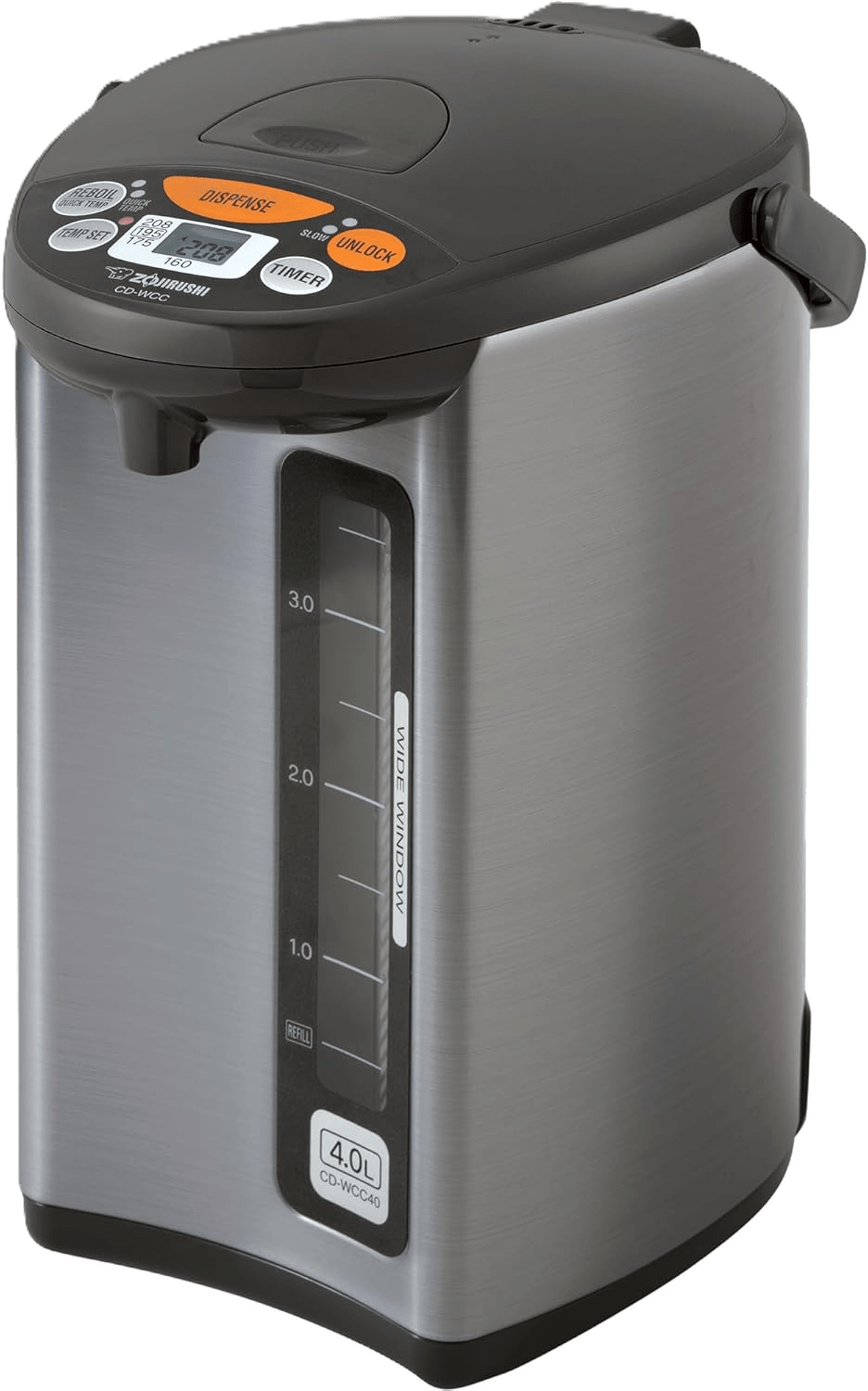
Zojirushi Micom Water Boiler & Warmer (CD-WCC40)
If your household runs on hot water all day, tea after tea, instant coffee, oatmeal, the odd cup of soup, the Zojirushi is the one appliance here that genuinely earns the buy-it-for-life label. It keeps four liters hot at your chosen temperature from morning to night, and owner reports of 10, 15, even 20 years of service are common. It will not pour a clean V60 and it is slow for a single cup, so think of it as a different tool entirely: an always-on hot-water reservoir that happens to outlive everything else on the counter.
Pros
- Legendary longevity: owners routinely report 10-20 years of daily use
- Keeps 4 liters hot all day at 160, 175, 195, or 208 degrees so there is no boil to wait for
- Micom micro-computer holds your temperature within a couple of degrees for tea, instant coffee, oatmeal, or French press
- Energy-saving timer and Quick Temp mode keep standby power reasonable
- One-touch electric dispensing, safety auto shut-off, and a low-water alert
Cons
- It is a hot-water reservoir, so it will not do fast single boils or gooseneck pour-over
- Bulky 4L footprint claims permanent counter space
- Nonstick-coated interior, so it is not the pick if you want zero coatings in your water (that is the COSORI or OXO)
Specifications
Why it stands out
Every other pick boils water on demand. The Zojirushi does something different: it keeps four liters hot all day at a temperature you choose, so there is no boil to wait for. Set it to 195 for coffee or 175 for green tea in the morning and it holds that line until bedtime. For a household that drinks tea after tea and reaches for hot water a dozen times a day, that changes the whole rhythm of the kitchen. It is also the only pick that genuinely earns the buy-it-for-life label, with r/BuyItForLife owners reporting ten, fifteen, even twenty years of daily use.
The catch
It is a standing reservoir, so no clean pour-over stream and no fast single boil, and the interior is nonstick-coated stainless rather than bare steel or glass. If zero coatings in your water is the priority, the COSORI or OXO is the better fit. But if you want one appliance that quietly outlives everything else on the counter, this is it, and it pairs naturally with the rest of our buy-it-for-life kitchen tools.
Which One Should You Buy?
You brew pour-over coffee daily and care about extraction quality: The Fellow Stagg EKG Pro is the one. The gooseneck precision and degree-by-degree control exist for exactly this purpose. Just go in knowing that the electronics may not last as long as you want, and budget accordingly.
You want something that works for everything and lasts forever: The Cuisinart PerfecTemp CPK-17. Six presets, fast heating, proven reliability across a decade of owner reports. It is not the most exciting kettle here, and that is the point.
You want gooseneck quality without the gooseneck price tag: The COSORI Original Gooseneck at around $70 covers most of what the Fellow does at roughly a third of the cost. The full stainless interior is a real advantage you will not find on many competitors at any price.
You want a large-capacity kettle with glass aesthetics and precision: The OXO Brew Adjustable Temperature Kettle. Its 1.75L glass body is striking and functional, with single-degree control you rarely find in large glass kettles.
You need to serve a household, not just yourself: The Ninja KT200. 1.7L capacity, 90-second single-cup boil, seven presets plus manual control. Worth a look if you can still find it in stock, since it is being phased out.
You want hot water ready all day and a kettle that lasts a decade: The Zojirushi Micom Water Boiler. It is a standing reservoir, so it pours slow, but for an always-on tea-and-coffee household it is the closest thing here to a buy-it-once appliance.
Make It Last: How to Descale a Kettle (and Why It Is the Whole Game)
Here is the thing nobody tells you when you spend $200 on a kettle: the fastest way to kill any of them is to ignore limescale. That chalky white film is calcium and magnesium from your water, and it builds up on the heating element as an insulating layer. A 1mm crust forces the element to work about 7% harder, and 2mm pushes it past 15%. The element runs hotter, develops hot spots, and eventually burns out, or the scale fouls the steam path and the auto shut-off starts mis-triggering. Descaling on a schedule is the single biggest thing you can do to keep a kettle alive for years instead of months.
The method is simple. Citric acid is the better choice because it has no smell, no aftertaste, and it is gentle on stainless: dissolve one to two tablespoons of citric acid powder in enough water to cover the element, boil, switch off, and let it sit 15 to 60 minutes depending on how heavy the scale is. Pour it out, then boil one or two fills of fresh water and dump them to rinse. White vinegar works too and costs less, but it is smelly and needs more rinsing: fill with a 1:1 vinegar-and-water mix, boil, let it sit about an hour, then boil two or three fills of clean water to chase the taste out. Never scrub stainless or glass with steel wool or abrasive pads, which scratch the surface. Let the solution do the work instead.
How often depends on your water. Soft water, under 60 mg/L, needs it every two to three months. Hard water, over 120 mg/L or roughly seven grains per gallon, needs it every two to four weeks, or the moment the bottom starts to look chalky and boils slow down. One bonus from 2024 research: because boiling hard water traps microplastics inside the limescale, the gunk you rinse out is partly captured plastic. Descaling cleans your kettle and your water at the same time.
Product Comparison at a Glance
| Product | Our Score | Brand | Capacity | Temp Control | Keep Warm | Best For | Action |
|---|---|---|---|---|---|---|---|
#1Fellow Stagg EKG Pro | 9.4 | Fellow | 0.9L | Degree-by-degree | 60 min | Pour-over coffee | |
#2Cuisinart PerfecTemp CPK-17 | 9.2 | Cuisinart | 1.7L | 6 presets | 30 min | All-purpose workhorse | |
#3COSORI Original Electric Gooseneck Kettle | 9.0 | COSORI | 0.8L | 5 presets | 60 min | Budget pour-over | |
#4OXO Brew Adjustable Temperature Kettle | 9.1 | OXO | 1.75L | 1-degree dial | 30 min | Aesthetics & families | |
#5Ninja KT200 Precision Temperature Kettle | 8.8 | Ninja | 1.7L | 7 presets + manual | 30 min | Large households | |
#6Zojirushi Micom Water Boiler & Warmer (CD-WCC40) | 9.3 | Zojirushi | 4.0L | 4 hold temps | All day | Set-and-forget BIFL |